
Why Does Moisture Control Matter So Much in Modern Plastic Processing?
2026-01-15
I have worked with plastic processing lines long enough to know that moisture is one of those quiet problems that can ruin everything if it is ignored. When I first came across Sinburller, it was through real conversations with engineers who were struggling with unstable material quality and rising scrap rates. That is also when the concept of a well-designed Dehumidifier Dryer and Feeding system started to make practical sense to me, not as a theory, but as a daily production safeguard.
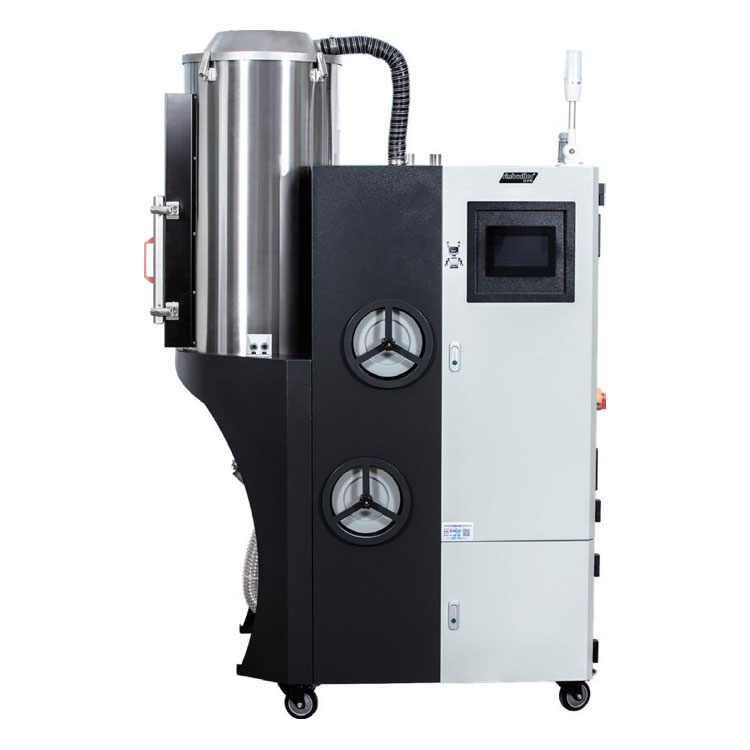
How Does Excess Moisture Actually Affect Plastic Materials?
Many people underestimate how sensitive hygroscopic plastics are. From my experience, even small amounts of residual moisture can lead to defects that are hard to trace back once production is running at full speed. This is exactly where a reliable Dehumidifier Dryer and Feeding solution proves its value.
- Surface defects such as silver streaks and bubbles
- Reduced mechanical strength of finished parts
- Inconsistent melt flow during injection molding
- Higher scrap rates and wasted raw materials
By controlling humidity at the source, a properly configured Dehumidifier Dryer and Feeding system helps eliminate these issues before they appear on the production floor.
Why Is Integrated Drying and Feeding More Efficient Than Separate Units?
I used to think that combining drying and feeding was mostly about saving space. Over time, I realized the real advantage lies in consistency. When drying and feeding are designed to work together, material exposure to ambient air is minimized. That alone makes a noticeable difference in long-term stability.
| Aspect | Separate Systems | Integrated Solution |
|---|---|---|
| Material Handling | Multiple transfer points | Sealed and continuous flow |
| Moisture Control | Higher reabsorption risk | Stable low-dew-point environment |
| Operation | More manual coordination | Simplified and automated |
| Energy Efficiency | Harder to optimize | Optimized drying and feeding cycle |
This is why I now see an integrated Dehumidifier Dryer and Feeding setup as a practical investment rather than an optional upgrade.
What Should You Look for in a Dehumidification Drying System?
Not all systems are built with real-world production challenges in mind. Based on what I have observed on factory floors, these factors matter the most when evaluating a Dehumidifier Dryer and Feeding system.
- Stable dew point control under varying load conditions
- Consistent airflow through the drying hopper
- Accurate temperature management for different resins
- Feeding accuracy that matches machine throughput
- Easy maintenance without frequent shutdowns
When these elements work together, operators spend less time correcting problems and more time focusing on productivity.
How Does Automation Improve Daily Production Reliability?
One thing I appreciate about modern systems is how automation reduces human error. With intelligent control logic, material drying parameters adjust automatically as conditions change. In a busy workshop, that reliability is hard to overstate.
A well-engineered Dehumidifier Dryer and Feeding system ensures that materials reach the processing machine in a stable, predictable state. Over weeks and months, this consistency translates into fewer quality complaints and more confidence in production planning.
Is This Type of System Only for Large-Scale Manufacturers?
This is a question I hear often, and the answer is no. While large plants benefit from scale, smaller and mid-sized operations often feel the impact of moisture problems even more strongly. A single rejected batch can be costly. For them, a dependable Dehumidifier Dryer and Feeding solution can act as a form of insurance against avoidable losses.
Why Does Long-Term Value Matter More Than Initial Cost?
From a long-term perspective, the true cost of equipment is not just the purchase price. It includes downtime, wasted material, and labor spent troubleshooting avoidable issues. Systems designed with durability and process stability in mind tend to pay for themselves faster than expected.
This mindset is why more manufacturers are rethinking how they approach material preparation and choosing solutions that support consistent quality from the start.
Ready to Improve Material Quality and Production Stability?
If moisture-related defects or inconsistent feeding have been slowing your operation, it may be time to rethink your material preparation process. A carefully selected Dehumidifier Dryer and Feeding system can make a measurable difference in both product quality and operational efficiency.
If you want to explore how the right configuration could work for your production line, feel free to contact us and share your application details. Leaving an inquiry is often the first step toward more stable, predictable, and efficient manufacturing.