
How Do I Choose an Explosion Proof Potentiometer That Won’t Let Me Down?
2025-11-20
I spend a lot of time on job sites where sparks are the enemy and space is tight, so I’ve learned to be picky about controls. Over the years, my team at YXFB has refined a simple rule of thumb for hazardous areas: start with the right foundation and everything else gets easier. That’s why I look first at the Explosion Proof Potentiometer before I talk mounting plates or enclosures.
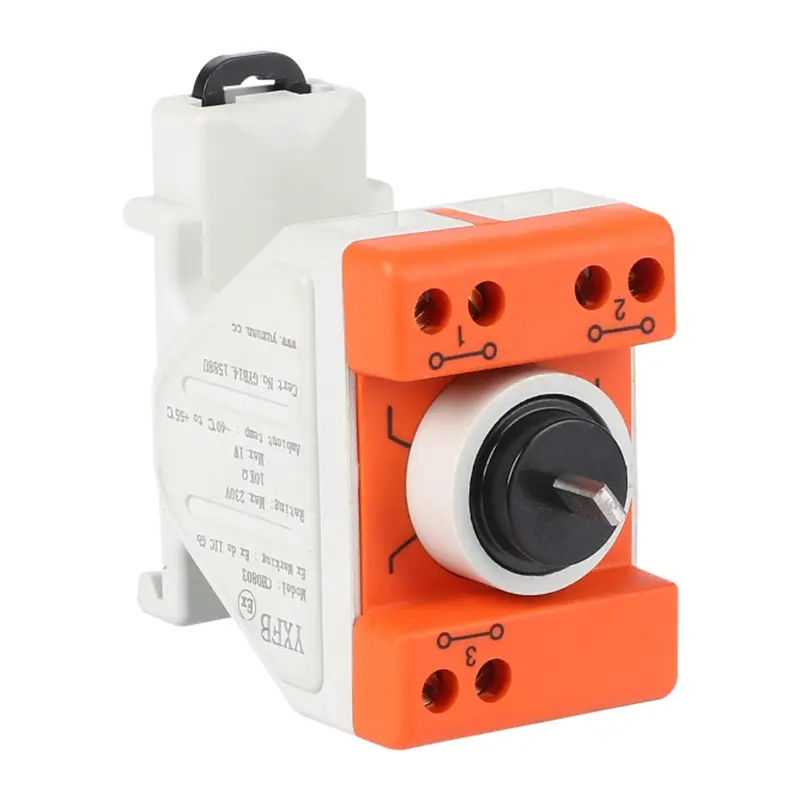
Why does the right Explosion Proof Potentiometer lower my total cost instead of raising it?
I’ve seen unsealed shafts seize after thermal cycling, thin housings crack when a line valve hammers, and drift force nuisance shutdowns. A better device pays for itself because:
- It holds calibration, so I stop chasing “ghost” faults in PLC logs.
- It resists heat, cold, and vibration, so maintenance windows stay predictable.
- It arrives with clear documentation, so commissioning doesn’t stall at the last meter.
What should I prioritize when the site is Zone 1 versus Zone 2?
In Zone 1 gas groups and similar high-risk locations, I usually favor a wire-wound design because the robust track and generous creepage paths tolerate abuse and make certification straightforward. For lighter-duty areas, conductive-plastic or cermet cores can trim size and torque without sacrificing stability. I still check shaft seals, bearing choice, and enclosure joints before I sign off on any Explosion Proof Potentiometer.
Here’s how I translate that into a quick selection on real projects.
| Hazard level and job | Preferred core type | Why I pick it | Key spec cues I verify | Service notes I keep in mind |
|---|---|---|---|---|
| Zone 1 mixers, compressors, pump skids | Wire-wound | High energy tolerance, clear thermal headroom, proven ignition protection geometry | Temperature class fit, enclosure joint length, shaft seal design, linearity ≤ ±1% | Accepts heavier knob torque; slightly larger footprint worth the margin |
| Zone 2 valve panels, HMIs, positioning dials | Conductive plastic | Smooth feel, long life, compact body for dense panels | Ingress rating, wiper life cycles, tempco, repeatability | Great where duty is frequent but shock is modest |
| Instrumentation trim in harsh ambient | Cermet | Stable over temperature, good for fine adjustment | Thermal drift, resolution, vibration endurance | Use when precise set-point is the priority |
How do I know the device is built to survive before the first shipment?
Our shop backs every unit with a traceable ID, so when I scan the code I can pull its lot data, test records, and drawings. The design work sits on a double-digit stack of explosion-protection patents, which shows in the way joints, seals, and tracks are arranged. Before it leaves, a unit completes thermal cycling at both extremes, vibration endurance, and an explosion-containment verification aligned to the relevant national standard. That’s how I decide a Explosion Proof Potentiometer is more than a catalog picture.
Where does service make a bigger difference than unit price?
- Real-time help: I get round-the-clock technical support, so commissioning questions don’t wait for Monday.
- Model matching: Share shaft style, panel depth, and ambient profile; I receive a short list of suitable models instead of a 200-page PDF.
- After-sales response: If something slips, I expect a maintenance response inside two days, not two weeks.
That level of support matters more when the part is an Explosion Proof Potentiometer sitting at the heart of a safety-critical loop.
Which specifications should I read first on the datasheet?
- Marking and protection concept matching your local code and gas group.
- Operating temperature window that actually matches your worst ambient plus self-heating.
- Linearity and repeatability so the set-point stays where I leave it.
- Ingress protection and sealing for dust, oil mist, and washdowns.
- Mechanical life and torque so operators get a smooth feel without premature wear.
When those five line up, the Explosion Proof Potentiometer tends to disappear into the panel in the best possible way.
Can I customize without risking re-approval or delay?
Within the certified envelope, I regularly tailor shaft geometry, stop angles, resistance values, and terminals. Our R&D group helps tweak the structure to keep ignition protection intact while hitting the adjustment accuracy I need. The result is a Explosion Proof Potentiometer that fits the job instead of forcing the job to fit the part.
What buying checklist keeps my project on schedule?
- Confirm Zone rating, gas group, and temperature class for the installation.
- Choose core type based on risk and duty cycle; wire-wound for Zone 1 heavy service is my default starting point.
- Lock mechanical details early: shaft type, bushing length, knob style, and panel depth.
- Request traceability and test summaries with the quote; verify certification scope.
- Align service expectations: 24×7 support channel and a two-day maintenance response target.
Follow that list and your Explosion Proof Potentiometer stops being a risk item and becomes one less thing to worry about.
Would you like help picking a part that matches your site?
If you’re weighing options for an Explosion Proof Potentiometer in a high-risk Zone 1 area or just want a compact solution for a tight panel, tell me about your equipment and ambient conditions and I’ll suggest a short list with lead times. For drawings, samples, or a quick technical check, contact us and let’s get your specification finished today.