Window Coverings OEM: How Custom Manufacturing Elevates Your Brand
2026-11-03
In a market flooded with look-alike window treatments, standing out isn’t just about design—it’s about manufacturing. When every detail from the fabric weave to the control mechanism reflects your brand’s identity, you stop selling products and start building loyalty. ROLLERGY has spent years perfecting OEM custom window coverings that let brands own their space, not just rent it. Here’s how a true custom manufacturing partner can turn ordinary shades into a signature statement.
When Stock Blinds Send the Wrong Message About Your Brand
Stock blinds often whisper “temporary” the moment a client steps through the door. Crisp slats that never quite align, plastic wands that feel flimsy, a shade of greige chosen to match every office in the building—none of it says you paid attention. Your brand might promise precision or warmth, but the window coverings are telling a quieter, less flattering story about compromise and cost-cutting.
When every meeting room reads the same beige-on-beige, visitors learn to expect generic answers. Custom alternatives don't have to shout; even a subtle shift in texture, a matte finish, or a bolder edge can turn an afterthought into part of the narrative. The goal isn't to decorate. It's to make sure the room reinforces the same message your logo, website, and handshake already deliver.
Custom Manufacturing Is Not Just About Size—It’s About Identity
When a company decides to invest in custom manufacturing, the common assumption is that scale drives the decision—bigger runs, larger facilities, more output. But the real differentiator isn't volume; it's how the product becomes an extension of the brand itself. Custom work, at its best, captures the specific contours of a company's values, its operational rhythm, and the unspoken expectations of its end users. That's not a matter of size. It's a matter of character.
Consider two factories producing seemingly identical components. One runs a standard line, efficient and predictable. The other works with clients to tweak materials, tolerances, and finishes until the part behaves like a signature. The second factory isn't just supplying an item—it's co-authoring the client's identity in physical form. This shift from transactional supply to collaborative expression is what separates true custom manufacturing from mere made-to-order.
Identity-driven manufacturing also forces a different kind of conversation. Instead of asking "How many do you need?", the first question becomes "What should this feel like in the customer's hand?" That change in frame leads to decisions that don't scale linearly: a slight change in alloy, a non-standard thread pattern, a subtle logo placement that only repeat buyers notice. These choices won't make headlines in a production report, but they will make the product unmistakably yours.
The Downside of Generic Window Treatments Nobody Talks About
Most people assume that off-the-shelf window treatments are a safe, budget-friendly choice. What rarely gets mentioned is how much they quietly flatten a room’s personality. A stock roller shade in greige might technically block light, but it does nothing to echo the proportions of your windows or the way light moves across your walls at different hours.
There’s also the issue of fit. Generic sizes force you to accept gaps at the edges or awkward pooling at the sill, and those small imperfections add up to a room that feels unfinished no matter how carefully you style everything else. Because the hardware is standardized, you lose the chance to use trim, valances, or layered panels that would normally give windows a more considered look.
The hidden cost is patience. You end up replacing the cheap blinds sooner than you’d expect, either because the mechanism wears out or because you realize the space never felt quite right. That cycle of buying, discarding, and rebuying often costs more than a single custom decision made once.
How a Private Label OEM Partner Can Turn Fabric into a Signature Look
A private label OEM partner does more than stitch pieces together. They start by digging into the mood of your brand—whether that means sourcing a jersey with the right weight for a relaxed drape or matching a woven's texture to the edge you want on a collar. This early collaboration shapes fabric choices so the final garment doesn't just fit, it carries a recognizable feel from the first touch.
Once the base cloth is selected, the real transformation happens in the details. Custom dye lots can lock in a shade that's yours alone, while specialized finishes—enzyme washes, brushed surfaces, or water-repellent treatments—change how the fabric behaves and looks. Small-batch prototyping lets you test a garment's movement and wear before committing, so adjustments to seam lines or pocket placement happen without slowing down production.
The signature look comes through when every run stays consistent. A capable OEM partner manages sourcing and quality checks at each stage, from incoming fabric inspection to final pressing. That consistency is what lets a single style become the piece customers recognize on sight, without needing a logo to tell them who made it.
Designing Details That Make Customers Stop Scrolling
The details that make someone pause mid-scroll rarely come from a bigger hero image or a louder headline. They tend to sit in the small, easy-to-miss decisions: a button that presses down by just two pixels, a product photo with a shadow that matches the room's light source, or a line of microcopy that answers a question before it fully forms. These touches read as intentional rather than decorative, and that intent is what earns a second glance.
Another trick is to break visual rhythm without breaking trust. When every card, margin, and caption follows the same spacing, the eye learns to skip ahead. A deliberate interruption—an off-center testimonial, a divider that arrives a half-second later, a single word in an unexpected weight—can reset attention long enough for the actual message to land. It should feel like a pause in conversation, not a pop-up.
But not every detail deserves to stay. If a hover state takes too long to respond or a custom cursor forces people to relearn how to move, the detail becomes friction. The simplest test is to ask whether the choice makes the next step feel clearer or more enjoyable. If the answer is no, removing it usually does more for stopping power than adding another effect.
From Sample to Storefront: What a Real OEM Process Looks Like
Most people assume an OEM journey is just sending a photo and waiting for boxes to arrive. In reality, the gap between that first approved sample and a shelf-ready product is where brands either sink or build trust. A proper OEM partner doesn't just copy your spec—they pull it apart, question weak points in sewing, material sourcing, or packaging, and come back with suggestions you didn't know you needed. That back-and-forth isn't friction; it's the filter that separates a one-off batch from something you can restock without surprises.
From the sample to the actual storefront, every step shifts from "can we make this?" to "can we make this again, at scale, without losing what you approved?" Tooling may need adjustment after the first production run. Labels, barcodes, and inner cartons get locked only when the final prototype is signed off. A real OEM process involves multiple pre-production samples, not because anyone is stalling, but because small shifts in fabric tension, stitch density, or box dimensions change how the product survives transit and sits on a shelf. The storefront isn't the finish line—it's proof the whole chain held.
Where many brands get burned is assuming the sample is the product. A sample is a promise; the OEM's job is to make that promise repeatable. That means clear tolerance sheets, a defined inspection point before bulk packing, and a shared understanding of what "acceptable" means for minor variations. If your partner rushes from first sample to final shipment without structured checkpoints, you're not saving time—you're deferring problems to your customer's unboxing moment. The real OEM process looks less like a straight line and more like a controlled loop, where each loop tightens the gap between what you pictured in the beginning and what actually lands on the shelf.
FAQ
It means a manufacturer produces blinds, shades, or shutters to your specifications, often with your branding, so customers see your identity rather than a generic supplier's.
You can offer exclusive fabrics, hardware finishes, and valance styles that aren't available off the shelf, which gives interior designers a reason to specify your line.
Many partners now run flexible production cells that allow runs as low as 50 or 100 units, though material choices and component standardization play a bigger role in cost than order size.
Look for incoming fabric inspection, automated cutting tolerance checks, cycle testing on cordless lifts, and a documented final audit before cartoning.
Instead of building your own sewing and assembly lines, you tap into an existing production ecosystem, so prototypes can move to mass production in as little as six to eight weeks.
Yes, most established manufacturers accept customer-supplied materials or source to your exact specifications, though lead times and minimums may shift depending on supplier availability.
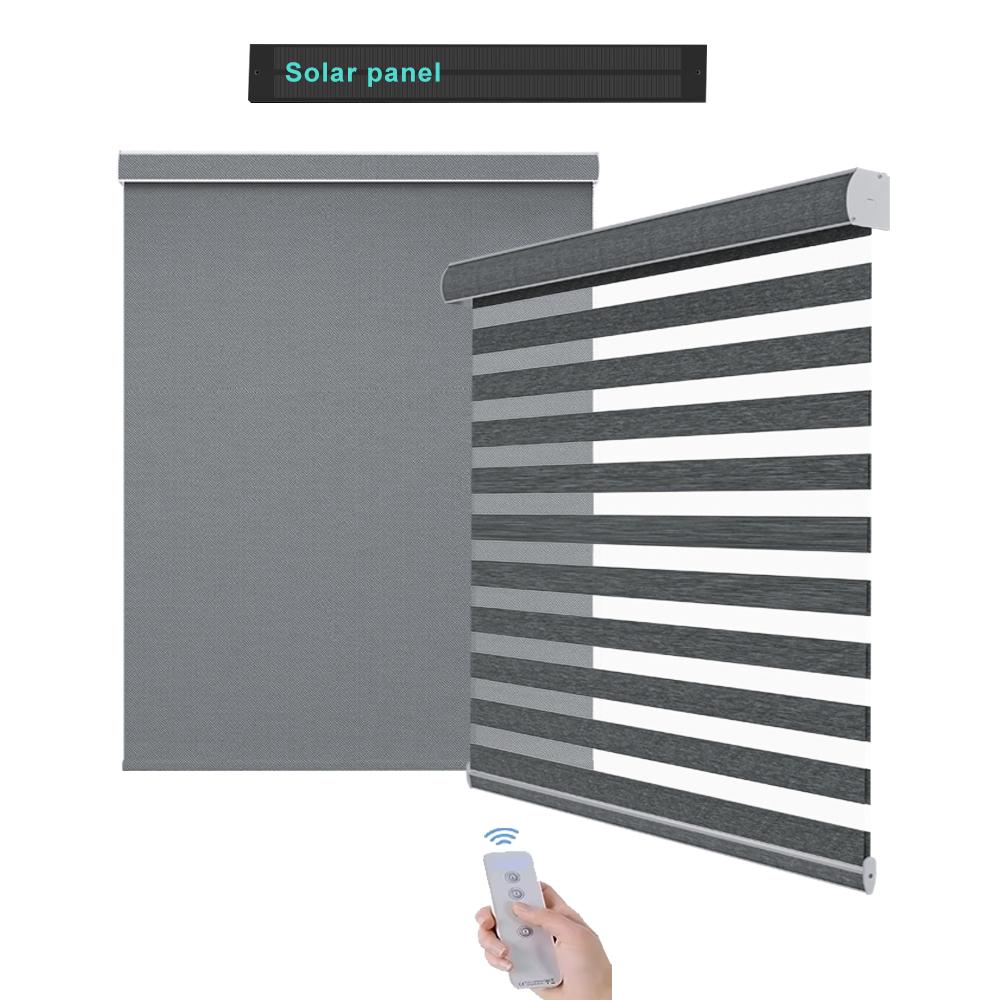
Roller shades, zebra blinds, cellular shades, Roman shades, and custom drapery hardware are all common, with motorization options increasingly part of the mix.
You can specify branded cartons, installation guides, and even woven labels on the product itself, so every unboxing reinforces who you are.
Conclusion
Stock blinds often carry a generic look that quietly undercuts the story your brand is trying to tell. When every window in a catalog or showroom has the same off-the-shelf trim and predictable hardware, customers notice—even if they can't name why. Custom manufacturing shifts the conversation from "what size do you need?" to "who are you as a brand?" It means choosing edge details, folds, and operating mechanisms that align with your design language. This is not simply about fitting unusual window dimensions; it is about creating a product that feels intentional from the first glance. The generic route also has hidden costs: missed chances for differentiation, compromised material pairings, and a flattening of your visual signature that no amount of staging can fix.
A private label OEM partner can turn an ordinary fabric into a signature look by giving you control over the details that make a customer pause. Think of the weight of a pull cord, the sheen of a lining, the exact placement of a seam—these micro decisions become your brand's fingerprint. In a real OEM process, you move from a single sample swatch to a store-ready product through iterative sampling, feedback on hand feel and drape, and final quality checks that match your tolerance for imperfection. The result is a window covering that doesn't just cover glass—it carries your identity into the room. When competitors are still selling anonymous panels, your custom line tells a story that stock products simply cannot.
Contact Us
Contact Person: Vivien Cheng
Email: [email protected]
Tel/WhatsApp: +86 13751758835
Website: https://www.rollergytech.com/