Top Warehouse Forklift Types to Boost Productivity
2026-10-25
Warehouse productivity hinges on one often-overlooked decision: which forklift you put on the floor. Pick a model that fights your aisle width or load profile, and every pick, put-away, and replenishment cycle slows to a crawl. Pick the right type, and throughput climbs without adding headcount. In this post, we’ll cut through the noise and walk through the top warehouse forklift types that actually deliver measurable gains—including durable options from HANGCHA that stand up to real shift work. Whether you're outfitting a new DC or replacing aging equipment, the right choice starts here.
Counterbalance Forklifts: The Dependable Backbone of Busy Docks
On a busy dock, counterbalance forklifts are the first machines to start and the last to shut down. Their straightforward design—a heavy cast iron counterweight at the rear offsetting the load up front—means no outriggers are needed, allowing them to drive directly up to a trailer or container edge. That may sound trivial, but when trucks are backed in three deep and every pallet counts, not having to fuss with stabilizing legs keeps the line moving.
These lifts earn their keep in tight turns and on uneven surfaces. Dock plates, expansion joints, sloped ramps—none of it throws off a well-maintained counterbalance unit. Operators rely on the three-point suspension and low center of gravity to handle loads that would make other equipment feel tippy. It is not flashy, just the predictable control you need at hour ten of a shift.
Battery or LPG, the real difference comes down to how a dock manages charging versus refueling. Electric models run quieter and cleaner, but they demand battery swap schedules. LPG units keep going with a quick tank change, which matters when a ship's turnaround window is tight. Either way, counterbalance trucks remain the go-to because they do not ask for much—just a clear path and a driver who knows the weight of what they are moving.
Reach Trucks That Turn Narrow Aisles into Extra Storage Space
The real advantage starts with the pantograph reach mechanism. Instead of driving into the rack, the forks extend forward while the truck itself stays in a compact footprint. This lets a facility shrink aisle widths to as little as eight feet and still handle standard 48-inch-deep pallets with confidence. When you combine that with double-deep racking, you create storage density that never existed before without expanding the building.
Modern reach trucks also reduce the stress of tight-quarter operation. Proportional hydraulic controls and well-placed cameras let operators place loads at top beam levels without guesswork. On a busy shift, that translates to fewer rack hits, less product damage, and a steadier pace through the shift. Electric steering and regenerative braking matter more in narrow aisles because every inch of drift costs time.
The payoff shows up in cold, hard numbers. A warehouse that reduces aisles from twelve feet to nine can often add a full row of racking, sometimes pushing pallet capacity up by twenty-five to thirty percent. But this only works when floors are smooth and racks are plumb. Before committing to narrow-aisle reach trucks, check your slab tolerance and rack installation quality, otherwise the promised storage gains disappear into constant corrections.
Electric Pallet Jacks for Short Runs That Add Up Fast
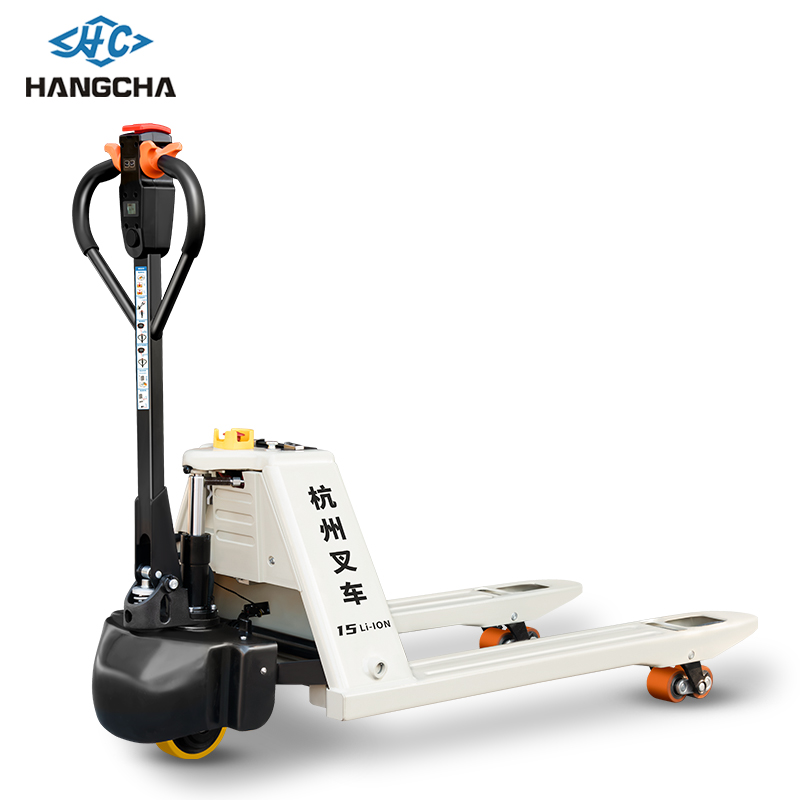
A worker shuttling between a staging lane and a trailer might only travel 80 feet per trip. It looks trivial on paper, but when that trip happens 150 times in a shift, the walking distance exceeds four miles—and every one of those miles involves twisting, stopping, and nudging a loaded pallet. Electric pallet jacks remove the physical toll from those repeated short cycles. The drive motor handles the push and pull while the operator simply steers and adjusts speed, which means less shoulder strain and fewer micro-pauses before the next move.
Over the course of a week, those saved seconds and reduced fatigue don't just show up as higher pick rates; they show up as fewer errors and fewer people rotating out early with sore backs. Many compact electric models fit easily into narrow cross-dock lanes or racking aisles where a sit-down forklift would be overkill. Quick acceleration with a low top speed suits stop-and-go work better than constant long-haul travel, and lithium-ion batteries keep the jack ready between breaks without the maintenance ritual of older lead-acid packs.
Order Pickers Built to Cut Walking Time and Keep Pickers Picking
Order pickers used to spend more than half their shift walking between storage locations, and that constant movement drained both energy and accuracy. The newer generation of picking equipment attacks this problem head-on by bringing items to the worker instead of sending the worker after items. Vertical lift modules, goods-to-person stations, and zone-routing carts all share the same goal: compress the distance between the picker and the next pick so that a step becomes a lean instead of a stroll across the warehouse floor.
Keeping pickers picking means eliminating the small pauses that add up—the scan that fails because the worker is out of breath, the wrong bin reached because fatigue set in, or the five-minute walk to the far corner for a single SKU. Designs now place frequently ordered items in dense, accessible clusters and use light-directed or voice-directed cues to guide the next grab without breaking rhythm. Some systems even adjust shelf heights dynamically so the current pick is always at waist level, removing the need to stoop or stretch.
When a distribution center swapped its traditional pick carts for a fleet of narrow-aisle order pickers with onboard batch picking and automated lift assistance, the average walk time per order dropped from nine minutes to under two. Pickers stayed on task longer because the equipment handled the vertical movement and route planning, leaving them to focus on grabbing and scanning. Turnover dropped as well—fewer miles on the pedometer meant fewer complaints about sore feet and dead time, and the pick rate per labor hour climbed enough to pay for the new machines inside a year.
Articulated Forklifts: Tight Corners, Heavy Loads, No Compromise
Most warehouse aisles force a choice: sacrifice lift capacity for maneuverability, or widen the racks and lose storage density. Articulated forklifts erase that trade-off. Their pivoting front mast lets the forks swing left or right up to 180 degrees while the chassis stays nearly stationary, so a 5,500-pound pallet can be placed into racking from an aisle barely wider than the machine itself. The result is not just tighter turns, but a different way of thinking about floor space.
On uneven dock plates or cracked concrete, the articulation joint does more than steer. It loads the two front wheels independently, which keeps all four tires grounded when a rigid truck would teeter or spin. Operators report fewer pallet drops and less product damage when handling tall, top-heavy loads in cold storage, where traction is unpredictable and a dropped pallet can mean a full shift lost to cleanup. That stability also translates into less operator fatigue: the mast movement, not the steering wheel, does the fine positioning.
Maintenance teams tend to appreciate the simpler drivetrain. Because the wheels do not scrub sideways during tight turns, tire wear drops noticeably compared to conventional counterbalance trucks doing the same work. And with fewer three-point turns at the end of every aisle, the hours add up as real productivity, not just a spec-sheet headline. The machines earn their place not by claiming to do everything, but by quietly removing the usual reasons to compromise.
Tow Tractors for Batch Movement Without Burning Operator Hours
Tow tractors change batch movement because they pull multiple carts in one pass instead of making separate trips with a single load. An operator can hitch five, ten, or even fifteen carts to a compact electric tractor and cover an entire production floor loop without stepping off the vehicle. That single-route approach removes the constant back-and-forth that burns hours on empty travel.
The savings show up in operator time and physical workload. Instead of walking miles between storage racks and assembly lines, one person stays seated and follows a predictable delivery schedule. Fewer steps and fewer mount-and-dismount cycles mean less fatigue, fewer slowdowns, and a crew that can sustain output across a full shift without extra bodies on the floor.
Modern tow tractors also make batch movement flexible enough for tight spaces. Adjustable speed limits, compact turning radii, and quick-release hitches let operators drop off or pick up carts at each station without shutting down the run. Those small time gains accumulate, freeing up hours that can be reassigned to picking, restocking, or quality checks rather than moving material one load at a time.
FAQ
Reach trucks, order pickers, and electric counterbalance units usually top the list. Reach trucks let you store pallets higher and in narrower aisles, which frees up floor space for faster movement. Order pickers cut travel time by bringing the operator right to the pick face. Electric counterbalance trucks eliminate exhaust delays and tend to have quicker acceleration for short shuttle runs.
Reach trucks use extending forks that slide under the load, so the mast doesn't have to move as far forward. This lets operators work in aisles as narrow as 8 to 10 feet, while a standard counterbalance needs 12 feet or more. The extra space can be converted into additional rack rows, which means more pallets stored per square foot and fewer trips to off-site overflow storage.
Pallet jacks shine when you're moving single pallets short distances across smooth floors, like from a staging area to a dock door or between packing stations. They're cheaper to run, need almost no training, and don't require the same clearance as a forklift. If your crew is constantly hopping on and off a counterbalance just to shuffle one pallet 50 feet, switching to electric pallet jacks often frees up the bigger trucks for actual stacking work.
Order pickers raise the operator along with the forks, which makes it much faster to grab individual items from high shelves. They're most effective in warehouses with a lot of split-case picking or slow-moving SKUs stored at height. One thing many managers overlook is fall protection and operator comfort: a full shift standing in a raised platform demands anti-fatigue mats and harness training, or you'll see mistakes and turnover climb.
For most indoor warehouses, yes. Electric models produce no exhaust, run quieter, and have fewer moving parts, which cuts downtime. But if your operation includes a lot of heavy outdoor loading on rough or wet ground, an internal combustion truck with pneumatic tires might still pull ahead. The key is matching the power source to your actual shift length: fast-charging lithium-ion batteries can eliminate the battery-swap bottleneck that older lead-acid setups caused.
Articulated forklifts have a pivoting mast or chassis that lets the forks turn sharply without moving the whole truck. This means they can work in aisles under 7 feet wide, similar to a reach truck, but they also often come with cushion or solid pneumatic tires and higher ground clearance for dock work. Instead of buying separate narrow-aisle trucks and outdoor counterbalance units, some warehouses use one articulated fleet double-shifting between both roles.
Stand-up models put the operator in a sideways stance with a small footprint, which makes them very quick to get on and off. That matters a lot in high-frequency loading tasks where the operator dismounts every few minutes. Sit-down trucks offer more comfort for long runs and heavier loads but slow down that mount-dismount cycle. If your crew averages more than 30 stops per hour, the stand-up design usually wins on total time saved.
Automated guided forklifts remove the human variability from repetitive horizontal moves. They don't take breaks, don't deviate from the optimized path, and can be scheduled to run during off-peak hours when labor is scarce. That said, they're not a drop-in replacement for every task; mixed pallet building or damaged-load handling still needs a human. The productivity gain comes from assigning robots to the boring, high-volume lane movements so skilled operators stay on value-added work.
Conclusion
Counterbalance forklifts anchor busy docks with raw lifting power, while reach trucks transform narrow aisles into profitable storage by stacking higher without widening lanes. Electric pallet jacks handle short, frequent runs that accumulate significant time savings, and order pickers slash walking distances so workers stay on task instead of roaming aisles.
Articulated forklifts master tight corners and heavy loads without sacrificing maneuverability, and tow tractors move batches of carts in one trip, sparing operators from repetitive, hour-draining shuttles. Together, these six warehouse workhorses cover every corner of material flow—from dock to rack to pick face—letting operations boost throughput, reduce labor waste, and keep productivity climbing even in constrained spaces.
Contact Us
Contact Person: Liuxue
Email: [email protected]
Tel/WhatsApp: +86-19084200370
Website: https://www.hf-ec.com/