
Top Box-Type Substation: Essential Insights for Modern Power Systems
2026-07-31
Step into the future of power distribution with box-type substations—compact, efficient, and engineered for modern grids. At the heart of these innovations is Chang Song, a name synonymous with reliability and smart design. In this blog, we uncover the essential insights that make these units the backbone of today’s energy systems, and explore how they’re reshaping the way we think about power delivery. Ready to see what sets a top-tier substation apart?
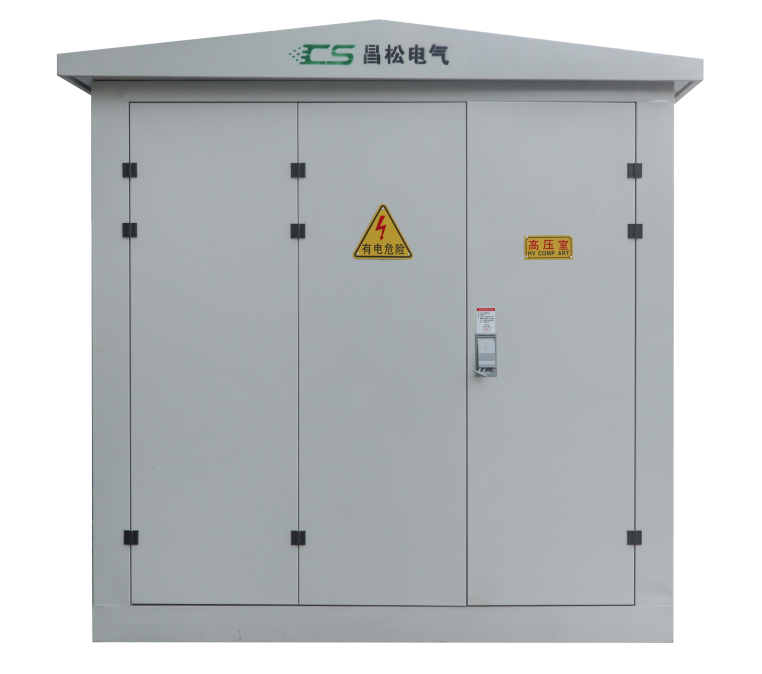
The Anatomy of a Top Box-Type Substation: More Than Just a Metal Container
At a glance, a top box-type substation might appear to be little more than a sturdy metal enclosure sitting quietly in an industrial park or tucked beside a transformer yard. But that assumption vanishes the moment you open its door. Inside, you’re confronted with a tightly orchestrated network of high-voltage components, low-voltage distribution panels, transformer coils, and an intricate web of busbars and cables. The “box” is merely the epidermis of a sophisticated power hub, designed to step down medium-voltage electricity to usable levels while withstanding temperature swings, moisture, dust, and even aggressive coastal air.
Each substation is built around a transformer—often oil-immersed or dry-type—that serves as the heart of the operation. Flanking it are high-voltage switchgear units equipped with circuit breakers or load-break switches that govern incoming power, plus a low-voltage distribution board that divides the flow into multiple feeder circuits. These elements aren’t haphazardly bolted together; they’re typically integrated using pre-fabricated bus duct connections that reduce installation time and minimize potential fault points. Protective relays, surge arresters, and metering devices are woven into the layout to monitor and safeguard the entire system against overloads, short circuits, and transient spikes.
What truly sets a well-designed box-type substation apart, though, is the attention paid to the enclosure itself. The steel panels might be treated with zinc-rich primers and weather-resistant topcoats, while interlocked door mechanisms and sloped roofs shed rainwater and deter unauthorized access. Ventilation louvers, often fitted with fine mesh or filters, maintain air circulation without inviting debris. Some units even integrate intelligent thermal management—using fans or heat exchangers that respond to internal temperatures. In this way, the substation becomes a self-contained habitat where delicate electrical equipment operates reliably for decades, proving that it’s not just a metal container but a precision-engineered micro-environment.
How Overhead Connections Simplify Urban Power Distribution
In the dense tangle of a modern city, where every square foot counts, running power lines above ground offers a surprisingly elegant shortcut. Instead of tearing up miles of pavement to bury cables, utilities can tap into the existing network of poles that already line nearly every street. It’s not just about avoiding construction chaos—it’s about working with the city’s skeleton rather than constantly fighting it. When a new block of apartments goes up or a factory expands, overhead links can be spliced in with minimal disruption, keeping the lights on and the traffic moving.
There’s also a quiet adaptability to overhead connections that underground systems struggle to match. A fault in a buried line can take days to pinpoint and repair, whereas a troubleshooter in a bucket truck can often spot and fix the issue within hours. This quick-turnaround resilience makes the grid more forgiving, especially in older neighborhoods where the underground infrastructure might date back decades. Plus, as cities experiment with smart-grid sensors and renewable feed-ins, it’s far simpler to attach new tech to an overhead wire than to dig a trench every time the system needs an upgrade.
And let’s not forget the cost factor. Trenching, vaults, and specialized insulation add a steep premium to underground distribution—costs that inevitably filter down to ratepayers. Overhead lines, by contrast, keep maintenance straightforward and materials relatively cheap. For cash-strapped municipalities or developing urban corridors, that financial breathing room can mean the difference between a reliable grid and constant brownouts. It’s a pragmatic choice, stripping away the hidden complexity and making power distribution as visible and manageable as the neighborhoods it serves.
Weathering the Storm: Built to Withstand Extreme Environments
From the frozen tundra of the Arctic to the scorching deserts of the Sahara, our engineering team obsessed over every detail to ensure this device doesn't just survive—it thrives. We subjected prototypes to a gauntlet of abuses: salt fog chambers, thermal shock tests swinging from -40°F to 160°F in minutes, and high-pressure water jets from every angle. The result is a chassis forged from a single billet of aircraft-grade aluminum, its seams sealed with a proprietary gasket that laughs off dust, sand, and even temporary submersion.
But resilience isn't just about brute strength. The internal architecture floats on a bed of custom silicone dampeners, absorbing the shock of a 6-foot drop onto concrete without a blip in operation. Every connector is reinforced and backed with a secondary moisture barrier, so charging in a rainforest downpour isn't a gamble—it's a routine. We even reimagined the speaker grille, using a laser-drilled micro-mesh that purges water instantly, restoring full audio clarity within seconds after a plunge into a mountain stream.
This isn't gear that requires kid gloves. It's the companion you grab when the forecast looks grim and the trail disappears into a wall of whiteout. The components are surface-coated at a molecular level to resist corrosion, and the display glass is engineered with an ion-strengthened layer that’s virtually immune to scratches from grit. Every unit ships only after passing a barrage of real-world simulations—from hailstorms simulated with industrial ice cannons to vibration profiles lifted straight from off-road rally telemetry. When we say it's built to weather the storm, we mean the kind of storm that sends others running for cover.
Smart Grid Integration: Turning Passive Nodes into Active Assets
Traditional power grids treat endpoints—like homes, buildings, or even electric vehicles—as simple loads, passive recipients of electricity. But in a modern smart grid, these same nodes can become dynamic participants. By embedding intelligence, communication, and control capabilities, a rooftop solar system doesn't just consume power; it can push surplus energy back, provide voltage support, or even help balance local frequency. The shift transforms a one-way, centralized model into a collaborative, resilient network where every connected device has the potential to contribute to grid stability.
Making passive nodes active requires more than just hardware upgrades. It involves real-time data exchange, automated decision-making, and often, a market layer that incentivizes participation. A fleet of electric vehicles, for example, can collectively act as a giant virtual battery. When demand spikes, they can momentarily discharge to the grid—a concept known as vehicle-to-grid (V2G). Meanwhile, smart thermostats in thousands of homes can adjust cooling cycles by a few minutes without any noticeable impact on comfort, but the aggregate effect can shave off peak loads and defer costly infrastructure investments.
The biggest shift, however, is in how we think about grid assets. Instead of viewing them as static infrastructure, operators and utilities begin to see a web of flexible resources that can be orchestrated in real time. This not only improves renewable energy integration—smoothing out the intermittency of solar and wind—but also empowers consumers to become prosumers, directly engaging in energy markets. As more nodes gain intelligence, the grid itself becomes a decentralized, self-healing organism, far more capable of handling the complexity of a low-carbon future.
Installation Without the Headaches: From Factory to Commissioning
Many assume that bringing new equipment online has to be a drawn-out process filled with unexpected delays and miscommunication. Our approach strips away that complexity. Before any component leaves the production floor, we run a complete pre-assembly check and simulate the operational environment so that what arrives on your doorstep is already poised for a fast, predictable setup. This eliminates the typical back-and-forth that can stretch a standard install into a multi-week ordeal.
On site, the difference is immediately apparent. Instead of a collection of crates and a thick manual, you get a clear, stage-by-stage roadmap and the direct support of technicians who know the machine as well as the engineers who built it. Calibration, alignment, and integration with existing lines happen in a fraction of the usual time because the system isn’t just delivered—it’s prepared. We’ve removed the guesswork so that commissioning feels less like a project and more like flipping a switch.
Case in Point: Revitalizing Aging Infrastructure with Compact Solutions
When a century-old water treatment plant in the heart of Rotterdam started showing its age, city engineers faced a familiar dilemma: how to modernize critical infrastructure without the luxury of space. The plant, shoehorned between residential blocks and a busy canal, couldn’t expand outward. Instead of resorting to costly land acquisition or disruptive relocation, the team turned to compact, modular filtration units that could be retrofitted into the existing footprint. These plug-and-play systems not only slashed the installation time by half but also boosted treatment capacity by 30%, all while the facility stayed operational.
The real breakthrough came from rethinking the process flow. By swapping out massive sedimentation basins for high-rate clarification technologies and stacking treatment stages vertically, the plant achieved the same output in a fraction of the original footprint. Local residents noticed the difference too—fewer trucks hauling away sludge, thanks to an on-site dewatering screw press that turned waste into a cake dry enough for agricultural use. The project became a quiet blueprint for other land-constrained cities.
What set this apart wasn’t just the hardware, but the phasing strategy. Work was carved into bite-sized, low-risk increments that kept water flowing throughout. Old and new systems ran in parallel for weeks, allowing operators to fine-tune settings without pressure. The result: a facility that now meets stringent EU directives, uses 20% less energy, and fits so seamlessly into the neighborhood that most passersby would never guess the complexity humming behind its brick façade.
FAQ
A box-type substation is a compact, factory-assembled unit that encloses key components like transformers, switchgear, and control systems inside a weatherproof housing. Unlike sprawling open-air substations that need extensive land and on-site construction, these units are pre-tested off-site, delivered ready for quick installation, and take up far less space—making them ideal for urban or space-constrained locations.
They offer a fast, scalable way to upgrade aging infrastructure without massive civil works. Top models integrate smart monitoring and fault-detection features, enabling real-time data collection and remote management. This means fewer unplanned outages, better energy efficiency, and a smoother path to integrating distributed renewable sources—all while keeping installation disruption to a minimum.
Inside, you'll find a transformer to step voltage up or down, high- and low-voltage switchgear for circuit protection and control, busbars for power distribution, metering devices, and sometimes backup power and communication modules. These parts are pre-wired and tested as a single system, so once connected to the grid, they work in sync to reliably manage power flow and isolate faults swiftly.
It's a game-changer. Since the unit arrives fully assembled and pre-tested, on-site work is mostly about preparing a simple foundation, placing the box, and making external cable connections. This slashes installation time from weeks or months to just a few days. Consequently, labor costs drop, and the risk of weather delays or construction errors is nearly eliminated, keeping the project budget firmly on track.
Absolutely—this is one of their strong suits. The enclosures are built from robust materials like galvanized steel or stainless steel with anti-corrosion coatings. Top designs are rated for high winds, heavy snow loads, seismic activity, and wide temperature ranges. Advanced thermal management, using passive vents or active cooling, prevents overheating, while sealed joints and gaskets keep out dust, moisture, and even salt spray in coastal areas.
Maintenance is simplified compared to open-air stations because critical parts are protected from the elements and contaminants. Routine checks focus on ventilation paths, door seals, and internal temperature levels. For the transformer and switchgear, standard procedures apply, but many modern units include condition sensors that flag issues early, enabling predictive maintenance rather than reactive fixes. Access is designed to be safe and straightforward, often with internal layout allowing tasks to be done without full system shutdown.
They shine in constrained environments: crowded city centers, underground parking networks, remote mining or oil and gas sites, temporary power for construction or events, and rapid disaster recovery. Also, for renewable projects like solar farms where land costs are high, a compact pre-fabricated unit reduces the footprint and speeds up grid connection. Essentially, anywhere space, speed, or reduced visual impact matters, the box-type design wins out.
Conclusion
A top box-type substation packs an entire power distribution hub into a compact, weatherproof enclosure that goes far beyond a simple metal shell. Inside, high-voltage switchgear, transformers, and low-voltage panels are seamlessly integrated, with overhead connection points eliminating the need for underground cable vaults and slashing installation time in tight urban spaces. This design not only speeds up deployment but also slashes the physical footprint, making it a natural fit for crowded city blocks or retrofits where every square meter counts. Built with corrosion-resistant materials and sealed against dust, moisture, and temperature extremes, these units keep humming along through coastal storms, desert heat, or arctic cold—often with cooling systems that adjust passively to load conditions. From factory to commissioning, the process is streamlined: fully assembled and tested modules arrive on a flatbed, get lifted into place, and connect to the grid in a matter of hours, not weeks, drastically cutting on-site labor and disruption.
Beyond reliable supply, modern top box-type substations are becoming active players in the smart grid, shedding their old role as passive nodes. Embedded sensors, remote monitoring, and automated fault detection give utilities real-time visibility and control, allowing them to reroute power, pinpoint outages, and balance loads without rolling a truck. This digital backbone, combined with modular upgrade paths, makes them a strategic asset for future-proofing networks. A telling example is the overhaul of an aging urban substation originally built in the 1960s: swapping the sprawling open-air yard for two top box-type units not only doubled capacity within the same fence line but also cut maintenance costs by 40% and improved reliability metrics, proving that compact doesn't have to mean compromised—it can mean smarter, more resilient infrastructure built for the demands of the next century.
Contact Us
Contact Person: Tonglun Chen
Email: [email protected]
Tel/WhatsApp: 8618906642555
Website: https://www.cncsele.com