
Stainless Steel Carriage Bolt Manufacturer Guide to Finding Trusted Suppliers
2026-11-02
Sourcing stainless steel carriage bolts isn't just about finding the lowest price—it's about finding a manufacturer that won't compromise on corrosion resistance or dimensional accuracy. This guide walks you through what to look for, from material certifications to real-world testing. Along the way, you'll see why Wanluo has become a go-to partner for buyers who need consistency at scale. Ready to stop second-guessing your supply chain?
What Separates Reliable Stainless Steel Carriage Bolt Makers from the Rest
Reliable stainless steel carriage bolt manufacturers distinguish themselves through a stubborn insistence on raw material traceability. You won't see vague terms like "300 series stainless" on their certifications. Instead, each lot maps back to a specific heat number, with mill test reports that show exact chromium, nickel, and molybdenum percentages. This matters because a single batch of substandard 304 or 316 can fail in marine environments months after installation, turning a minor hardware purchase into a costly recall. The best shops keep physical samples from every melt for five years or more, so if a railpost corrodes in a coastal project, they can pull the archived bar stock and verify whether it was a material defect or a misapplication.
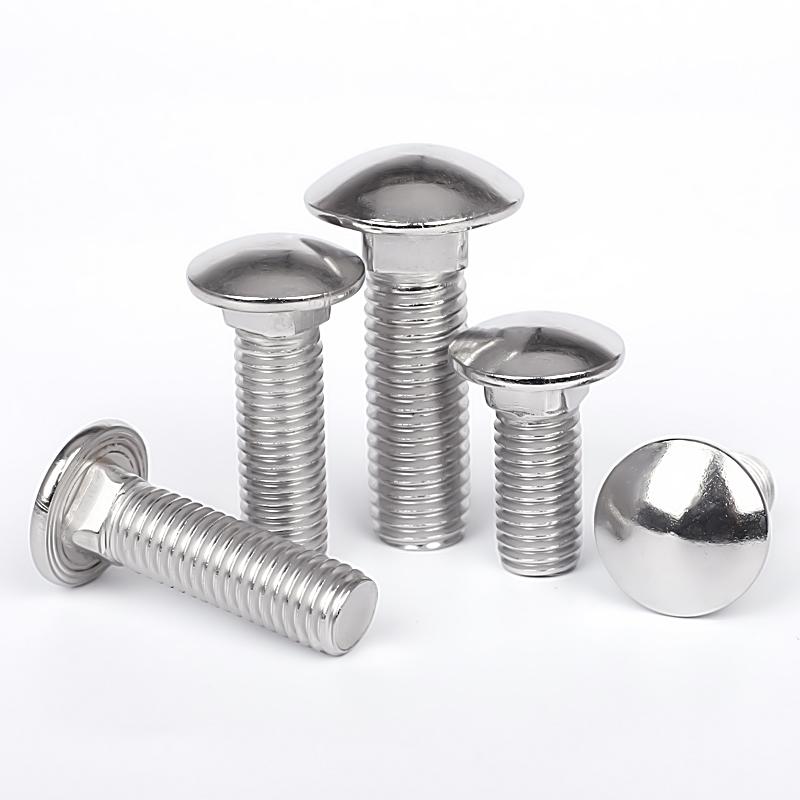
Another quiet marker is how they handle cold forming versus machining. Cheap operations often buy generic round bar and cut threads with dies, which leaves microscopic tears at the thread roots where chloride pitting begins. Top-tier carriage bolt makers invest in progressive cold headers that reshape the grain flow around the square neck and the dome head. That flow continuity gives the bolt a fatigue life you won't find in machined versions, and it shows up in salt-spray tests that run past a thousand hours without red rust. You can see the difference under a microscope, but more practically, you'll notice their bolts never snap when you torque a nut onto a slightly misaligned bracket.
Finally, reliable producers treat passivation as a controlled chemical process, not a quick acid dip. They validate each passivation bath with copper sulfate testing, track temperature and immersion time, and often use citric acid rather than nitric to avoid intergranular attack on sensitized welds. Their finished bolts come out with that uniform matte gray that doesn't fingerprint or flash-rust within a week. More tellingly, they'll offer you the actual test reports for hydrogen embrittlement and bend testing, not just a generic certificate of conformance. When a manufacturer can hand you a stack of documents showing exactly how every lot was passivated, you're probably dealing with a shop that treats stainless steel as a specialty, not a sideline.
Reading Between the Lines of Material Certifications and Alloy Grades
A mill test report can look flawless at first glance, yet still conceal limitations that matter once the material hits the shop floor. Chemistry, mechanical properties, and heat treatment are usually listed in tidy rows, but the actual grade designation often carries assumptions about hardenability, weldability, or corrosion resistance that are not spelled out on the page. An alloy may meet the minimum tensile and yield values while behaving differently in a specific service environment, simply because the cert does not reveal the full range of acceptable composition or the effect of a secondary refining step.
One of the more overlooked details is the difference between a generic grade and a restricted chemistry version of that same grade. Two bars labeled 4140 can have meaningful differences in sulfur, phosphorus, or residual elements depending on the specification and the producing mill. The heat number becomes valuable here: it links the material to a specific ladle analysis and allows a careful reviewer to compare the reported values against the purchase order rather than the headline grade alone. Small deviations in trace elements can shift machining response, hardenability, or even long-term fatigue behavior.
Cross-referencing the cert with the actual drawing or code requirement also helps catch mismatches that are easy to miss. A plate certified to a structural standard may not automatically satisfy a pressure vessel clause, even if the grade name sounds familiar. The real skill lies in reading between the listed results and asking what was not tested or what the standard leaves open. In many cases, the most expensive failures start with a material certification that was accepted too quickly.
Shop Floor Clues That Reveal a Manufacturer's True Capability
Walk onto a shop floor and the first thing that hits you is order—or the lack of it. Machines that are regularly cleaned and positioned with clear access paths, tools shadow-boarded, and raw materials stored in labeled zones tell you the production team respects process discipline. It's not about being spotless; a factory that makes parts will have some grime. But when you see consistent floor markings, visual work instructions at each station, and no clutter around emergency exits, you're looking at a management system that actually works. These are the small signals that separate a facility that merely claims ISO compliance from one that lives it.
Watch how people move. In a capable plant, material flow follows a logical sequence, not a random maze of forklifts and hand carts. Operators rarely leave their stations to hunt for gauges or the next batch of raw material, because those items arrive just in time. If you see workers improvising with tape or propping open machine guards to speed things up, that's a clue that the documented process doesn't match reality. On the flip side, when a line stops and the team huddles around a quality issue rather than hiding it, you know problem-solving is part of the culture, not just a poster on the wall.
Pay attention to what is measured and displayed. Real-time defect boards, first-pass yield charts, and maintenance logs that have recent dates with actual initials—not just blank forms—are evidence of a living quality system. Check the calibration stickers on measuring equipment; if they're expired or missing, the "accurate" checks are likely theater. Also note how samples from each shift are retained and marked. When a manufacturer can show you a rejected part, explain exactly how it was caught, and walk you through the corrective action, that's a stronger capability signal than any glossy brochure.
The Customization Conversation Most Buyers Skip
Most buyers walk into a purchase focused on price, delivery speed, and the headline features they’ve already seen in a demo. What rarely comes up is the simple question: “Can this be adjusted to fit how we actually work?” Because the default version looks finished, people assume it’s the only version—then quietly build workarounds later.
A five-minute conversation about customization can surface options that never appear in a standard proposal. Some vendors can tweak module layouts, change reporting formats, or adjust onboarding steps without much effort. The key is asking early, while the vendor is still flexible and the implementation plan hasn’t hardened around assumptions.
Skip that conversation, and the real cost appears months down the line—extra manual steps, frustrated team members, or another tool switch nobody wanted. Asking what’s changeable before signing doesn’t make a buyer difficult; it just prevents a quiet mismatch from becoming an expensive one.
Quality Checks That Catch Defects Before They Reach Your Dock
Catching a defect at your receiving dock means the failure already happened—it’s just now sitting on your floor, eating up time and trust. The smarter approach is to move quality checks upstream, into the supplier’s workflow, long before containers are sealed. This means setting clear, measurable criteria for critical dimensions, materials, and functional tests, then verifying them at defined stages: first article inspection, in-process random sampling, and a pre-shipment audit that actually mirrors how your team will use the product on day one. When checks are tied to real failure modes—not just a generic checklist—you stop defects at the point where they’re cheapest to fix.
One practical lever is to stop relying on end-of-line inspection as your only safety net. Instead, work with suppliers to build process controls that flag drift early. For example, if a metal bracket tends to warp during cooling, check the temperature and cycle time at the press, not just the finished bracket’s flatness. If a fabric’s color shifts after washing, test a sample from each dye lot before cutting. This shifts the conversation from “did we catch the bad ones” to “how do we prevent bad ones from being made,” which is far more reliable when you can’t be on the factory floor every day.
Finally, make your quality data work harder. Instead of just recording pass/fail, capture why a defect happened and how it correlates with specific batches, operators, or raw material lots. Share that pattern back with the supplier in a way that encourages joint problem-solving, not finger-pointing. Over time, you’ll see fewer surprises at the dock, less time spent reworking or returning goods, and a supply chain that actually gets quieter as you scale—because the checks are designed to prevent defects from shipping, not just to document them after the fact.
Building a Supply Relationship That Survives Demand Spikes
Demand spikes test supplier relationships in ways that steady-state purchasing never will. If your only lever has been price, you'll likely end up at the back of the queue when capacity tightens. Suppliers who prioritize you during a surge are usually the ones you've invested in during normal periods—sharing rolling forecasts, giving early visibility into promotions or product launches, and not grinding down every purchase order to the last cent. That reciprocity builds a sense of mutual obligation that no formal SLA can fully replace.
Contractual flexibility matters as much as goodwill. Instead of fixed monthly volumes, agree on a range with tiered pricing or reserve a portion of your supplier's capacity in advance. During a spike, you can invoke that reserved capacity without triggering a renegotiation. Pair this with a clear escalation path: name the person on each side who can make fast decisions about expediting orders, accepting partial shipments, or switching to alternative packaging. When a spike hits, decision speed often determines whether you get the stock or your competitor does.
After the spike passes, don't go quiet. Pay promptly, acknowledge the extra effort, and share what you learned about demand patterns. That post-spike debrief is where the relationship actually strengthens. Suppliers remember who was reasonable when the pressure was on—and who wasn't. Over time, they'll start offering early warnings about material shortages or suggesting ways to build safety stock without wrecking your cash flow. That's the kind of partnership that survives the next spike without drama.
FAQ
Look at their material certifications, production capacity, and whether they can provide test reports for each batch. A trustworthy supplier usually shares mill certificates and allows third-party inspection before shipment.
Ask for a PMI test or spectro analysis report. You can also request samples and run your own salt spray test or use a magnet as a rough check, though some stainless grades are slightly magnetic.
Most buyers reference ASTM A193, ASTM A320, or DIN 603 depending on the region. Clarify the exact grade—like 304 or 316—and ask for documentation showing compliance with that standard.
It varies by diameter and length, but many manufacturers accept 5,000 to 10,000 pieces for standard sizes. For special head markings or non-standard threads, the MOQ can rise to 20,000 or more.
Request their in-process inspection checklist and final random sampling plan. A reliable factory will measure thread tolerance, head dimensions, and surface finish at multiple production stages, not only at the end.
For standard sizes in 304 stainless, 20 to 35 days is common. If you need 316 material or custom packaging, plan for 35 to 50 days. Always confirm whether the lead time includes ocean freight to your port.
Yes, most established suppliers offer custom stamping on the head and poly bags or cartons with your label. Provide clear artwork early and request pre-production samples so there are no surprises during final inspection.
Vague answers about material grade, refusal to share mill certificates, unrealistically low prices for 316 stainless, and pushy demands for full payment before production are common warning signs. Take time to visit the factory or hire an inspection service.
Conclusion
Finding a stainless steel carriage bolt manufacturer you can actually rely on starts with looking past the polished sales pitch. The best suppliers don't just claim quality—they prove it through material certifications that match the exact alloy grade you need, whether that's 304, 316, or a specialized duplex for corrosive environments. Walk their shop floor if you can: you'll quickly see whether their tooling is maintained, their tolerances are tight, and their workforce understands the difference between a cosmetic finish and a structural one. Many buyers skip the customization conversation, but that's where real partnerships begin. A manufacturer willing to discuss head dimensions, thread length, or even a unique drive style is far more likely to accommodate your future design changes than one pushing only stock items.
Equally important is how a supplier handles quality before your order ships. Ask about in-process checks, not just final inspection—are they testing hardness, verifying thread pitch, and checking for surface contamination on every batch? And don't ignore the human side: a manufacturer that communicates honestly about lead times, holds safety stock, and has a plan for raw material shortages will save you from painful delays when demand spikes. Building that kind of relationship takes time, but it means you'll never be left guessing whether your carriage bolts will arrive on spec and on schedule. Trust is earned through transparency, not fancy brochures.
Contact Us
Contact Person: Shane
Email: [email protected]
Tel/WhatsApp: 8613357785029
Website: https://www.wanluohardware.com