
RFID Warehouse Management: Brand Selection Guide for Modern Supply Chains
2026-10-16
RFID warehouse management isn't just an upgrade—it's the difference between a supply chain that reacts and one that leads. Yet, with a flood of hardware and tags claiming superiority, choosing the right brand can feel like scanning through static. A mismatched system means dead zones, misreads, and inventory drift that erodes trust. This guide cuts through the noise, focusing on what actually matters: read range, durability, integration ease, and vendor support. Whether you're retrofitting a small depot or orchestrating multi-site logistics, the right RFID partner turns raw data into operational clarity. That's where OSRFID enters—not as another option, but as a benchmark for modern warehouse reality. Here's how to evaluate brands like a pro, not a purchaser.
Where Warehouse RFID Projects Go Wrong Before a Single Tag Is Printed
Most warehouse teams assume the biggest RFID risks involve tag placement or reader range, but the real failures start much earlier. Before anyone unboxes a printer, projects collapse because stakeholders never defined what “success” actually means for daily operations. Is the goal to cut cycle count time, reduce mis-shipments, or track returnable containers? Without a narrow, measurable objective, the pilot phase drifts into testing every possible use case, and no one can agree on whether the system ever worked. Budgets get consumed by endless setup tweaks, and six months later the RFID initiative is quietly shelved as “not ready for our environment.”
Another silent killer is neglecting the backend data flow. RFID generates thousands of reads per minute, but many warehouses still try to shoehorn that stream into an old WMS built for manual barcode scans. The result is either ignored duplicate reads, crashed batch jobs, or motion events that mean nothing to the inventory ledger. If your receiving dock has no clear rule for when a tagged pallet becomes “putaway ready,” the tags are just expensive stickers. The physical layer gets blamed, but the truth is that no one mapped how RFID events would trigger existing workflows—so the system produces noise instead of decisions.
Finally, warehouse operators routinely overlook the harsh reality of their own aisles and dock doors before a single tag is printed. Metal racks, liquid-filled containers, and overhead conveyors all distort RF signals in ways a lab demo never shows. Teams that skip a proper site survey—walking the floor with sample tags and test readers—end up discovering dead zones after full deployment. By then, the budget for extra readers or antenna tuning is gone, and workers lose faith in the technology. The project didn’t fail because RFID is unreliable; it failed because no one bothered to listen to the physical space first.
Reader Sensitivity and Tag Pricing: What Separates Enterprise Brands from Toys
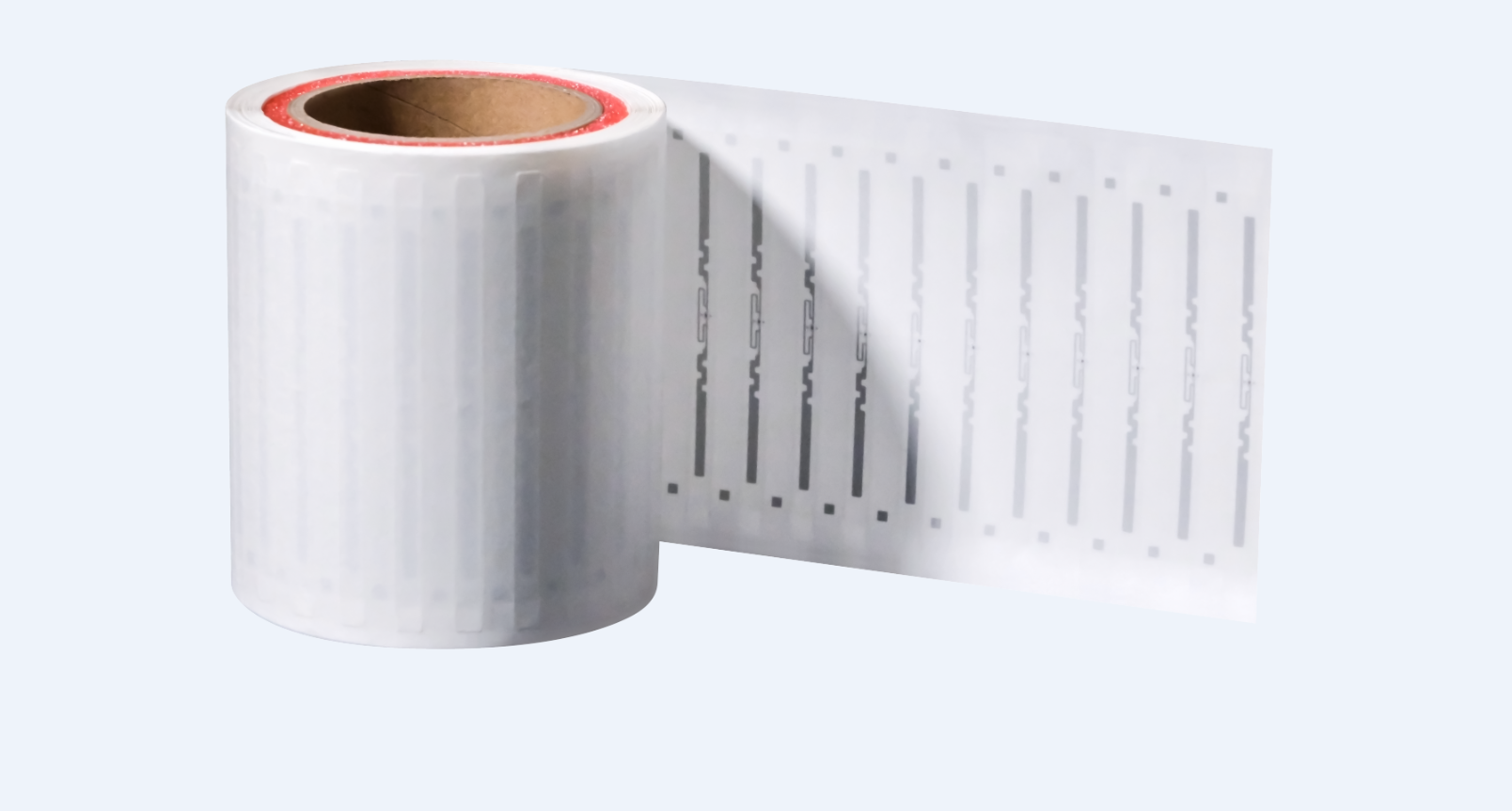
When you put an enterprise reader next to a toy-grade scanner, the difference in sensitivity becomes obvious within seconds. Enterprise hardware is built to catch weak, oddly oriented, or densely packed tags from several meters away, even through packaging and mild interference. Toy readers often struggle with a single tag held at arm's length, let alone a pallet stacked with mixed items. That gap isn't accidental; it comes from better antennas, tighter filtering, and firmware tuned over years of real-world deployments. A cheap reader might read a tag in a quiet lab, but it falls apart in a busy warehouse or retail floor.
Tag pricing tells a parallel story. Toy tags are usually sold in bulk for pennies, but their performance matches the price: inconsistent encoding, fragile inlays, and a narrow frequency response that drifts with temperature or bending. Enterprise tags cost more because they're engineered for predictable reads across large populations, with stronger adhesives, better chip sensitivity, and uniform RF characteristics. The difference may seem trivial on a spec sheet, but in practice, a batch of cheap tags can cause read rates to drop from 99% to 80% overnight. That 19% gap means missed inventory counts and angry customers.
So when companies compare enterprise brands to toys, the real question isn't whether the hardware can read a tag at all; it's whether it can do it reliably in the environments where money is lost or made. Reader sensitivity and tag pricing are two sides of the same cost-of-ownership equation. Cutting corners on either one might save a few dollars up front, but it quietly shifts the burden to labor, error handling, and system downtime. Enterprise brands charge more because they've already paid for those failures in their R&D. Toy products pass them on to you.
ERP Integration That Doesn't Require a Six-Month Consulting Retainer
Most ERP integration projects get stuck before they even start. Vendors quote a lengthy discovery phase, then a six-month timeline, and before you know it you're paying for a team of consultants who spend more time in status meetings than building connections. That model made sense when every interface was custom-coded, but it's no longer the only option.
Today's integration platforms lean on pre-built connectors and API-first architectures to collapse the timeline. Instead of mapping fields by hand, you select your ERP from a dropdown, authenticate, and let the system pull standard objects and endpoints automatically. For common scenarios like syncing orders, invoices, or inventory, a working pipeline can be live in days—not months. The heavy lifting is handled by the tool, not by a billable consultant.
That doesn't mean every edge case disappears. But it does mean the default path no longer involves a retainer. Your internal ops or finance team can own the integration, tweak mappings as needed, and push changes without scheduling another vendor call. The goal isn't to eliminate human expertise—it's to stop paying for it to reinvent the wheel.
Scaling from Pilot Bay to Full Warehouse Without Halting Pick Lines
Moving from a pilot bay to the entire facility usually means pausing live operations, but that doesn't have to be the case. The trick is to treat the pilot as a template rather than a test cell. Once the first zone proves stable, we mirror its layout logic, charging patterns, and traffic rules across adjacent aisles during slow hours or scheduled maintenance windows. Pickers keep working because each new zone is brought online only after its physical markers, network handoffs, and safety interlocks pass a short shadow-mode check.
Instead of a cutover weekend, the rollout follows the natural flow of inventory. Fast movers stay in the pilot bay until the next three zones pass a 72-hour stability threshold. Slow movers are migrated first, creating empty slots in the original bay that act as buffers. By the time the final zone flips, the system has already handled real order volume in mixed mode for weeks, so there's no single moment where the pick line stops and restarts.
Vendor Support Response Times When Your Peak Season Depends on It
In peak season, vendor support response times are a direct line to revenue. A delay that feels minor in February can cost real orders in November. The vendors who understand this don't just promise quick replies; they staff for the spike, set clear internal SLAs, and give you a direct escalation path before you need it.
Request written response-time commitments tied to your peak calendar, not just a generic 24-hour window. Ask how they handle after-hours issues during your busiest weeks, whether they add temporary support staff, and what happens if a critical system goes down on a Friday evening. The answers reveal whether they treat your season as an event or an afterthought.
Test them before you sign. Send a non-urgent but specific question on a Tuesday afternoon and another on a Saturday morning during a known busy period. Compare response times and the quality of the answers. Vendors who slow down just when you need them fastest will show that pattern early. Choose the one whose response rhythm matches the pace of your peak.
Open APIs, Data Ownership, and the Hidden Cost of Proprietary Clouds
When a cloud provider hands you an open API, it feels like liberation—until you try to leave. The interface may be standard, but the data flowing through it is often trapped by proprietary services, uneven egress fees, and undocumented quirks that only become visible once you attempt a migration. Openness at the surface doesn't guarantee portability underneath.
Data ownership is rarely a binary you can check off in a contract. It's a gradient shaped by where backups live, who controls encryption keys, and whether your query patterns are being logged as a training signal. Most teams don't notice the hidden cost until they're already locked into a particular vendor's convenience layer—by then, the switching cost is measured in engineering months, not dollars.
The real price of proprietary clouds isn't the monthly invoice. It's the quiet erosion of your ability to walk away. Open APIs give you a door, but if the exit route leads through a narrow tunnel of vendor-specific data formats and premium transfer fees, you're not really free—you're just renting a well-furnished cage.
FAQ
Look beyond read range specs. Ask for performance data in your specific environment—metal racks, liquid products, and fast-moving pallets degrade signals differently. Request a pilot kit with sample tags and fixed readers to measure edge-case reliability, not just lab results.
Pallets often need rugged on-metal tags with a larger footprint, cases work well with lower-cost inlays optimized for dense stacks, and item-level tagging requires thin, flexible labels that survive curved surfaces. The brand you choose should offer a clear portfolio with tested pairings for each level.
Usually yes, if the RFID middleware supports standard APIs like REST or MQTT and can publish tag reads to your WMS as inventory events. Avoid brands that lock you into a proprietary cloud dashboard and charge extra for basic integrations.
Common culprits are tag orientation, RF interference from metal shelving, and reader antenna placement. Strong vendors provide tuning tools, predictive site surveys, and automatic power adjustment, rather than treating the hardware as plug-and-play.
A single fixed portal with four antennas, reader, and installation typically ranges from $3,000 to $8,000, but ongoing costs vary widely based on tag consumption, software licensing, and support. Compare three-year total cost, not just hardware sticker price.
Confirm firmware update policies, spare reader availability, SLA for on-site repairs, and whether phone support includes actual engineers or only sales engineers. Ask for reference customers with similar warehouse layouts and volumes.
RAIN RFID (UHF Gen2) is the safe baseline for most warehouses. Watch for brands adopting GS1 Digital Link and improved battery-assisted passive tags for real-time sensor data, but avoid proprietary air protocols that limit future tag sourcing.
Plan for a four-to-six-week pilot with two or three dock doors and one stockroom zone, followed by a phased rollout over three to six months. Compress timelines only if the brand offers pre-configured portal kits and remote tuning support.
Conclusion
Most warehouse RFID initiatives collapse long before hardware ever reaches the dock. Teams rush into tag selection, print a few thousand labels, and then discover reader sensitivity can't handle dense racking or metal shelving. Enterprise-grade readers aren't just more expensive—they consistently pull clean reads in environments where cheaper 'toy' units drown in interference. The same logic applies to tags: a penny saved on inlay quality becomes a dollar lost in missed reads during peak throughput. Meanwhile, ERP integration should not demand a six-month consulting engagement. Brands worth considering offer native connectors or well-documented APIs that a competent internal IT team can wire up in days, not quarters.
Scaling from a pilot bay to a full warehouse is where many vendors quietly fail. The right brand lets you add reader portals and antenna zones without halting active pick lines; the wrong one forces a weekend shutdown for recalibration. Support responsiveness matters most when a failed reader stalls outbound shipments during your busiest week—enterprise vendors answer in hours, not days, and often ship replacement hardware before you finish writing the ticket. Finally, examine the hidden cost of proprietary clouds. Open APIs and clear data ownership mean your tag reads remain your asset, not a subscription hostage. If a vendor's platform can't export raw read events without a monthly fee, treat that as a long-term liability, not a minor inconvenience.
Contact Us
Contact Person: Esme Mo
Email: [email protected]
Tel/WhatsApp: 0086 191 2931 7837
Website: https://www.osrfidglobal.com/