
Professional Steel Truss Welding Production Line: Essential Guide for Modern Manufacturers
2026-08-31
Steel truss welding is where precision meets punishment—one bad bead can ripple into structural failure, while a well-tuned line doubles output overnight. Yet most shops still patch together saws, jigs, and robots from different eras, hoping they'll cooperate. This guide cuts through the noise and lays out what a modern professional steel truss welding production line actually needs: smart material flow, repeatable clamping, and weld data you can trust. We'll also show how YI ZHOU TECHNOLOGY packages those capabilities into systems that grow with your orders, not against them. Read on if you're ready to stop babysitting welds and start commanding a line.
Mapping the Flow From Raw Steel to Finished Truss
Raw steel arrives at a fabrication facility as coils, plates, or structural sections, and each form sets a different starting point for the journey toward a finished truss. The first mapped stage usually involves straightening, cutting to length, and punching or drilling holes for later connections. Tagging each batch at this point creates a thread that can be followed through every downstream operation, so a single truss component never loses its identity.
Mapping the flow between stations often uncovers friction that spreadsheets miss. A cutting line may feed two welding cells at different rates, causing stacks of half-finished chords to sit idle. By walking the actual floor path and timing transfers, teams can move drilling next to assembly or switch to smaller transfer carts, keeping material moving instead of waiting.
Near the end of the line, trusses are assembled, dimensionally checked, and coated. This is where the map pays off: if a chord shows a weld defect, the recorded flow points back to the exact steel heat and operator shift. Such traceability turns a static drawing into a working tool for reducing rework and meeting delivery dates.
Why Automated Welding Cells Now Outperform Manual Booths
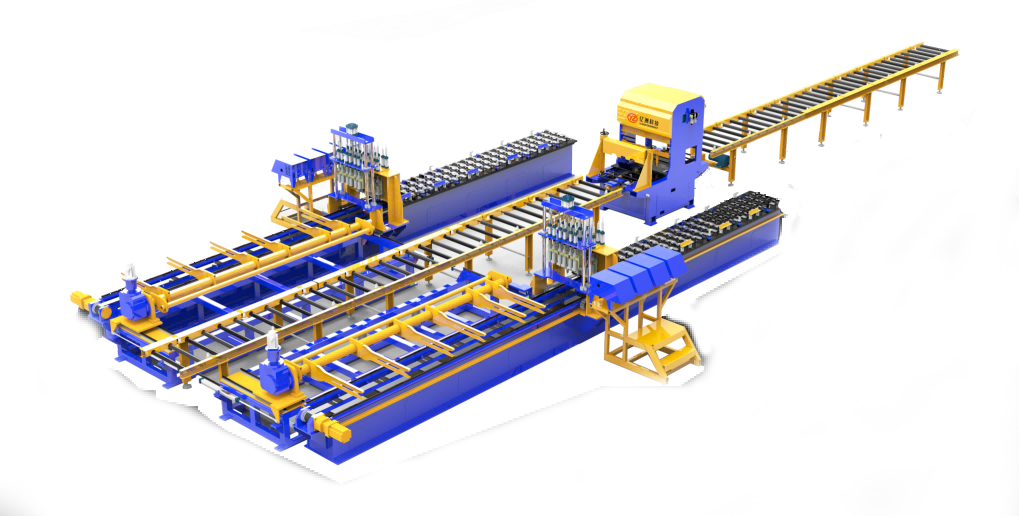
Walk into a busy fab shop and the difference is immediate. Manual welding booths still rely on a steady hand, good eyesight, and the kind of focus that fades after hour four. Automated cells don't get tired or distracted. A robotic arm holds the same travel speed, stick-out, and torch angle on the thousandth part as it did on the first. That repeatability alone has flipped the ROI conversation: shops once bought cells for huge production runs, but now even mid-size batches justify the switch because rework and scrap rates drop fast enough to cover the payments.
There's also the labor math. Fewer young welders are entering the trade, and the ones already in it are commanding higher wages while still walking away from repetitive, fume-heavy work. An automated cell changes the job from "stand in a booth and weld all day" to "load parts and monitor a process." That makes it easier to keep skilled people on payroll and easier to train new operators. Meanwhile, modern cells use seam tracking and adaptive fill to handle gaps and fit-up variations that used to require human judgment. They adjust in real time rather than stopping for rework or scrapping an assembly.
Safety and data push the gap even wider. Enclosed cells pull weld fumes away from workers and keep eyes off the arc, cutting long-term health risks and short-term injury reports. On top of that, every weld can be logged: current, voltage, wire feed, travel speed, even torch position. If a batch fails downstream, the cell's records show exactly what happened, which beats trying to figure out which shift, which welder, or which setting drifted. Manual booths still have their place for one-off repairs and awkward field work, but for production welding, the automated cell now wins on speed, quality, and cost per good part.
Jig and Fixture Design That Cuts Setup Time in Half
The core of cutting setup time is not just building any fixture, but designing one that removes every unnecessary move the operator makes. Map out the current routine: each clamp location, each alignment check, each tool reach. Then eliminate steps that add no value. Instead of four loose strap clamps, use a single cam-action clamp that pushes the part against fixed stops. Add diamond pins or offset dowels so the blank only fits one way, killing orientation mistakes before they happen.
A lot of wasted minutes come from re-indicating the fixture every time it goes back on the table. A subplate with pre-bored holes for common positions lets you swap entire setups with two bolts. Spring-loaded locating buttons that retract as the fixture lowers can hold repeatability within a few thousandths without sweeping an indicator. For part families that share a hole pattern, leave a master plate bolted to the table and mount individual fixture bodies to it. What used to take half an hour of tramming now takes five minutes.
The human side matters just as much as the metal. Color-code clamp handles in the order they should be tightened, engrave torque values directly on the fixture, and keep setup tools on a shadow board attached to the cart. A good fixture makes the right setup the easiest option. When an operator can load, clamp, and hit cycle start without walking to the toolbox, setup time drops on its own. After a few weeks, ask the floor team what still annoys them—moving a handle ten degrees or shortening a stud can shave seconds that add up fast.
Common Bottlenecks in Truss Lines and How to Avoid Them
In most truss plants, the saw and assembly stations drift out of sync because cutting times vary with chord sizes and web angles. When the saw waits on layout marks or a missing plate list, downstream crews idle. One practical fix is to cut and bundle by truss, not by member type, and stage a rolling buffer of two or three complete trusses ahead of the table. This absorbs small delays without turning the floor into a storage yard.
Another common choke point is the finish station, where crews often stop to hand-stack plates, search for piggybacks, or re-square a truss that shifted during pressing. Setting up a simple inspection gauge at the press exit and pre-kitting connectors in labeled bins before the run can remove most of that fumbling. It also helps to assign one person to float between pressing and stacking, so the press operator never breaks rhythm for material handling.
Inspection Stations That Keep Weld Quality Consistent
Most weld defects don't announce themselves right away. That's why inspection stations aren't just checkpoints—they're where a shop catches porosity, undercut, and misalignment before those flaws travel downstream. A well-placed station uses a mix of visual checks, ultrasonic thickness gauges, and occasionally dye penetrant on critical joints, so no single failure mode gets a free pass.
The real difference comes from tying inspection data back to the weld procedure. Operators at these stations compare bead profile against the WPS, monitor fit-up gaps with simple go/no-go tools, and flag any torch angle or travel speed drift that might not show up on a macro etch until it's too late. That loop—measure, record, adjust—keeps repeatability from becoming guesswork.
Consistency also means the station itself stays calibrated. Weekly checks on measuring instruments, clean lighting over the inspection table, and a clear reject/rework bin keep the process honest. When every weld that leaves the cell has passed through the same set of eyes and gauges, the customer stops asking for extra documentation.
Energy and Consumable Costs You Can Control Today
Our monthly electric bill dropped by nearly a fifth after we stopped treating every machine as if it needed to run at full readiness all day. Idle equipment, especially older CNC and hydraulic units, still draws a surprising amount of power. We started shutting down compressors during lunch breaks and turning off task lighting in areas where no one was working. Those small changes added up faster than expected.
Consumables are easier to ignore because individual purchases look cheap. But when you track gloves, cutting fluid, filters, and shop towels as a single category, the waste becomes obvious. We now keep a simple log near each station and only restock what actually gets used. The result is less clutter, fewer emergency orders, and a much clearer picture of true operating cost.
FAQ
The main difference is repeatability. A professional line integrates fixturing, clamping, and welding heads that move along programmed paths, so each truss comes out with the same geometry. You also get data logging for weld parameters, which helps trace quality issues back to a specific batch or shift. Manual welding can produce good results, but it depends too much on operator skill and fatigue.
Look at your rework rate and labor hours per truss. If you're spending more than 15% of labor time on rework or fitting corrections, an automated line usually pays for itself within 18 to 24 months. The real savings come from cutting out the non-value-added time: grinding mismatched joints, re-clamping, and waiting for inspectors. Throughput typically rises 40-60% with the same floor space.
Pay attention to the welding power source, the linear rails, and the clamping system. Cheaper lines use plastic or aluminum clamps that lose rigidity after a few thousand cycles. Look for hardened steel clamping points and a gantry that can maintain +/- 0.5 mm positioning tolerance over years of use. Also, ask about the controller: it should let you store at least 50 truss recipes and adjust weld speed, voltage, and wire feed independently.
Yes, but only if the line has modular fixturing or servo-driven adjustable stops. Fixed jigs are fine for high-volume, single-profile production, but most job shops need to switch between profiles within 20 to 30 minutes. Look for a line where the chord and web locators move automatically from a stored program rather than requiring manual repositioning. That flexibility prevents the line from becoming a bottleneck when product mix changes.
Beyond basic voltage and current monitoring, good lines include arc tracking or seam tracking to correct for minor fit-up deviations. Some systems measure penetration with a post-weld camera or ultrasonic probe on a sample basis. In practice, you should set acceptance criteria like 'no undercut deeper than 0.5 mm' and 'weld throat at least 80% of nominal' and then verify those periodically rather than relying on visual inspection alone.
Sequence matters more than clamping force. Weld the web members from the center outward to let the truss 'grow' symmetrically, and avoid fully welding one side before tacking the opposite side. Some lines incorporate hydraulic pre-bowing to counteract expected shrinkage. If you're welding chord-to-web joints with fillet sizes above 6 mm, consider using a dual-torch setup that welds both sides simultaneously to balance heat input.
The most neglected areas are wire feed liners and contact tips. Replace contact tips every 8 to 10 hours of arc time, and blow out the liner with dry air at every shift change. Grease the gantry rails weekly, but use a light grease that won't trap grinding dust. Also, calibrate the torch angle and TCP (tool center point) monthly; a 2 degree drift can cause inconsistent throat sizes and undercut.
Conclusion
A modern steel truss welding line starts with raw section steel flowing through a sequence of cutting, fitting, and tacking stations before reaching the main welding cells. The shift from manual booths to automated cells isn't just about speed—it's about repeatability. Robotic torches hold consistent travel angles and stick-out lengths, eliminating the subtle variations that human welders introduce over an eight-hour shift. Pair that with jigs and fixtures designed around quick-release clamps and positive stops, and setup time drops dramatically. Instead of measuring and shimming every new truss configuration, operators simply swap a few locator pins and the cell is ready for the next batch. This combination of flow mapping and intelligent fixturing means a line can produce more trusses per shift without adding floor space.
Bottlenecks in truss lines rarely come from welding speed alone. They usually appear at the inspection station, where inconsistent weld profiles force rework, or at the material staging area, where poor inventory control starves the line. A dedicated inspection station with a simple go/no-go gauge for throat thickness and a visual weld profile comparator keeps quality issues from reaching the customer without slowing production. On the cost side, energy and consumables are often overlooked. Adjusting shielding gas flow rates to the minimum required, switching to larger wire spools to reduce changeover downtime, and scheduling preventive maintenance on power sources can cut operating costs by double-digit percentages. None of these actions require a major capital investment—just a willingness to measure current usage and enforce simple operating standards.
Contact Us
Contact Person: Sophia Jiang
Email: [email protected]
Tel/WhatsApp: +86 17367381818
Website: https://yzwelding.com/