
Package Printing Die Making Equipment Factory: Precision Tooling for Packaging Production
2026-11-02
Packaging has no room for error. A die that's off by a fraction of a millimeter can jam a production line or ruin an entire print run. That's where ADEWO comes in—a factory built around precision tooling for packaging production. In this post, we'll look at how the right die making equipment changes everything from die cutting to creasing.
From CAD File to Cutting Edge: How Dies Take Shape on the Factory Floor
A die begins as a digital ghost. In the engineering office, a designer pulls up a 3D model of a stamping or forming die, checking draft angles, trim lines, and punch clearances on a screen. That CAD file is more than geometry; it carries tolerances, surface finish notes, and often the entire manufacturing history of similar jobs. Once the design is signed off, the file travels to the shop floor, where it becomes the single source of truth for every machine that will touch the steel.
On the floor, the transformation from file to physical tool is rarely a straight line. CNC machining centers rough out the die blocks from billets of tool steel, following toolpaths generated directly from the CAD model. But after roughing, the die often goes to a wire EDM or a jig grinder for the fine details that a rotating cutter cannot reach. Here, the machinist may adjust the program on the fly, tweaking spark gaps or grinding wheel offsets based on in-process measurements. The CAD file is not a rigid script; it is a starting point that experienced hands refine.
Testing closes the loop. A newly machined die is set into a tryout press, and the first parts are run. Inspection points are compared back to the CAD model, not just for dimensions but for springback, thinning, and surface blemishes. Adjustments get made—a die section is hand-polished, a punch is shimmed, a trim steel is repositioned. Those changes are then captured back into the CAD file, so the next die benefits from what the floor learned. In that back-and-forth, the abstract data of the design and the concrete reality of the tool gradually merge, until the die finally produces parts that match the original intent.
Steel Grades and Surface Treatments: The Chemistry Behind Durable Die Blades
The lifespan of a die blade rarely hinges on a single decision. It emerges from the interplay between the alloy's crystalline structure and the final microns of its treated surface. Tool steels like D2 or M2 gain their hardness through martensite formation during heat treatment, but the real secret lies in how carbide distribution resists micro-chipping under repetitive shear loads. A blade made from A2, for instance, balances toughness and wear resistance differently than one from CPM-10V, where powder metallurgy creates finer, more uniform vanadium carbides. Choosing the wrong grade for a high-impact cutting line means accepting premature edge rounding, no matter how well the machine is maintained.
Surface treatments then act as a chemical and physical modifier on top of that base. Nitriding, whether gas, plasma, or salt bath, diffuses nitrogen into the steel's outer layer, forming a hard compound zone that can exceed 70 HRC. This dramatically improves abrasion resistance but also introduces brittleness if the case depth is too great for the core's support. PVD coatings like titanium nitride or chromium nitride add a thin ceramic layer that reduces friction and resists adhesive wear from sticky materials. The real skill lies in matching the treatment to the failure mode: a blade that dulls from abrasive paper stock needs a different approach than one that chips from metal staples in recycled board.
The chemistry rarely stops at the factory door. In service, the blade's edge undergoes a continuous cycle of micro-welding and fracture, especially when cutting coated or laminated substrates. A properly selected steel grade with a tailored surface treatment interrupts this cycle, keeping the cutting edge sharper for longer without resorting to frequent re-grinding. Maintenance crews who understand the underlying chemistry can diagnose wear patterns—a polished, rounded edge points to abrasive wear, while a jagged, spalled edge suggests adhesive or fatigue failure—and adjust blade specifications or operating speeds accordingly. In the end, durable die blades are not just bought; they are engineered at the molecular level for the specific stresses they will face.
Micron-Level Precision: Why Every Tolerance Counts in Packaging Lines
On a modern packaging line, differences measured in microns decide whether a carton seals cleanly or jams the guides. A flap that sits 0.05 mm too tall scrapes against the folder belt, while a glue pattern shifted by half that amount leaves a corner that pops open in transit. Operators who treat tolerances as suggestions soon learn that downstream stations amplify every deviation.
The challenge grows with line speed. At 600 packs per minute, there is no window for manual correction; the forming mandrel, the side-seam heater, and the transfer lug must each respect a tolerance band narrower than a human hair. Tooling wear, temperature drift, and film thickness variation all push dimensions toward the edge of that band. Routine checks with a calibrated micrometer are not optional—they are the difference between running three shifts without a stop and chasing intermittent rejects for hours.
Precision at this scale is less about expensive machinery and more about consistent measurement habits. Reference masters checked before each production run, thermal stabilization after a line stop, and documented pass/fail limits for every critical dimension keep variation from becoming a hidden cost. When every micron has a consequence, the teams that respect the numbers are the ones that hit their throughput targets.
Custom Die Configurations for Cartons, Corrugated, and Specialty Substrates
Die configurations for folding carton work often lean on steel rule dies paired with precise creasing channels. Board caliper, flute direction, and the presence of recycled fiber all shift how a die needs to be built—too much crease pressure on lightweight SBS can crack the surface, while too little on double-wall corrugated leaves folds that won’t hold a clean edge. Custom setups typically include variable rule heights, relief areas around tight scores, and selective serration for tear strips or easy-open features.
For corrugated and specialty substrates, the tooling conversation changes. Rotary dies handle high-volume runs but demand tighter registration on glued lap lines and slot depths, especially when running E-flute microboard or high-performance liners. Specialty substrates—plastic corrugate, rigid vinyl, laminated boards—often require harder steel, non-stick coatings, or alternative crease profiles because the material resists compression differently than paperboard.
A well-configured die set also accounts for downstream handling. Stripping pins, blanking grids, and rubber placement need to be tuned so parts don’t jam in the die or tear at weak points. When the same product line uses multiple substrates, many converters opt for modular dies with interchangeable cutting and creasing inserts rather than forcing one configuration across every material.
Pre-Production Inspection Routines That Eliminate Costly Rework
Catching discrepancies before the line starts is cheaper than fixing them after units pile up. A pre-production inspection routine should begin with a physical check of incoming materials against the bill of materials and approved samples, not just a paper sign-off. Measuring critical dimensions on first-off parts, confirming torque settings, and verifying that jigs and fixtures still match the latest revision often reveal drift that would otherwise turn into a batch of rejects.
Another routine worth formalizing is a short walk-through of the first completed piece with the operator, quality lead, and line supervisor present. Instead of relying on a checklist that gets initialed without reading, have the operator demonstrate the setup and explain any non-standard adjustments. This catches misinterpretations of the drawing, worn tooling, or undocumented shortcuts before full production starts. When these checks are done consistently, rework drops not because more inspectors were added, but because the process is forced to prove itself before it's allowed to run.
Smart Automation in Die Making: Reducing Human Error, Boosting Repeatability
Ask any toolroom veteran what keeps them up at night and you'll likely hear about the scrapped cavity block that was milled 0.2 mm off because someone misread the setup sheet. Automation in die making doesn't replace the machinist's judgement; it removes the repetitive steps where fatigue and distraction creep in. By letting the CAM system drive tool changes, probe part alignment, and update offsets automatically, shops see far fewer of those late-night phone calls about a crashed electrode.
The bigger payoff, though, is repeatability across a multi-cavity die. Once a proven program is locked in, every insert comes off the machine with the same shut-off heights and vent depths, regardless of who ran the shift. That consistency matters more than raw speed when you're fitting a die set that has to open and close millions of times.
That said, automation works best when it's treated as a layer on top of solid process discipline. Clean tool data, verified cutting parameters, and realistic stock allowances still matter. Automating a sloppy process just makes scrap faster.
FAQ
It builds the precision machinery used to cut, crease, and shape printed packaging materials—think folding cartons, labels, and corrugated boards—so they can be formed into final containers.
Even a fraction of a millimeter off can cause misregistered prints, rough edges, or jammed converting lines. The equipment must hold tight tolerances to ensure each die matches the artwork and substrate exactly.
Yes. Many jobs involve non-standard carton designs or specialty materials. The engineering team typically works from CAD files to build machines that produce dies for complex contours, windows, or multi-up layouts.
It is used across food and beverage, pharmaceuticals, cosmetics, consumer electronics, and e-commerce. Any industry needing high-volume folding cartons or corrugated packaging depends on accurate die making.
It combines in-house machining, laser calibration, and test runs with sample materials. Each machine is verified against reference dies before shipping, and many facilities use statistical process control to track repeatability.
Look beyond the spec sheet—ask about support for retrofits, spare parts availability, training, and whether the supplier has experience with your specific board thickness or coating. A factory that asks detailed questions about your production line is often the better long-term partner.
Many factories offer both. Flatbed systems suit shorter runs and thicker materials, while rotary lines deliver high-speed output for long runs. Some modular machines can switch between the two with quick-change tooling.
Regular lubrication, checking cutting edges for wear, and recalibrating sensors are common. Many machines now have diagnostic software that alerts operators before a component drifts out of tolerance.
Conclusion
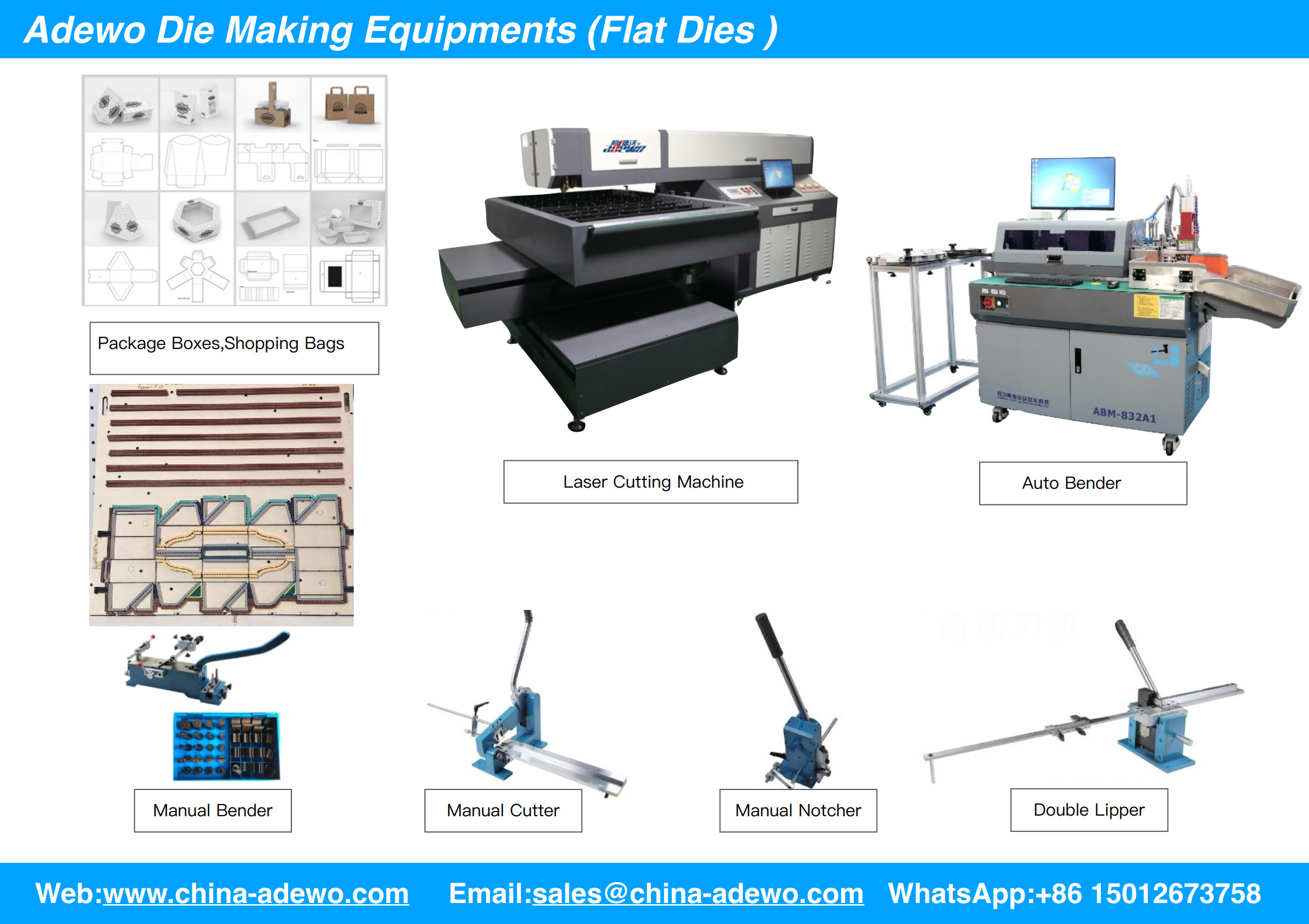
On the floor of a package printing die making equipment factory, precision tooling begins long before any blade touches paperboard. The journey from a CAD file to a finished cutting die involves converting digital layouts into physical forms through laser cutting, CNC bending, and hand finishing. Experienced technicians understand that each step builds on the last, so they inspect steel grades and surface treatments before shaping a single edge. High-carbon steel with hardened tips and low-friction coatings extends blade life, reduces dust buildup, and keeps cutting edges sharp through millions of impressions. Without careful material selection, even a perfectly machined die would dull quickly or snap under the stress of high-speed packaging lines.
Beyond material chemistry, micron-level tolerances separate reliable dies from costly rework. In carton, corrugated, and specialty substrate work, a deviation of just a few microns can create binding, tearing, or incomplete cuts. Custom die configurations address these demands by adjusting blade height, bevel angle, and creasing rule placement for each substrate type. Pre-production inspection routines—using optical comparators, coordinate measuring machines, and test cuts on actual stock—catch misalignments before a die reaches the customer. Meanwhile, smart automation increasingly handles repetitive tasks like rule bending and notching, reducing human error and boosting repeatability across large orders. Together, these practices create a factory culture where precision is not a final checkpoint but a continuous thread running from design to delivery.
Contact Us
Contact Person: KAELYN LEE
Email: [email protected]
Tel/WhatsApp: +86 15012673758
Website: https://www.china-adewo.com