
Oil-Immersed Transformer Powerful Manufacturer Provides Long-Lasting Performance
2026-08-26
Ask any plant engineer what keeps them up at night, and a failing oil-immersed transformer usually makes the list. The irony? Most failures aren't sudden—they're years of small compromises in design, materials, and cooling. Chang Song flips that script by treating every transformer as a 20-year commitment rather than a checkbox item. From winding precision to oil preservation, the focus stays on one thing: delivering the kind of durable, low-maintenance performance that quietly fades into the background of daily operations. Here's why that matters more than you might expect.
What Actually Happens Inside an Oil-Filled Tank at Full Load
At full load, the winding conductors and core laminations act as distributed heat sources, pushing oil temperatures well past the point where natural convection takes over. The hottest oil rises from the top of the core, while cooler oil sinks along the tank walls, creating a slow but steady circulation loop. That thermal head is what drives oil through the radiators without any pump, and the hottest spot usually sits a few centimeters below the top oil surface, inside the winding stack.
As the tank reaches thermal equilibrium, dissolved moisture and trace gases start to migrate out of the cellulose insulation and into the oil. You will often see a slight pressure increase inside the tank because the oil expands by roughly 0.07% per degree Celsius. With the conservator or pressure relief device doing its job, the tank breathes in and out rather than holding a fixed volume, but the gas space above the oil is where any free hydrogen or methane tends to collect first.
The real danger at full load is not the average oil temperature but the hottest-spot temperature in the winding. Even a small imbalance in cooling ducts or an overloaded tap changer can push that local hot spot beyond the thermal class of the paper insulation. Once the paper starts degrading, it releases furans and carbon oxides, and the oil's dielectric strength begins to drop in a way that no amount of external cooling can reverse.
How Vacuum Drying and Oil Filtration Push Insulation Life Beyond 30 Years
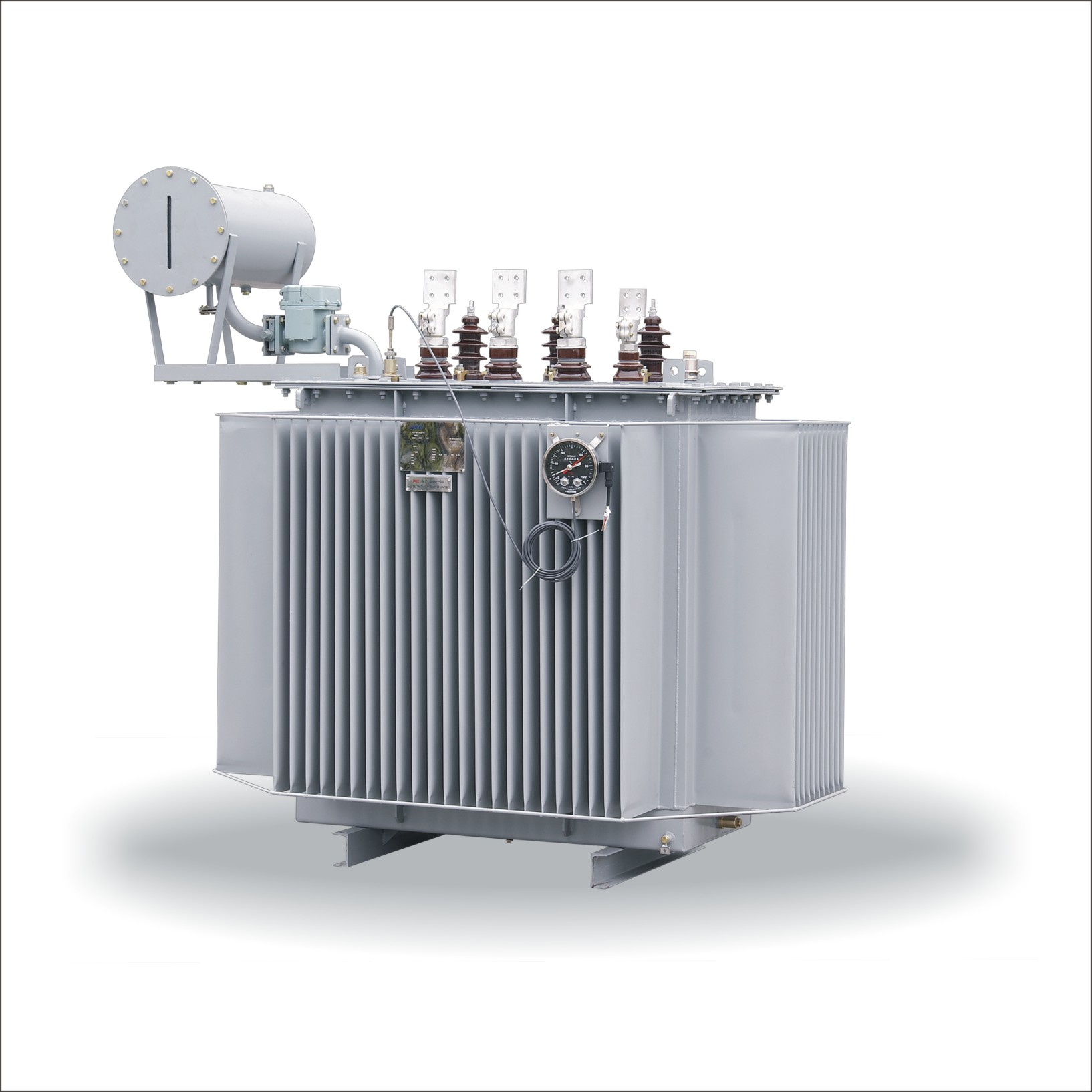
Paper insulation inside a transformer does not age gracefully on its own. It picks up moisture from the day it leaves the factory, and every degree of heat speeds up the chemical breakdown of its cellulose fibers. Vacuum drying interrupts this cycle early by placing the active part under low pressure and moderate heat, which forces water vapor out of the paper's microscopic pores without baking the fibers brittle. That single step can set the aging clock back by years before the unit is even filled with oil.
Oil filtration handles the slow, invisible contamination that builds up during operation. Fine particles from mechanical wear, dissolved water from breathing cycles, and acidic byproducts of oil oxidation all attack both the oil and the solid insulation. A well-maintained filtration loop removes these impurities down to levels that standard tests often miss, keeping the oil's breakdown voltage high and its viscosity stable. The immediate payoff is quieter thermal performance; the long-term payoff is that hot spots stay cooler and the paper is not repeatedly exposed to acidic moisture.
What makes the combination so powerful is that it addresses both sides of the aging equation at once: the initial dryness of the cellulose and the ongoing purity of the liquid that surrounds it. Transformers treated this way routinely cross the 30-year mark without major reclamation work, not because they were built differently, but because the usual aging accelerators were kept out of the picture from the start and then filtered away before they could accumulate.
The Factory Floor Where Every Transformer Survives a Simulated Fault Before Shipping
Inside the final test bay, every unit gets wired into a bank of fault simulators before it ever sees a crate. Engineers throw staged short circuits, voltage spikes, and even simulated lightning strikes at the windings while thermal cameras record hot spots in real time. A transformer only moves to the loading dock if its insulation holds and the internal temperatures stay within spec after each hit.
The floor itself runs on a strict pass-or-fail logic. One operator watches the oscilloscope for partial discharge signatures while another checks bushing connections under mechanical stress. Anything that drifts outside the tolerance band triggers an automatic teardown—no exceptions for rush orders or long weekends. That's why the test records here read more like a stress journal than a checklist.
This approach has made field failures from manufacturing defects nearly unheard of. Utilities receiving these units know the fault tolerance was proven under controlled abuse, not just calculated on paper. The simulated fault isn't a formality; it's the last and loudest argument against shipping anything less than battle-ready.
Why Galvanized Steel and Reinforced Seams Keep Moisture Out for Decades
Galvanized steel forms a protective zinc layer that sacrifices itself to corrosion before the underlying metal ever sees rust. In practice, that means water sitting on the surface or seeping into tiny scratches won't immediately compromise the structure. The zinc corrodes slowly and evenly, creating a barrier that can shrug off decades of rain, snow, and humidity without pitting or weakening the core material.
Reinforced seams take that protection a step further by eliminating the weakest points in any steel assembly. Instead of relying on a simple overlap or a thin bead of sealant, these seams are folded, interlocked, or double-stitched to create a mechanical lock against water ingress. Even when the building shifts slightly with temperature changes or wind load, the seam remains tight, preventing capillary action from drawing moisture inside.
Together, the galvanized coating and reinforced seam design work as a two-part defense. The zinc handles surface-level moisture and minor abrasions, while the reinforced seams stop water at the joints where leaks typically start. The result is a building envelope that stays dry not just for a few seasons, but for the entire expected lifespan of the structure—often 40 to 60 years with minimal maintenance.
Real-World Proof from 25 Years of Service in Coastal and Desert Substations
When equipment survives a quarter century in a coastal substation where salt spray coats every surface, the claim of corrosion resistance stops being a spec sheet bullet point. The combination of high humidity, chloride-laden winds, and daily thermal swings works relentlessly to degrade lesser materials. Across numerous installations along coastlines, the hardware has maintained structural integrity with only routine inspection and occasional cleaning—no hidden pitting, no seized fasteners, no premature replacement cycles.
Desert environments present a different but equally harsh test: abrasive sandstorms, extreme ultraviolet exposure, and temperature deltas that can exceed forty degrees Celsius within a single day. In these substations, components that look identical to their coastal counterparts have endured constant grit blasting without losing protective coatings or developing micro-cracks. Maintenance logs spanning decades show the same pattern—minimal intervention, predictable performance, and zero unplanned outages traceable to environmental degradation.
What makes this proof convincing is not a single heroic installation but the quiet accumulation of service records from more than two dozen sites. Engineers who have walked these substations year after year report that the aging process is linear and graceful: surface dulling, perhaps slight discoloration, but nothing that compromises function. That kind of track record cannot be simulated in an accelerated lab test. It only emerges from trusting the design in the real world, season after season, and finding it still doing its job when younger equipment elsewhere has already been replaced.
Matching kVA Ratings to Actual Load Patterns So You Don't Trade Lifespan for Capacity
Choosing a transformer based solely on nameplate kVA without looking at how the load actually behaves is like buying shoes two sizes too big because you might grow into them someday. You end up paying for unused capacity, and worse, you might be inviting overheating or insulation stress down the road. A transformer that regularly runs far below its rated kVA doesn't just waste energy in core losses; it can also mask real load growth until you're suddenly forced into an emergency replacement. Matching kVA to real load patterns means observing the daily, weekly, and seasonal swings in demand, not just the peak number on a spec sheet.
Real-world loads are rarely steady. A commercial kitchen might spike hard during lunch and dinner, then idle through the night. A water treatment plant's pumps cycle on and off depending on reservoir levels. If you size a transformer for the absolute maximum momentary draw, you'll carry a lot of dead weight most of the time. On the other hand, if you size only for average load, you'll push the unit into overload during those peaks, accelerating thermal aging of the insulation. The trick is to find the sweet spot where the transformer's thermal time constant absorbs short peaks without exceeding the rated hot-spot temperature, while still staying efficient during lighter periods.
A practical approach starts with logging actual current draw over at least a week, then calculating the root mean square (RMS) load rather than relying on peak or average values alone. Compare that RMS figure to the transformer's rated kVA and check how often the load exceeds 100% of rating, and for how long. Many modern transformers can handle short bursts of 110% to 120% load without immediate damage, but repeated overloads will shorten insulation life faster than a continuous full-load condition. By aligning the kVA rating with the true load profile, you keep the unit running within its thermal comfort zone, extending service life without paying for phantom capacity you'll never use.
FAQ
The design pairs a robust tank structure with high-grade electrical steel and carefully dried insulation paper. Once the core and coils are submerged in treated mineral oil, they are shielded from moisture and oxygen, which slows insulation aging. The manufacturer also adds a conservator with a silica gel breather so the oil can expand and contract without pulling in humid air, which keeps dielectric strength stable over many years.
Instead of relying on generic ratings, each unit is built around a calculated thermal envelope. Radiator banks are sized after reviewing the expected load cycle, so the oil stays within a safe temperature band during peaks. Repeated heat-run tests are performed at the factory, and the winding temperature rise is kept well below the standard limit to leave extra headroom for unexpectedly high demand.
Yes. The tank is treated with a multi-layer coating system that resists salt spray and condensation. All gaskets and bushings are specified for outdoor exposure, and the breathing system includes an oil seal in the conservator to block moisture entry. This combination prevents rust and water contamination, which are the two main causes of premature failure in humid regions.
The oil does more than cool; it also preserves. By filling every gap around the windings and leads, it eliminates hot spots and prevents partial discharge activity. At the same time, the oil blocks oxygen from reaching the cellulose insulation, so the paper retains its mechanical strength far longer than in dry-type designs. That translates into a lower failure rate after 20 or 30 years of service.
Every transformer undergoes a full routine test program: winding resistance, voltage ratio, no-load loss, load loss, insulation resistance, and induced overvoltage. Beyond that, the manufacturer runs a partial discharge test and a short-circuit withstand verification on prototypes and periodically on production units. Only after the oil has been processed, degassed, and tested for moisture content is the unit sealed and shipped.
The design is intended to be low-maintenance, but not zero-maintenance. For a typical installation, you would inspect the oil level and breather color every six months, take an oil sample for dissolved gas analysis once a year, and check bushing connections and gasket tightness during scheduled outages. If the oil shows rising acidity or moisture, a simple filtration or oil regeneration process restores it without replacing the whole unit.
Customization is standard. The manufacturer builds to IEC or IEEE specifications depending on the destination market, and can supply primary voltages from 6 kV up to 220 kV or higher. Taps on the HV winding allow for local voltage adjustment, and vector groups, impedance values, and cooling stages are all matched to the actual network conditions where the transformer will run.
The production line uses modular tank designs and pre-qualified accessory packages, so the engineering team does not start from a blank sheet for each order. Core cutting and coil winding are done in-house with automated checks at every stage. Because the manufacturing process is split into standardized blocks, the factory can assemble a customized transformer quickly without sacrificing the repeatability that long-term reliability depends on.
Conclusion
Inside a fully loaded oil-filled tank, the core and windings generate intense heat that must be managed by the insulating oil’s natural convection and the tank’s radiant surface. A well-built transformer uses precisely graded paper insulation and controlled oil flow so that hot spots never exceed the thermal class limits. Vacuum drying before oil filling removes every trace of moisture from the cellulose, while continuous oil filtration keeps the dielectric strength high and prevents sludge. This combination is what pushes insulation life beyond thirty years, even under daily cyclic loading. On the factory floor, each unit is subjected to a simulated fault—short-circuit, overvoltage, and thermal runaway—before it ships, so the transformer has already survived its worst-case scenario in the test bay rather than in your substation.
The tank itself is built from galvanized steel with reinforced, double-seamed welds and gasketed cable boxes that keep moisture out for decades, not years. Field evidence from coastal and desert substations over twenty-five years shows that these design choices prevent rust, salt creep, and sand ingress, maintaining a stable oil level and low dew point inside. Equally important is matching the kVA rating to your actual load pattern—oversizing wastes money and increases no-load losses, while undersizing forces the insulation to age faster. A powerful manufacturer provides long-lasting performance by combining heavy-gauge mechanical strength, rigorous testing, and realistic loading advice, so the transformer delivers full nameplate capacity for its entire service life without trading lifespan for capacity.
Contact Us
Contact Person: Tonglun Chen
Email: [email protected]
Tel/WhatsApp: 8618906642555
Website: https://www.cncsele.com