OEM Metal Barware Factory Insights for Crafting Custom Cocktail Tools That Impress
2026-11-02
Crafting a signature cocktail is only half the story—the tools you use can be just as unforgettable as the drink itself. From weighted mixing spoons to precision jiggers, custom metal barware has become the quiet hallmark of serious mixology programs. But finding a manufacturing partner who truly understands both form and function? That’s where most brands hit a wall. In this guide, we pull back the curtain on OEM metal barware production and show how working with a specialist like APEXAL can turn your bar tool ideas into tactile, bartender-approved reality.
How a Blank Steel Rod Becomes a Backbar Conversation Piece
It starts as an unremarkable length of cold-rolled steel, dull gray and indifferent, milled to a precise diameter but carrying none of the character it will eventually earn. The first cut matters less than the first heat: a bench torch brings the surface to a dull cherry, just enough to relax the grain, before the rod is hammered into a gentle taper. From there, the real work begins—twisting, forging, and grinding away material until the once-plain bar develops a spiral pattern that catches light like a slow-moving wave. No two ever come out the same, because the hand pressure and the cooling rate leave their own fingerprints in the metal.
Once shaped and quenched, the rod is buffed with progressively finer abrasives until it loses the machined look entirely. That's the point where it stops being a component and starts becoming an object someone wants to hang on a wall behind a liquor shelf. A dark chemical patina is worked into the grooves for depth, then the high spots are polished to a soft gleam. The result isn't flashy—it's the kind of texture that makes a person lean in, run a thumb over the ridges, and ask where it came from before they even think to ask what it cost.
Finally, brass end caps or a hand-rubbed oil finish roots it in the world of the bar, where it will sit among bottles and glassware. The rod's journey from stock metal to display piece mirrors what happens behind the counter on a busy night: ordinary ingredients, a little heat and friction, and enough attention to turn something raw into a reason to linger. It's not engineering—it's a small piece of theater that happens to be made of steel.
The Weight and Balance Secrets Behind a Bartender's Favorite Jigger
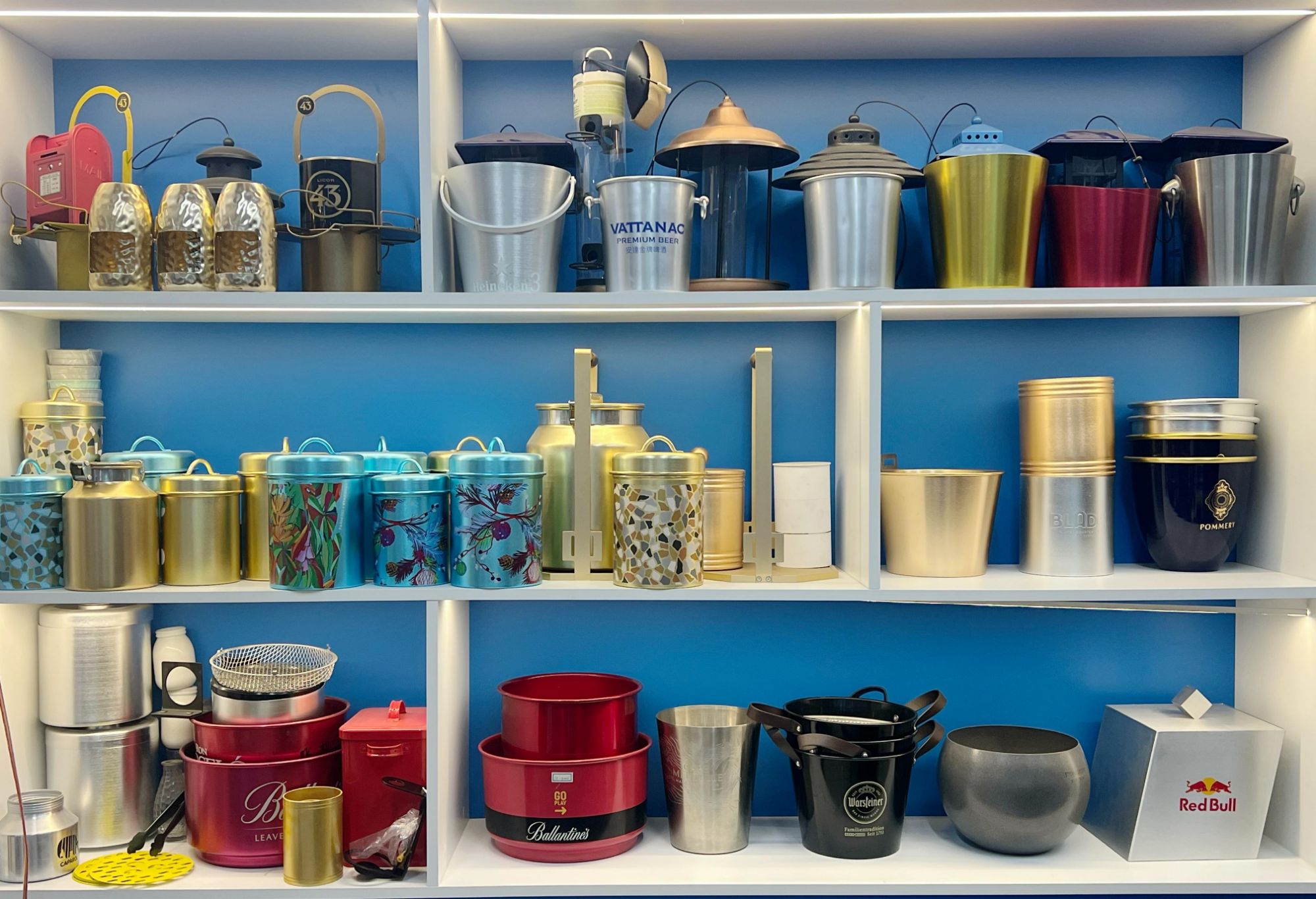
A jigger that earns a permanent spot behind the bar rarely gets chosen for its looks alone. Weight is the first thing a seasoned bartender notices. A solid, slightly heavier stainless steel jigger settles into the hand with a quiet confidence, giving each pour a sense of control that flimsy aluminum or plastic versions simply can't match. That heft isn't about showing off; it acts as a natural stabilizer, absorbing the small tremors and rushed movements of a busy shift so the liquid lands exactly where it should.
The real secret, though, lives in how the weight is distributed. A well-balanced jigger keeps its center of gravity close to the middle, regardless of which end you're using. This is why the best double-sided designs feel surprisingly neutral in the hand, whether you're measuring a half ounce or a full two ounces. Some makers achieve this by subtly thickening the waist or adjusting the curve between the two cones, ensuring the tool doesn't tilt forward when you switch ends mid-recipe. That balance becomes muscle memory after a few nights, letting a bartender flip the jigger without ever breaking rhythm.
There's also a personal threshold most bartenders discover over time. Too light, and every pour feels skittish, demanding constant correction. Too heavy, and your wrist pays the price by the end of a double shift. The favorite jigger usually sits right at that crossover point, heavy enough to glide through a pour with momentum you can trust, but light enough to disappear into your hand. It's rarely the most expensive tool on the rail, but it's the one that feels like an extension of your arm, balancing speed, accuracy, and comfort in a way no spec sheet can quantify.
Custom Finishes That Laugh Off Citrus, Ice, and Busy Shifts
A half-squeezed lime left near the service well, a rocks glass sweating onto the bartop, an ice bucket slid across the grain between tickets—none of it fazes a finish built for the pace of real shifts. Standard sealers start to cloud or etch after a few close calls with citrus and condensation. Our custom finishes are formulated to take those hits and keep their depth, so the surface doesn't turn into a map of every busy night.
The difference comes down to how the finish bonds with the material beneath it. Instead of sitting on top like a thin shield, it penetrates and cures into a dense layer that shrugs off acidic spills, thermal shock from chilled glassware, and the kind of scuffs that come from constant turnover. You get the look you want—matte, satin, or a deeper gloss—without sacrificing the toughness that actually matters when the bar rail is three deep.
For owners and managers, that means fewer touch-ups, less hovering over guests with a rag, and no awkward "please use a coaster" conversations. Ice can sit, citrus can drip, and the next shift can walk in without inheriting yesterday's stains. It's not just a finish; it's the quiet reason the place still looks sharp at last call.
Engraving, Plating, and the Small Touches Guests Actually Remember
Most hosts obsess over the showpiece details—the hand-engraved charger plates, the mirror-finish gold plating on the flatware. But ask anyone what they actually recall a week later and it’s rarely the shimmer. It’s the weight of a fork that felt just right, or the way the light caught a single etched initial on a butter knife. Engraving and plating set the stage, but they don’t write the memory; they just keep it from feeling generic.
Plating gets a lot of attention because it’s visual, and yes, a perfectly plated dish can stop a conversation. Yet the smallest touches tend to live longer in the mind: a slightly chilled salad plate, a napkin hemmed with a thread that matches the room’s trim, a tiny engraved logo on the base of a wine glass that you only notice when you tilt it for the last sip. Those are the details that make guests feel like someone thought about them, not just about the table setting.
The secret is that engraving and plating work best when they’re quiet. A heavily gilded rim can read as trying too hard, while a shallow hand-carved groove on a wooden serving board invites touch without announcing itself. If you want guests to remember the small things, stop aiming for wow. Aim for the pause—the second look, the question “where did you get this?” that comes halfway through the meal. That’s the real return on all the fine detail work.
From Your Logo File to a First Pour in Four Weeks
Most equipment suppliers treat your logo as an afterthought — a flat file slapped onto a stock template. We take a different route. Your artwork becomes the starting point for every design decision, from the curve of the drip tray to the placement of the pressure gauge. That means before a single screw is turned, we map out how the brand will live in three dimensions on the machine itself.
Four weeks is not a rushed compromise. It is the result of eliminating bottlenecks. We skip the endless back-and-forth by pulling your vector files directly into our CAD workflow, then confirming one physical prototype with you by day ten. While that sample travels to you, the chassis, boiler, and pump are already being staged. Nothing waits for a committee decision.
The result is a machine that looks like it grew out of your brand, not one that had a sticker applied. And because the entire process runs on a single timeline, your first pour happens before the novelty of the project has worn off. No six-month production cycles. No forgotten details. Just a clear, tight window from file to finished shot.
What Happens When Your Bar Tools Outperform the Cocktail Menu
A bartender with a perfectly weighted jigger, a shaker that seals without a fight, and a strainer that glides through ice can make even a forgettable menu feel like theater. You end up ordering a second round not for the drink, but to watch the tools work.
The bar becomes a stage where the equipment is the real star. Patrons lean in to ask where the mixing glass came from. The bartender’s technique draws more comments than the flavor notes. Loyalty forms around the ritual, not the recipe.
That imbalance can be a gift or a trap. If the menu eventually catches up, the bar feels complete. If not, the drinks start to feel like a letdown after the promise of the tools. Either way, the gear stops being just gear—it becomes the reason people stay.
FAQ
First check whether they actually specialize in metalwork rather than treating it as a side category. Ask about their in-house processes—cutting, stamping, welding, polishing, plating—so you know the finish quality won't be outsourced unpredictably. Also look for a factory that can show you physical samples or detailed video of similar tools, not just mockups. That gives you a realistic sense of weight, balance, and how the edges feel in hand.
304 and 316 stainless steel are the workhorses; 316 adds better corrosion resistance if your tools will be used around citrus and salt. Brass and copper look beautiful but need a protective lacquer or regular polishing to avoid tarnish, so they suit low-volume premium sets. Avoid cheap zinc alloy cores, they feel light and can degrade quickly. If you want a premium heft, ask for solid stainless construction instead of hollow handles.
Focus on the tactile details that mass-market brands skip—rounded edges on a strainer, a jigger with a slightly flared rim for clean pours, a muddler with a knurled grip that doesn't slip. Custom engraving depth matters too; shallow laser marks can feel cheap, while deep chemical etching or diamond drag gives texture. Weight distribution is another invisible quality cue: a bar spoon should balance near the bowl, not wobble at the handle.
Beyond logo engraving, you can usually adjust dimensions, surface finish (mirror, brushed, matte, antique), plating (gold, copper, black titanium), and even create hybrid designs combining wood, leather, or resin with metal. Some factories offer custom shape cutting for jiggers or strainer perforations, so your tool doesn’t look like a rebranded catalog item. Ask whether they can do gradient anodizing or two-tone finishes for a more distinctive look.
Most OEM factories set MOQs between 300 and 1,000 pieces per design, because setting up stamping dies, jigs, and polishing lines costs time and money. If you're testing the market, ask about low-volume pilot runs—some workshops will do 100–200 pieces with a higher per-unit price. The key is to confirm whether the factory owns its tooling or charges you separately for mold fees; that affects whether your design stays exclusive.
Watch for uneven polishing that leaves micro-scratches, especially on curved surfaces like jiggers and spoon bowls. Plating adhesion is another weak point—cheap plating flakes off after a few dozen washes, so request a salt-spray test or dishwasher simulation. Also check weld points on handles and hinges; a weak weld can snap under normal use. Ask the factory how they inspect burrs and sharp edges, since a poorly deburred rim can cut fingers or lips.
Work with a factory that's willing to sign an NDA and has a documented process for keeping client molds separate. You can also split production across two suppliers for different components—like one for metal heads, another for handles—though that adds logistics complexity. Registering your design in key markets gives legal backing, but practically, the best protection is a detail that's hard to replicate cheaply, such as a signature curve or a custom-weighted knob.
For a new design, typical lead time runs 45–75 days: about two weeks for sampling and tooling adjustments, three to four weeks for production, and one to two weeks for finishing, quality checks, and shipping. Rush orders are possible if the factory has spare capacity, but you'll likely pay 20–30% extra. Always clarify whether the quoted lead time starts from deposit payment or from final sample approval—that gap can add weeks if you're not careful.
Conclusion
At an OEM metal barware factory, the journey from a blank steel rod to a backbar conversation piece starts with obsessive attention to how a tool sits in the hand. Machinists turn, mill, and polish each rod until the diameter, taper, and edge radius feel instinctive. Then comes the invisible work: adjusting internal cavities and base thickness so a jigger pours with a weighted, almost magnetic pull toward the counter. Bartenders often can't name why a favorite jigger feels right, but it's almost always the same thing—balance that lets the wrist work without thinking. The finishes are equally deliberate. Custom PVD coatings, brushed textures, and matte blacks are tested against citrus acid, ice abrasion, and the chaos of a Saturday rush, not just a showroom shelf.
Small touches carry the real memory. Deep laser engraving that won't fade after a thousand dishwasher cycles, selective gold or copper plating on the lip where lips never touch but eyes always land—these details turn a tool into a signature. The factory's role is to make that signature fast and repeatable: a cleaned-up logo file can become a first run in about four weeks, with plating jigs and engraving fixtures built around your artwork. When the tools finally outperform the cocktail menu, the payoff is quiet but obvious: guests ask where the jigger came from, staff argue over who gets the weighted strainer, and the bar's identity no longer lives only in the drink list. It lives in the steel on the rail.
Contact Us
Contact Person: Milo
Email: [email protected]
Tel/WhatsApp: +86 18621923991
Website: https://www.dgbaide.com