
ODM 4 Chamber Laundry Pods: Why Multi-Compartment Design Changes Everything
2026-11-16
Laundry pods have looked the same for years—until now. The ODM 4 chamber design breaks every rule, separating active ingredients so they release at exactly the right moment instead of mixing prematurely. That means brighter whites, deeper color protection, and a clean that single-chamber pods simply can't match. For brands ready to lead rather than follow, LANJIEYA offers this multi-compartment breakthrough as your next private-label advantage. The question isn't whether four chambers are better—it's why you'd settle for anything less.
What Four Separate Chambers Do That a Single Mix Cannot
A single mixing chamber forces every ingredient to share the same environment, timing, and mechanical treatment. Four separate chambers break that limitation by assigning a distinct job to each stage. The first chamber can handle coarse breakdown and microbial fermentation without acid interference. The second can sort particles by size or density, returning large pieces for further processing while letting small ones move on. The third can remove excess water or absorb soluble nutrients, and the fourth can apply strong acid or enzymes only after the material has been properly prepared. This staging means no stage has to compromise on pH, temperature, or retention time.
In a ruminant stomach, for example, the rumen supports a dense community of fiber-digesting microbes that need a near-neutral pH and hours of fermentation. A single mixing vat would either expose those microbes to stomach acid too soon or leave the fibrous material underprocessed. The reticulum then catches heavy objects and returns poorly chewed cud to the mouth, something an undivided mixer cannot do. The omasum squeezes out water and absorbs volatile fatty acids before the abomasum finally adds hydrochloric acid and digestive enzymes. Each chamber maintains its own conditions, so the whole system can extract nutrients from tough plant matter far better than one mixed compartment ever could.
The real advantage is not just separation but the ability to run conflicting processes in parallel. Anaerobic fermentation and acid digestion cannot happen in the same vessel at the same time, but four linked chambers allow both to occur sequentially without cross-contamination. A single mix would end up as a compromise where no process works at full efficiency. By isolating mechanical sorting, microbial breakdown, water removal, and enzymatic digestion, the four-chamber design turns a messy, slow batch into a smooth, continuous flow of material that is fully processed before it moves on.
How Multi-Compartment Design Keeps Cleaning Agents Stable
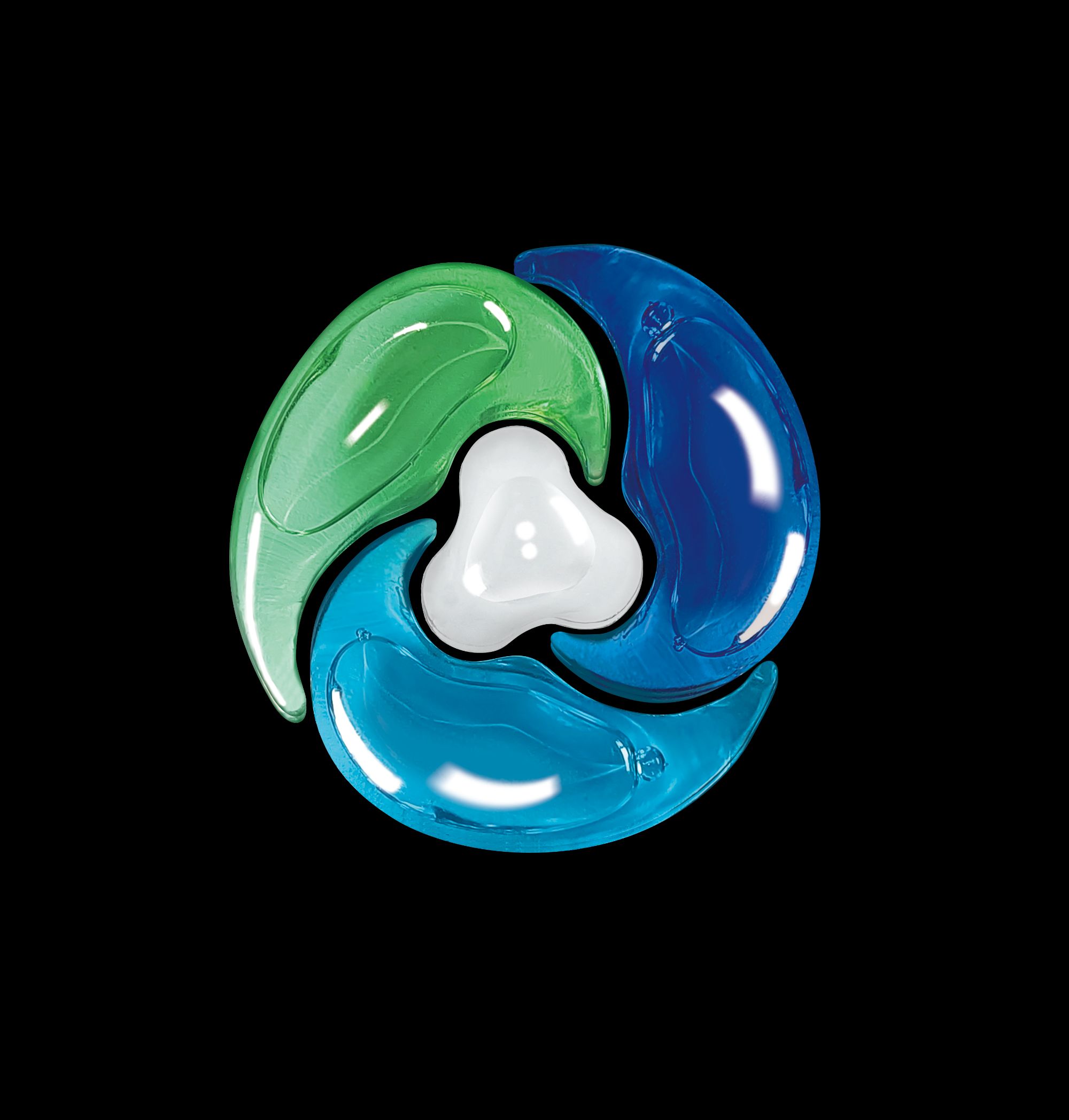
Multi-compartment design isn't about splitting a formula into random pockets. It keeps ingredients that would otherwise react with each other physically separated. Enzymes, oxygen-based bleaches, surfactants, and fragrances all have their own chemical temperaments. Once they share a single chamber, even inside a sealed bottle, they slowly degrade each other's performance. By sealing each compartment as an isolated microenvironment, formulators can load higher concentrations of actives without watching them cancel out on the shelf.
Take laundry detergent pods as an example. Powdered bleach and liquid enzymes sitting in the same cavity would trigger moisture migration that wakes up the enzymes and decomposes the bleach well before wash day. A multi-compartment structure keeps dry and liquid components apart, often using different film materials or dissolution rates for each chamber. Some compartments are designed to burst early in the cycle, others later. That staged release doesn't just protect stability during storage; it lets cleaning power unfold in a deliberate sequence inside the machine.
From a manufacturing standpoint, this approach also eases formulation constraints. A single-chamber product has to rely on ingredients that tolerate each other, which often means compromising on cleaning efficiency. With separate compartments, you can use more aggressive or delicate ingredients because they never meet until water breaks the barrier. The result is a quiet, stable unit sitting in the box—its chemistry held in a temporary truce until the moment of use.
The Staged Release Timing That Changes Everything
Most launches treat timing as a single switch: announce, ship, done. But a staged release flips that assumption. Instead of one make-or-break moment, you split the rollout into deliberate pulses—early access, limited regional waves, invite-only windows. Each stage gathers different data, from infrastructure load to real-world usage patterns, and lets you adjust without triggering a public reset.
The real shift happens when you stop optimizing for a clean calendar date and start optimizing for feedback velocity. A quiet beta might reveal that your onboarding flow confuses power users, while a slightly wider release uncovers pricing friction no survey would ever catch. By sequencing these exposures, you turn what could be a single catastrophic failure into a series of recoverable experiments.
The timing itself becomes a product decision. Releasing too fast burns trust, releasing too slow lets alternatives fill the gap. The staged approach gives you something rare: the ability to change trajectory mid-flight, based on what real users actually do, not what your internal roadmap predicted.
Why Stain Removal Feels More Complete When Ingredients Release Separately
There's a subtle psychology behind why a cleaner that releases its active ingredients one after another feels more satisfying than a single mixed solution. When surfactants, enzymes, and oxygen-based brighteners activate in quick succession, you're not just watching a stain fade—you're experiencing the process in layers. The first wetting stage loosens the surface, the middle stage seems to eat into the stain, and the final rinse carries away what's left. Each visible shift creates a small moment of progress, and those moments add up to a stronger sense that the job is actually done.
It's not only about perception. Separated release also prevents active ingredients from neutralizing each other too early. A single blended product may spend its energy before it reaches the deepest part of the fabric. When components are released separately, the detergent can work on the outer layers while an enzyme or oxygen booster waits its turn to tackle what's embedded below. That staged action leaves fewer hidden residues, which makes the fabric feel cleaner to the touch—not just look cleaner on the surface.
This layered approach also changes how you evaluate the result. If all the ingredients hit at once, you might see a quick change but still wonder whether anything remains trapped in the weave. With a staggered release, the stain tends to shrink in clear stages, and by the time the water runs clear, you've witnessed the entire sequence. That full visual record makes it easier to trust that the stain isn't going to reappear after drying, so the feeling of completeness comes from watching every step rather than just seeing the final outcome.
Cutting Down on Single-Use Waste Without Losing Cleaning Strength
Cutting single-use plastic from your cleaning routine doesn't mean reaching for weaker sprays. Concentrated refill pods and dissolvable tablets let you mix a full-strength cleaner in a reusable bottle, using tap water as the only filler. The surfactants and degreasers stay at the same concentrations as a standard bottle, so you still get the same cut through kitchen grease and soap scum.
Replace throwaway wipes with a stack of microfiber cloths and a refillable spray mop. Microfiber's split fibers trap dust and bacteria mechanically, which means plain water handles most everyday spills and smudges. When you do need a disinfecting boost, a small amount of concentrate on the cloth keeps the cleaning power high without a fresh plastic container every week.
For larger jobs, bulk refill stations let you top up laundry liquid, dish soap, and all-purpose cleaner straight into the containers you already own. Look for formulas with enzymes, oxygen bleach, or plant-based solvents rather than watered-down versions, and store them out of direct sunlight so the active ingredients don't degrade. This keeps your cabinets lighter and your cleaning routine just as tough.
First Wash Impressions: What Users Actually Notice
The first thing most people notice after that initial wash isn't a dramatic color shift or even a slight change in size—it's how the fabric feels against the skin. Stiffness, scratchiness, or a sudden softness can set the tone before the item is fully dry. A towel that turns cardboard-like or a tee that loses its smoothness makes an impression that no amount of label reading can undo.
Lint and loose fibers are another early tell. Most people rarely expect zero shedding, but a surprising amount on other clothes or in the trap raises immediate questions about the weave. If the hem stays flat, the seams don't twist, and the surface doesn't pill after one cycle, that small bit of stability reads as a quiet sign of quality.
Smell also plays a quieter role. A neutral, clean finish feels expected; a lingering chemical or overly perfumed scent can override everything else. The first wash is where the product either proves it can handle real use or reveals shortcuts that were hidden on the shelf.
FAQ
Most pods mix everything into one film, so active ingredients start neutralizing each other in the package. Four chambers keep enzymes, brighteners, stain fighters, and fabric conditioners isolated until the wash cycle hits the right temperature and agitation point.
Instead of a single burst of detergent, you get a timed release. The outer film dissolves first to tackle grease, the second chamber releases color-safe bleach for stains, the third activates enzymes for protein-based messes, and the fourth adds fragrance and softness at the end.
Yes, because the chambers are thinner and more targeted. The formula in each compartment is optimized to dissolve quickly even at low temperatures, so you don't need warm water to get the pod to break down completely.
No, and that's one of the design's main advantages. Since each component is released in sequence rather than all at once, there's less clumping and more even distribution, which reduces the chance of undissolved gel sticking to fabric.
A three-chamber pod often has to combine stain fighting and whitening in one cavity, which means one of those jobs suffers. The fourth chamber lets you separate those tasks, so you get dedicated stain enzymes and dedicated optical brighteners working without compromise.
Yes, the formulation is balanced for low-water machines. The compartment that produces suds is kept separate from the cleaning agents and released in a controlled amount, so you don't get the excess foam that can trigger error codes.
Anyone who regularly deals with mixed laundry loads. If you have gym clothes, kids' uniforms, and work shirts in the same basket, the separate chambers can address sweat, grass, and collar grime in one cycle instead of needing separate additives.
That's a fair question, but the separation of ingredients solves a real chemical problem. Active ingredients like enzymes and bleach are notorious for degrading each other in storage. By isolating them, each chamber stays potent longer, which translates to cleaner clothes without extra dosing.
Conclusion
Combining stain fighters, brighteners, enzymes, and fragrance into one liquid blend usually forces compromises—some ingredients neutralize each other before they ever touch fabric. The ODM four-chamber pod keeps those components apart until the wash cycle begins. That separation matters more than it sounds. Enzymes stay active because they are not sitting in a high-pH solution from the moment the pod is manufactured. Surfactants get their own chamber, so they don't drag down the brighteners. When the pod hits water, each chamber dissolves at a slightly different rate. The first release targets protein stains, the second loosens oils, and only later do the whiteners and fresheners enter. Users often describe the result as a cleaner that doesn't smell like a wall of perfume but leaves clothes genuinely fresh.
The design also cuts back on wasted chemistry. Instead of overdosing a single mixed liquid to compensate for degradation, each chamber holds a smaller, more precise amount of an active ingredient. That means less total product per load without giving up cleaning power. On the first wash, people tend to notice the difference in two spots: collars and cuffs come out without that faint gray shadow, and synthetic fabrics don't hold onto stale odors. There's no need for a separate pre-treater. The staged release does the work. While single-use pods have a reputation for being convenient but wasteful, the four-chamber approach rethinks that trade-off. You still get the convenience of one pod, but the chemistry stays sharper until it's actually needed.
Contact Us
Contact Person: Zhao Yanlong
Email: [email protected]
Tel/WhatsApp: 8615832007309
Website: https://www.gzlanjieya.com