
Mixer Agitator Solutions for Optimized Industrial Mixing Performance
2026-11-16
When a mixing line stalls or blend consistency drifts, the real bottleneck is rarely the recipe—it’s the agitator design working against your process. Sinou approaches industrial mixing from the opposite direction: mapping flow patterns, viscosity shifts, and shear sensitivity before recommending a single component. The result is a mixer agitator lineup that cuts energy waste and dead zones while holding tighter batch-to-batch tolerances. In this guide, we’ll break down the key selection criteria and retrofit strategies behind optimized mixing performance.
Rethinking Impeller Geometry for High-Viscosity Blends
Conventional impeller designs often fall short when dealing with high-viscosity blends, where standard radial or axial flow patterns struggle to overcome the thick, cohesive nature of the fluid. Instead of forcing existing geometries to work harder, a more effective approach lies in rethinking the blade shape itself—moving away from flat, symmetric blades toward curved, twisted, or even asymmetric profiles that create localized shear zones and promote bulk turnover. For example, a helical ribbon or anchor impeller with a slight tilt or variable pitch can break up stagnant regions near the vessel wall and encourage vertical circulation, which is critical for uniform blending in pastes, gels, and polymer melts.
Another overlooked factor is the clearance between the impeller tip and the vessel wall. In high-viscosity systems, a larger gap often leaves an unmixed boundary layer, while a very tight clearance increases torque demands and risks mechanical wear. A smarter design choice is to use wall-scraping elements or flexible edge strips that adapt to minor vessel irregularities, effectively wiping the surface without requiring excessive power. Additionally, the impeller's shaft position can be offset from the center to create an eccentric sweeping motion, which continuously reorients the flow field and prevents the formation of dead zones that plague conventional centered designs.
Perhaps the most promising avenue is to abandon the idea of a single rotating impeller altogether and instead consider dual or counter-rotating geometries. When two impellers rotate in opposite directions or at different speeds, the relative motion generates intense local stretching and folding of the fluid—a mechanism far more efficient than simply increasing rotational speed. This principle, borrowed from chaotic mixing theory, can be implemented through intermeshing helical elements or a combination of a central auger and an outer scraper. By treating the impeller not as a brute-force agitator but as a precision tool for manipulating flow topology, engineers can achieve homogeneous blends at lower energy input and with less thermal degradation of the material.
Energy Savings Without Sacrificing Shear
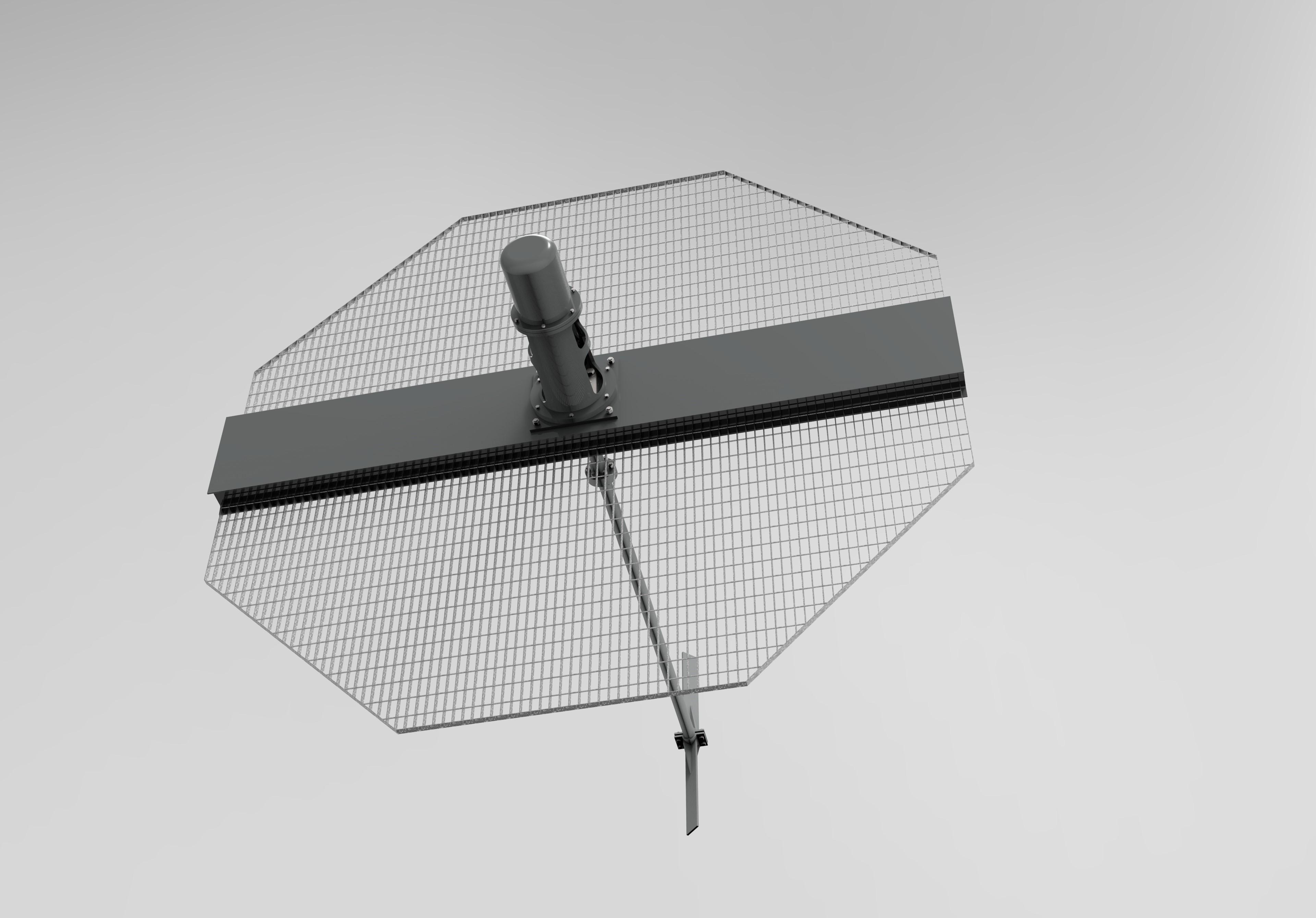
A common trade-off in heavy shearing equipment has long been the assumption that cutting force demands a constant, high energy draw. However, recent hydraulic circuit refinements allow the shear cylinder to build pressure only during the actual cutting stroke. Idle periods and return strokes run at greatly reduced flow, slashing kilowatt-hour consumption without dulling the blade's bite.
The key lies in load-sensing pumps paired with variable-frequency drives. When the blade meets dense material, the system instantly ramps up to full torque; once the cut is complete, it drops back to a low-power standby. This dynamic response preserves peak shear tonnage while eliminating the wasteful constant-speed operation that older machines relied on.
Operators notice the difference on the power bill and in the cut quality. There is no lag, no loss of splitting force, and no need to overbuild the motor. Instead of choosing between saving energy and getting clean cuts, the equipment does both by matching output to demand in real time.
Tailored Agitator Systems for Non-Standard Process Fluids
When a process fluid deviates from typical viscosity, density, or shear-thinning behaviour, off-the-shelf agitation rarely delivers consistent results. Non-standard fluids—whether they are high-solids slurries, shear-sensitive polymers, or non-Newtonian pastes—demand impeller geometry, shaft speed, and tank configuration that account for localised flow patterns rather than bulk averages. A tailored approach starts with characterising the fluid’s rheology under actual process conditions, then matching impeller type and placement to the zones where mixing energy is actually needed.
For shear-sensitive materials, oversized high-speed impellers can destroy product integrity long before homogeneity is reached. Conversely, highly viscous or yield-stress fluids often stall standard axial-flow designs, leaving dead zones near the vessel wall. Customised agitator systems address this by combining multiple impeller stages, variable frequency drives, and baffle arrangements tuned to the fluid’s transition between laminar and turbulent regimes. The result is not just uniform blending, but predictable heat transfer, gas dispersion, or solids suspension—outcomes that generic equipment seldom achieves.
Beyond the fluid itself, non-standard process conditions such as abrasive wear, corrosive chemistry, or extreme temperatures influence material selection and seal design. A tailored system incorporates wear-resistant coatings, specialised mechanical seals, and bearing arrangements that survive the actual operating environment. Rather than forcing a standard agitator into an unsuitable service, the engineered solution treats the fluid, the vessel, and the duty cycle as a single interacting system, reducing maintenance surprises and extending the interval between planned shutdowns.
Extending Service Life Through Advanced Seal Technologies
Every industrial system eventually confronts the same quiet enemy: wear at the sealing interface. Rather than accepting seal replacement as routine maintenance, forward-thinking engineers are adopting advanced seal technologies that fundamentally alter the failure curve. Modern materials such as perfluoroelastomers and thermoplastic polyurethanes resist chemical attack and extrusion far better than legacy nitrile or silicone compounds. Coupled with precision lip geometries that distribute contact stress more evenly, these materials keep lubricants in and contaminants out for thousands of additional operating hours.
The difference often shows up in the details of seal design. A well-engineered seal does more than fill a gap; it manages heat, pressure spikes, and shaft misalignment without losing its memory or resilience. Multi-lip configurations, integrated backup rings, and laser-etched micro-textures on the sealing surface each contribute to a longer interval between overhauls. For example, a pump operating with abrasive slurry can see bearing life double simply by switching to a dual-seal arrangement with a barrier fluid that flushes away debris. These are not exotic upgrades but practical choices that pay back quickly in reduced downtime.
Field data supports the shift. Plants that adopted advanced seal materials and designs report 30–50% fewer unplanned stops related to leakage. Moreover, the extended service life cascades into lower spare parts inventory, less waste, and a safer working environment where drips and spills no longer create slip hazards. The upfront cost of a premium seal is a small fraction of the labor and lost production involved in replacing a failed component early. Over a decade of operation, that initial decision compounds into a measurable gain in asset reliability.
Handling Abrasive Slurries with Minimal Wear
Reducing wear in abrasive slurry systems starts with understanding that particle impact and sliding friction are not evenly distributed. Instead of relying solely on harder materials, consider redesigning flow paths to eliminate sharp bends, dead zones, and sudden expansions where particle velocity spikes. Keeping the slurry velocity just above the critical settling point but below the threshold where erosion accelerates can dramatically lower metal loss. In many plants, a modest reduction in pump speed combined with smoother pipe transitions extends component life far more than an upgrade to exotic alloys.
Material choice should follow the specific wear mechanism rather than a generic hardness scale. Angular, freshly crushed particles tend to cut through brittle ceramics, while rounded sand grains polish surfaces. For highly acidic or caustic slurries, a dual-layer approach works well: a tough elastomer backing to absorb impact energy, topped with a replaceable ceramic or high-chrome wear plate. Polyurethane linings often outperform rubber when the slurry contains fine, sharp particles because they resist slicing while still damping vibration.
Operational habits play an underrated role in minimizing wear. Monitoring pressure drop across pumps and pipelines can reveal when internal clearances open up, signaling that wear is accelerating. Installing sacrificial wear plates at known high-impact zones—such as pump volutes, cyclone inlets, and pipe elbows—allows for quick, low-cost replacement without shutting down entire circuits. Variable frequency drives let operators fine-tune flow rates to match solids loading, avoiding the unnecessary velocities that turn a manageable slurry into a cutting jet.
Real-Time Monitoring for Consistent Batch Quality
Batch production has long leaned on end-of-run lab tests to confirm quality, a practice that leaves little room to correct a drifting parameter once the batch is already in the tank. Real-time monitoring changes that equation. Temperature probes, pH meters, viscosity sensors, and spectroscopic tools now feed live data straight to the control room. Operators watch trends develop minute by minute rather than discovering a problem hours after the fact. This immediate visibility means a slow pH decline or an unexpected temperature spike can be caught and corrected while the mixing vessel is still in operation, not after the batch has been ruined.
The real payoff shows up in batch-to-batch consistency. When critical process parameters are tracked continuously, small variations that previously went unnoticed become obvious. Plant engineers can set alert thresholds based on historical data from successful runs, then fine-tune those limits for each product recipe. Some facilities wire this data into automated feedback loops that adjust steam valves, agitator speeds, or dosing pumps without waiting for human intervention. The result is a tighter distribution around the target specification, fewer rejected batches, and less time spent reworking off-spec material. Instead of hoping the next batch behaves like the last one, manufacturers get live confirmation that it actually does.
FAQ
Focus on the rheology of the material rather than just the tank size. Shear-thinning fluids often need close-clearance impellers like anchors or helical ribbons, while Newtonian high-viscosity products may do fine with larger diameter pitched-blade or gate designs. Also check the torque capacity at low speed, because viscosity spikes during startup can stall an undersized drive.
A single hydrofoil impeller near the bottom can work for low viscosity, but adding a second impeller with opposite pitch shortens blend time and prevents stratification. For gas dispersion or solid suspension, the clearance from the tank bottom matters more than many people realize; too high and you waste power, too low and solids pack underneath.
People often match tip speed or RPM without checking power per unit volume and blend time. The result can be a production mixer that looks correct but takes far longer to reach homogeneity. Scale-up should include geometric similarity, impeller D/T ratio, and shear history, especially for emulsions or polymer solutions.
Yes, often you can switch to a more efficient impeller, add baffles, or adjust shaft speed with a gearbox change. Sometimes retrofitting a different seal or adding a variable frequency drive gives enough flexibility. The key is confirming the existing shaft and bearings can handle the new hydraulic loads.
Keep an eye on seal flush pressure and check runout at the shaft coupling every few months. Grease or oil changes based on operating hours matter more than calendar time in dusty plants. Also record vibration baseline after installation; a shift in that baseline usually shows up before a bearing fails.
Use low-shear impellers such as marine propellers or wide-blade hydrofoils and keep tip speed moderate. If solids need suspension, add baffles carefully rather than increasing RPM. Sometimes a larger diameter impeller turning slower gives the same pumping with much less local shear.
Yes, and it starts with right-sizing. Oversized motors on fixed-speed mixers waste energy in heat and turbulence. Installing a VFD, matching impeller diameter to the required flow pattern, and removing unnecessary baffles can cut energy use by 20-40% in some processes without affecting product quality.
Longer than expected blend times, temperature gradients, dead zones near the walls, or sediment on the tank floor are common clues. You might also notice the motor current fluctuating or the shaft vibrating more than usual. A quick dye test or sampling from multiple points can confirm whether the flow pattern has shifted.
Conclusion
Engineers who handle high-viscosity blends often find that conventional impeller profiles stall or create dead zones. Rethinking impeller geometry—shifting toward larger blade angles, contoured surfaces, or dual-flight designs—improves bulk turnover without raising motor load. The same principle carries into energy savings: a well-matched agitator delivers the necessary shear at lower tip speeds, reducing power draw while preserving product texture. For non-standard process fluids, such as shear-thinning polymers or temperature-sensitive emulsions, tailored agitator systems with adjustable baffles or variable-speed drives become essential. These custom configurations avoid overmixing and prevent phase separation.
Moving beyond the mixing vessel, advanced seal technologies extend service life by keeping aggressive solvents or high-pressure vapors away from bearing surfaces. Double mechanical seals with barrier fluid or dry-running gas seals cut maintenance intervals significantly. When abrasive slurries are part of the recipe, wetted parts made from hardened alloys or ceramic coatings minimize erosive wear, while impeller edges are rounded to reduce particle impingement. Finally, real-time monitoring—using torque sensors, vibration analysis, and in-line viscosity probes—closes the loop. Operators can detect batch-to-batch drift early and adjust speed or feed rate automatically, ensuring consistent quality without manual sampling.
Contact Us
Contact Person: HaiYan
Email: [email protected]
Tel/WhatsApp: +86 18957325588
Website: https://www.senyoubeton.com/