
Masterbatch Recommendations for Superior Blown Film Production
2026-08-01
Achieving flawless blown film isn't just about machinery—it's about the masterbatch you choose. From melt strength to dispersion, every pellet affects your film's clarity, strength, and process stability. At Xinwancai, we've seen how the right masterbatch can transform production. But with so many options, how do you select one that truly performs? This guide cuts through the noise, offering practical recommendations to elevate your blown film output. Dive in to discover what your current formulation might be missing.
Unlocking Clarity: Masterbatch Selection for Crystal-Clear Films
Achieving exceptional transparency in film applications demands meticulous attention to the masterbatch used. The clarity of a finished film is not merely a function of the base polymer; the additives and carrier resins within the masterbatch can significantly influence light transmission and haze levels. A mismatched carrier resin, even in small percentages, can introduce micro-scale refractive index variations that scatter light, turning a potentially sparkling film into a hazy, milky disappointment. Thus, the first rule of clarity is precise compatibility between the masterbatch carrier and the host polymer, ensuring a homogeneous blend that maintains the amorphous structure responsible for light to pass through undisturbed.
Beyond the carrier resin, the particle size and dispersion quality of pigments or additives within the masterbatch are pivotal. For crystal-clear films, any agglomerates or oversized particles act as nucleation sites for light scattering. Therefore, selecting masterbatches produced with advanced dispersion technology and ultra-fine particle sizes is non-negotiable. The goal is to achieve a state where the additive particles are so small and so uniformly distributed that they become optically invisible, preserving the film's inherent transparency. This requires not only superior milling and compounding processes but also rigorous quality control to eliminate even trace contaminants that could compromise the clarity of high-value films used in food packaging or optical applications.
The processing conditions also interact closely with masterbatch selection to unlock clarity. Even a perfectly formulated masterbatch can underperform if not processed correctly. Factors like melt temperature, screw speed, and cooling rates influence the crystallization behavior of the polymer and the final morphology of the film. A masterbatch designed for clarity often includes processing aids or nucleating agents that promote a more amorphous or finely crystalline structure, reducing haze. Collaborating closely with masterbatch suppliers to tailor formulations that align with specific extrusion or blowing parameters can make the difference between a film that simply functions and one that truly dazzles with its see-through brilliance.
Beyond Basic Color: Functional Masterbatches That Elevate Film Performance
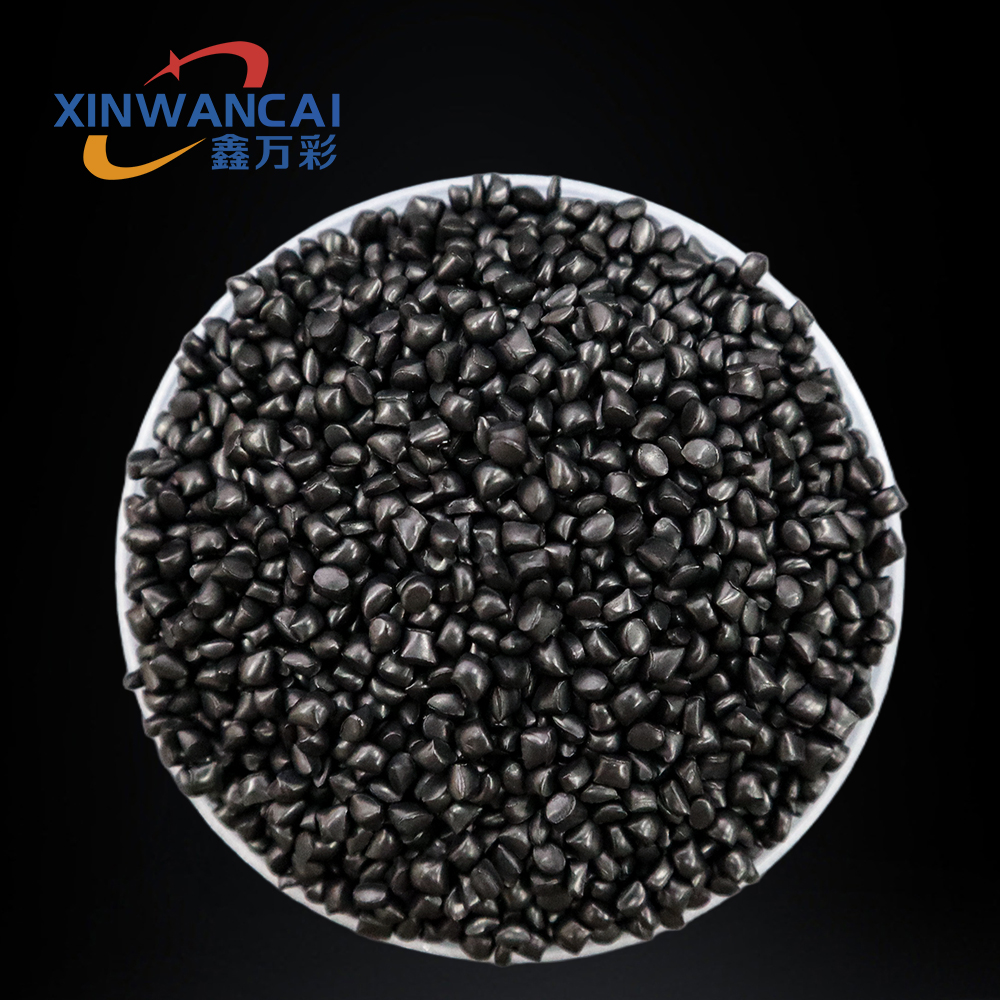
Color might grab attention, but it's the hidden additives inside a masterbatch that often determine how a film actually performs on the production line and in the real world. Functional masterbatches go far beyond simple pigmentation, embedding properties that tackle specific challenges—think film sticking to itself on the reel, fogging up in refrigerated packaging, or degrading under prolonged UV exposure. By integrating these capabilities directly into the polymer melt, manufacturers sidestep the need for secondary treatments or coatings that can wear off or add cost.
Take anti-block and slip agents: they work at the film's surface to reduce friction and prevent layers from clinging, yet too much can impair printability or seal strength. A well-formulated functional masterbatch balances these trade-offs, often combining additives so that a single pellet delivers multiple improvements. Anti-fog grades, for instance, don't just clear condensation—they can also incorporate anti-static properties to keep dust off packaged goods. The real art lies in dispersion; the additive must be distributed evenly enough to perform without creating gels or uneven surface tension that distorts clarity or print.
On the durability side, UV stabilizers and antioxidants protect films from sun and heat, extending the usable life of agricultural covers, construction sheeting, or outdoor signage. Recent formulations even address niche demands like ethylene absorption for fresh produce packaging or oxygen scavenging for shelf-life extension. Instead of stacking separate additive masterbatches, a single functional concentrate often handles several roles at once, simplifying inventory and reducing let-down ratios. It's this kind of multi-problem-solving that makes functional masterbatches a quiet, indispensable tool in modern film extrusion.
Melt Fracture Mysteries: How the Right Masterbatch Can Smooth Your Process
Melt fracture often shows up as a rough, sharkskin-like surface on extruded products, and it can be a persistent headache in polymer processing. The root cause is usually an imbalance between the stress at the die exit and the melt strength of the material. When the outer layer of the melt stretches too quickly and tears, those unsightly ridges appear. But the fix isn’t always about slowing down the line or raising temperatures—sometimes, the real trick lies in the additive package you choose.
A well-designed masterbatch can act like a lubricant at the die wall, helping the polymer slip smoothly instead of sticking and fracturing. Fluoropolymer-based processing aids, for instance, coat the metal surface over time, reducing the friction that triggers melt fracture. This lets you push throughput higher while keeping surface quality intact. What’s less obvious is how the carrier resin in the masterbatch matters too: a poorly matched carrier can create micro-dispersion issues that actually make the fracture worse before the additive has a chance to work.
Beyond just preventing sharkskin, the right masterbatch can give you more flexibility with tricky resins like metallocene LLDPE or highly filled compounds. It’s not a one-size-fits-all solution, though. The additive needs time to condition the die, and the dosage has to be tuned to your specific shear rates and die geometry. Once you dial it in, the difference is immediate: a smooth, glossy surface that used to require compromises in speed or material choice.
The Sustainability Edge: Eco-Friendly Masterbatches for Modern Blown Film
Modern blown film operations face a dual challenge: meet rising demand for flexible packaging while shrinking their environmental footprint. Eco-friendly masterbatches are rewriting the playbook by embedding sustainability directly into the polymer matrix. These concentrates combine bio-based carriers, recycled content, or biodegradable additives with precisely dispersed pigments and functional agents. The result is film that performs like conventional grades but carries a lighter ecological load. Processors can now deliver high-clarity, high-strength film without the sustainability trade-offs that once plagued green alternatives.
The versatility of these masterbatches extends beyond simple green marketing. Advanced formulations allow blown film lines to maintain speed and gauge consistency, even when incorporating post-consumer recycled resins. By fine-tuning melt flow and dispersion, converters avoid the gels, fisheyes, and thickness variations that typically arise with recycled streams. This harmony between processing efficiency and material stewardship turns sustainability from a constraint into a competitive differentiator. Film producers gain the ability to offer packaging that meets brand owners' ambitious recycled content targets without sacrificing machinability or shelf appeal.
Innovation in additive technology underpins this shift toward greener blown film. Emerging options include organic pigments that reduce heavy metal reliance, photodegradable masterbatches for controlled breakdown, and concentrates that enhance compostability in industrial facilities. Some grades even enable downgauging—producing thinner films with equivalent toughness—slashing material use without compromising protective properties. As regulations tighten and consumer scrutiny intensifies, these masterbatches offer more than compliance; they provide a tangible route to capturing value in a market that increasingly equates performance with planet-friendly production.
Processing Pitfalls: Masterbatch Solutions for Common Blown Film Defects
In blown film extrusion, defects like gels, melt fracture, and poor dispersion can halt production and eat into profits. These issues often stem from incompatible additives or uneven masterbatch distribution. By selecting a carrier resin that matches the base polymer and optimizing let-down ratios, processors can drastically reduce these defects. For instance, using a masterbatch with a high melt flow index can improve dispersion in low-viscosity materials, preventing surface roughness and pinholes.
Another frequent problem is color streaking or inconsistent opacity, which usually points to inadequate mixing in the screw or insufficient masterbatch concentration. A solution lies in using a masterbatch specifically designed for blown film, where pigment particles are pre-dispersed and coated to withstand high shear. Some advanced formulations even include processing aids that lower melt pressure, minimizing die build-up and gauge variations without compromising optical clarity. This proactive approach keeps lines running smoothly and reduces downtime for clean-outs.
Moisture-related defects, such as bubbles and streaks, demand attention to masterbatch drying and storage. Hygroscopic carriers or additives can absorb water, leading to hydrolysis and film weakening. Switching to a hydrophobic carrier system or using a desiccant masterbatch can mitigate these risks. Additionally, monitoring hopper residence times and employing vented screws helps eliminate trapped volatiles, resulting in a cleaner, more consistent film with fewer rejects.
Tailored for Toughness: Reinforcement Masterbatches for High-Strength Films
When standard films fall short under mechanical stress, reinforcement masterbatches step in to create a new class of strong, durable polyethylene and polypropylene films. These specialized compounds are engineered to boost tensile strength, puncture resistance, and tear propagation resistance without compromising flexibility or clarity. By incorporating carefully selected mineral fillers, nano-reinforcements, or advanced polymer blends, they transform ordinary film into a toughness-focused material that can endure the harshest packaging, agricultural, and industrial environments.
What sets these masterbatches apart is their ability to be tailored to exact performance specs. Whether you need a thin gauge film for heavy-duty sacks or a stretch film that resists puncturing during transit, the formulation can be adjusted in terms of carrier resin, filler loading, and coupling agents. The result is a homogeneous dispersion that avoids weak spots, ensuring every square inch of the film delivers consistent strength. This customization also allows balancing stiffness and elasticity, so the film maintains its integrity under dynamic loads without becoming brittle.
Beyond mechanical gains, using a reinforcement masterbatch can lead to material savings and sustainability benefits. Because the film can be downgauged while retaining required strength, less polymer is consumed per unit area. This directly reduces raw material costs and the carbon footprint of the final product. Manufacturers also gain processing stability, as these masterbatches are designed to run smoothly on existing blown or cast film lines, making the transition to high-strength films seamless and cost-effective.
FAQ
Masterbatches are concentrated mixtures of pigments, additives, or functional agents encapsulated in a carrier resin. In blown film, they serve as a precision tool to impart color, enhance performance, or improve processing. Instead of handling raw powders or liquids, producers use masterbatches to achieve uniform dispersion, consistent quality, and easier handling, which directly contributes to film superiority.
The selection starts with your end-goal: color, UV protection, slip, or mechanical strength. Match the carrier resin with your base polymer (e.g., LDPE, LLDPE, HDPE) to guarantee compatibility. Consider processing temperature and film thickness; a masterbatch that works for thin gauge might not suit heavy-duty sacks. Always request a let-down ratio recommendation and run a small-scale trial before full production.
Key families include color masterbatches for vibrant, consistent hues; additive masterbatches like antiblock, slip, and antistatic for handling and film separation; UV stabilizers for outdoor durability; and processing aids that reduce melt fracture and die buildup. For superior performance, many converters now use multi-functional combi-batches that bundle several additives into one concentrate, simplifying inventory and dosing.
For improved mechanicals, look for masterbatches containing reinforcing fillers such as calcium carbonate (if clarity isn't critical) or specialty impact modifiers. Metallocene-based masterbatches can also enhance toughness and dart drop values. However, the biggest gain often comes from processing additives that allow better bubble stability and draw-down, indirectly strengthening the film by reducing micro-defects.
Optical properties demand high-purity masterbatches with excellent dispersion. Clarifying agents and nucleators in a compatible carrier can reduce haze and boost gloss. Avoid fillers that scatter light. For polyolefins, select masterbatches with a high Melt Flow Index (MFI) carrier that matches the film resin, ensuring the additive doesn't form visible specks. Silica-free antiblock with controlled particle size is also critical for maintaining clarity while preventing blocking.
Processing aid masterbatches, often based on fluoroelastomers, coat the die lip and reduce melt fracture, allowing higher outputs without sharkskin. Purging compounds, formulated as masterbatches, cut changeover time and remove carbonized residue. Anti-oxidant and thermal stabilizer masterbatches preserve polymer integrity during extended runs, minimizing gel formation. Together, they keep the line running consistently with fewer interruptions.
While masterbatches cannot replace a dedicated barrier layer, certain additive masterbatches can improve moisture vapor transmission rate (MVTR) or oxygen barrier. Nanoclay-based masterbatches create a tortuous path, slowing gas permeation. For high-moisture environments, desiccant masterbatches incorporated into the film structure can scavenge humidity. Always evaluate the impact on other properties like optics and seal strength.
Typical pitfalls include using an incompatible carrier resin, which can lead to delamination or poor dispersion. Overdosing or underdosing the let-down ratio disrupts color consistency and performance. Ignoring masterbatch moisture content is risky; hygroscopic additives must be dried properly. Finally, not validating with a trial run can cause large-scale waste. Partnering with a knowledgeable supplier and documenting successful recipes are the best safeguards.
Conclusion
Achieving superior blown film production relies on strategic masterbatch choices that go far beyond simple coloration. For crystal-clear films, selecting masterbatches with high-purity pigments and excellent dispersion is essential to reduce haze and enhance light transmission. But today’s processors also benefit from functional masterbatches—those delivering UV stabilisation, anti-block, slip, or anti-fog effects—that boost film performance and end-user appeal. A particularly overlooked advantage is how the right formulation can alleviate melt fracture. By fine-tuning melt elasticity and promoting smoother die flow, specialised masterbatches eliminate surface roughness and allow higher throughput without compromising quality.
Sustainability has become a decisive factor, with bio-based and recycled-content masterbatches allowing converters to lower environmental impact while maintaining clarity or strength. When common defects like gels, fisheyes, or gauge variation appear, masterbatches that incorporate processing aids and homogenising agents offer targeted fixes. For demanding applications, reinforcement masterbatches containing nano-fillers or custom polymer blends deliver impressive toughness and puncture resistance. A comprehensive masterbatch strategy that balances optical clarity, mechanical durability, and ecological responsibility is what sets apart truly exceptional blown film production.
Contact Us
Contact Person: JACK
Email: [email protected]
Tel/WhatsApp: 86 18650130917
Website: https://www.xinwancai.com/