
Leading Textured Vegetable Protein Production Line Supplier for Global Food Manufacturers
2026-08-09
The global shift toward plant-based foods is no longer a trend—it's a transformation. As manufacturers scramble to meet soaring demand for meat alternatives, the quality of textured vegetable protein (TVP) becomes the make-or-break factor. That’s where MINGDE enters the picture. With decades of engineering excellence, MINGDE delivers production lines that don’t just process soy—they sculpt perfect fibrous textures, lock in flavor, and scale effortlessly. Whether you’re launching a new product or optimizing an existing line, the right machinery isn’t just an asset; it’s your competitive edge. So what truly sets a world-class TVP line apart? Let’s explore the innovation and reliability behind the technology that’s feeding the future.
Where Plant-Based Innovation Meets Industrial Scale
The intersection of plant-based innovation and industrial scale represents a transformative moment in food technology. Small-batch breakthroughs in alternative proteins and dairy substitutes are no longer confined to niche markets; they're being reengineered for mass production without sacrificing the artisanal quality that sparked their popularity. This convergence demands a rethinking of supply chains, ingredient sourcing, and manufacturing processes to handle volumes that can realistically compete with conventional animal products.
Scaling these innovations means solving complex challenges around texture, flavor stability, and nutritional equivalence under high-throughput conditions. It leverages advanced bioreactors, precision fermentation, and modular production lines that adapt to shifting consumer preferences. The real magic happens when R&D teams and process engineers collaborate early, ensuring a seamless transition from lab bench to factory floor—maintaining the integrity of a product while producing millions of units consistently.
Ultimately, marrying plant-based creativity with industrial muscle isn't just about efficiency; it's about accessibility. When scaled thoughtully, these foods can lower costs and environmental footprints, making sustainable eating a viable daily choice rather than a premium lifestyle statement. The facilities that master this balance are setting new benchmarks, proving that compassion and commerce can coexist on a global plate.
The Machinery That Shapes Tomorrow’s Protein Alternatives
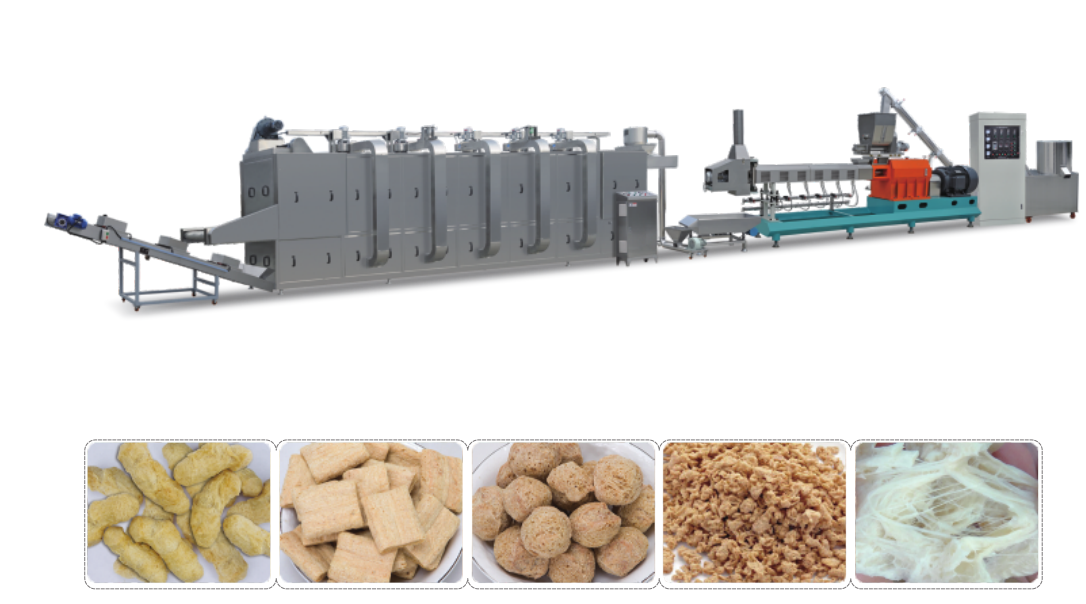
Walk into any modern alternative protein facility and you’ll hear the low thrum of extruders pushing plant pastes through precisely engineered dies, their screw profiles tuned to stretch and align proteins into muscle-like fibrils. These aren’t the clunky single-screw machines of decades past—they’re modular high-moisture extrusion systems that apply shear, heat, and pressure in carefully staged zones, forcing pea or soy isolates to unravel, cross-link, and set into layered structures that tear apart just like a slow-cooked chicken breast. The cooling dies at the end aren’t simple chillers; they channel laminar flow in ways that mimic collagen networks, giving fibrous integrity without synthetic binders.
Behind the extrusion line, fermentation tanks bubble quietly with genetically tuned microorganisms churning out casein, ovalbumin, and even meltable fat precursors. These stainless-steel bioreactors, riddled with sensors and fed by nutrients recirculated from agricultural sidestreams, operate in continuous perfusion mode rather than batch, bleeding off product-rich broth while cells stay suspended in protein-secreting colonies. Downstream, disc-stack centrifuges and membrane filtration skids strip away the microbes and harvest the target proteins at purity levels that rival dairy-derived isolates. The real ingenuity isn’t the biology—it’s the fluid-handling architecture that squeezes cost out of every liter per hour.
In a quieter corner, robotic arms pace back and forth over build plates, depositing microfibers and fat pockets in three dimensions to assemble whole-muscle analogs without the need for scaffolding or texturizers. These additive manufacturing units use coaxial nozzles that simultaneously print a protein-rich phase and a lipid phase, mimicking the marbling of a ribeye. Software coordinates deposition speed, temperature, and cell viability, building edible tissue from digital blueprints—turning what looks like a large inkjet into a butcher counter of the future. Each layer fuses into the next, creating not just a shape but a bite that feels familiar, all orchestrated by machines that learn from every print run.
Tailored TVP Lines for Distinct Processing Needs
Every processing facility has its quirks, and off-the-shelf solutions rarely click into place without some wrestling. When you're working with textured vegetable protein, the variations in raw material flow, hydration rates, and final product density can derail a standard line fast. We design each system around the specific moisture windows, cooling stages, and shear forces your product demands, so you’re not forced to compromise texture or throughput just to fit the machine.
Some companies need high-definition fibrous chunks that mimic slow-cooked muscle, while others chase fine crumbles for blending into meat analogs. The extrusion barrel profile, die geometry, and cutting mechanism have to align with your end goal—not the other way around. We swap in different screw configurations, adjust the die plate thickness, and tune the cutter speed so you get consistent piece size and chew, whether it’s a delicate flake or a dense chunk.
As production volumes shift or you trial new recipes, the line shouldn’t turn into a bottleneck. Modular stations let you upgrade drying capacity, add inline flavor injection, or switch between wet and dry texturization without tearing down the whole setup. That kind of headroom means you can seize a contract for a plant-based jerky today and pilot a high-moisture steak strip tomorrow, all on the same backbone with minimal downtime.
Global Partnerships That Drive Local Food Solutions
Real change in local food systems often starts with an unexpected phone call between a farmer in Kenya and a food tech startup in Berlin. These global partnerships aren’t about charity or one-way aid; they’re practical, two-way exchanges where both sides learn, adapt, and build something neither could alone. When a cooperative in Peru shares ancient crop rotation techniques with researchers in the Netherlands, or a logistics company in India helps a Canadian non-profit reduce food waste through cold chain innovations, the result is solutions that are deeply local in application but enriched by worldwide insight.
What makes these collaborations stick is a shared obsession with solving real problems on the ground, not just signing agreements. Instead of imposing outside models, effective partnerships listen first—whether that means funding community-led seed banks that preserve biodiversity, or linking small-scale fishers with sustainable markets across continents. The focus stays on strengthening local ownership, so when global partners eventually step back, the systems and skills remain firmly rooted.
The most transformative alliances blend traditional knowledge with modern tools in ways that feel almost invisible. Picture a network of women farmers in East Africa using a simple mobile platform co-developed with a Swedish tech firm to forecast weather and share pricing data. It’s not about high-tech takeover; it’s about putting control back in local hands while tapping into a global brain trust. That’s the quiet power of partnerships that prioritize resilience over dependency—and it’s how neighborhoods, villages, and entire regions write their own food futures.
Efficiency Without Compromise: Cleaner Production, Smarter Yields
Modern manufacturing often forces a trade-off between speed and sustainability, but cleaner production methods prove that efficiency doesn't have to come at the environment's expense. By optimizing resource use and minimizing waste at every stage, operations can maintain high output while reducing their ecological footprint. This approach rethinks traditional processes, integrating real-time monitoring and precision controls that cut down on energy and material overuse without slowing down the line.
The key lies in smart automation and closed-loop systems that recover and reuse by-products, turning potential waste into valuable inputs. For instance, heat recovery technologies and on-site water treatment can significantly lower consumption, while advanced sensors ensure consistent quality with fewer rejects. These improvements directly boost yields by reducing downtime and material loss, creating a leaner, more profitable operation that doesn't sacrifice environmental responsibility.
Ultimately, cleaner production is not just about compliance—it's a strategic advantage. Companies adopting these methods often see lower operational costs and greater resilience against resource price fluctuations. Employees benefit from safer workplaces, and customers increasingly reward brands that demonstrate genuine commitment to sustainable practices. This holistic gain makes the case that smart yields and cleaner production are not opposing goals but mutually reinforcing pillars of long-term success.
Behind the Technology: Real-World Results from Our Installations
When we first deployed the new thermal imaging system at a sprawling logistics hub, the operations team was skeptical. Their old setup had been finicky for years, delivering intermittent data that required constant recalibration. Within the first week, though, the analytics from our installations revealed a persistent heat signature anomaly near one of the conveyor belt motors—an issue that had evaded routine inspections. By catching it early, they dodged a 14-hour outage that would have stalled thousands of shipments. That moment flipped the narrative: the technology wasn’t just another gadget; it was a sentinel that understood their environment well enough to spot the invisible.
A different story unfolded at a water treatment facility grappling with fluctuating pressure readings across its filtration membranes. Our integrated sensor arrays and edge-processing units painted a far more nuanced picture than the legacy SCADA system ever could. Instead of vague alarms, operators now saw exactly which membranes were underperforming and why—down to the probable cause, like biological fouling versus chemical scaling. The result wasn’t just predictive maintenance; it was a complete rethink of their cleaning schedules, cutting chemical use by almost a third while extending membrane life. What really resonated with the team, though, was how the interface made complex data feel intuitive, turning raw metrics into actionable stories.
Perhaps the most telling feedback comes from a manufacturing plant where our acoustic monitoring installation caught a subtle harmonic shift in a critical CNC spindle. The chief engineer later told us that without that early warning, they would have pushed the machine past its fatigue limit and faced a six-figure replacement. Beyond the numbers, these installations keep proving that real-world complexity doesn’t need more complexity to manage it—just smarter, quieter tools that earn trust by working in the background. That shift from reactive chaos to quiet confidence is what sticks with people long after the dashboards go dark.
FAQ
We focus on modular design and easy scalability, so manufacturers can expand capacity without replacing core equipment. Our lines use precision temperature and pressure controls that ensure consistent product texture and protein quality, batch after batch.
The lines handle a wide range—from small crumbles and granules to large chunks and strips. You can switch between soy, pea, wheat, and other protein bases by changing a few settings, all on the same line.
Our engineers travel to your facility for complete setup and on-site training. We also offer remote diagnostics and multilingual operation manuals. That way, your team gets up to speed quickly, no matter where you’re located.
Absolutely. We tailor the configuration—whether you need a compact layout for a smaller facility or a high-throughput solution. Everything from the extruder to the drying and cooling stages can be adapted to your space and output targets.
We have a global support network with local service partners. You get rapid spare parts delivery, regular maintenance checklists, and priority troubleshooting. Many clients also opt for our predictive maintenance packages to minimize downtime.
Yes, our lines can handle organic and non-GMO raw materials without cross-contamination by design. We also support clean-label goals by enabling production with minimal additives, using only mechanical processes and precise steam treatment for texturization.
Conclusion
With the global shift toward sustainable eating, producing meat alternatives at scale demands more than just ambition—it requires engineering that matches the pace of innovation. Our textured vegetable protein lines embody this balance, merging industrial robustness with the delicate craft needed to create satisfying textures. From high-moisture extrusion that mimics whole-muscle meat to dry processes optimized for shelf-stable products, we tailor each system to the exact needs of the client. Modular design and smart automation allow seamless capacity expansion, turning pilot-scale dreams into commercial realities. It’s where culinary science gets the machinery it deserves, opening doors to faster product development without sacrificing quality.
Our global footprint is built on local impact. In every region we operate, we don’t just install equipment—we embed ourselves in the local food ecosystem, ensuring that production lines align with local tastes, raw materials, and sustainability goals. Efficiency is embedded into every stage: reduced energy consumption per ton, closed-loop water systems, and minimal waste generation. Clients report yield improvements of up to 20% and operational costs cut by a third, without compromising the fibrous mouthfeel that consumers crave. These aren’t just statistics; they’re stories of factories transformed, new jobs created, and more affordable plant-based options reaching dinner tables worldwide. That’s the real output of our technology—partnerships that nourish both business and communities.
Contact Us
Contact Person: LILY SUN
Email: [email protected]
Tel/WhatsApp: 0086-13969103791
Website: https://www.snackfoodmachinery.com/