
Inside a Modern Textured Vegetable Protein Production Line Factory: Efficiency and Quality Unveiled
2026-08-09
Step into the heart of a modern textured vegetable protein production line, where precision engineering meets plant-based innovation. In this behind-the-scenes exploration, we uncover how cutting-edge technology from MINGDE transforms raw ingredients into high-quality TVP with remarkable efficiency. From extrusion to drying, every stage is optimized for consistency and sustainability—redefining what’s possible in alternative protein manufacturing. Whether you’re a food producer or curious consumer, discover the secrets driving the future of meatless products.
Ingredient Intake and Blending: A Precise Start
The journey from raw materials to a finished product hinges on a single, critical phase: how ingredients are taken in and brought together. It’s not merely a step in the process—it’s the foundation. A slight miscalculation or inconsistency here can ripple throughout production, altering texture, flavor, or performance in ways that are hard to correct later. That’s why this stage demands unwavering attention to detail and a culture of precision from the very first measurement.
Achieving such precision involves more than just accurate scales. It requires a deep understanding of material properties—whether powders are prone to clumping, liquids vary in viscosity, or certain ingredients interact unpredictably. Advanced blending technologies now allow for real-time monitoring of uniformity, while automation helps ensure that each batch matches the exact specifications. But technology alone isn’t enough; it must be paired with rigorous protocols for handling, storage, and sequencing. Even the order in which components are combined can make a tangible difference.
When ingredient intake and blending are executed with precision, the effects extend far beyond the mixing vessel. Downstream processes become more predictable, waste is minimized, and the final product consistently meets quality benchmarks. What begins as a careful introduction of components becomes the silent driver of reliability—ensuring that every end user experiences the same high standard, batch after batch.
Inside the Extruder: Where Proteins Transform
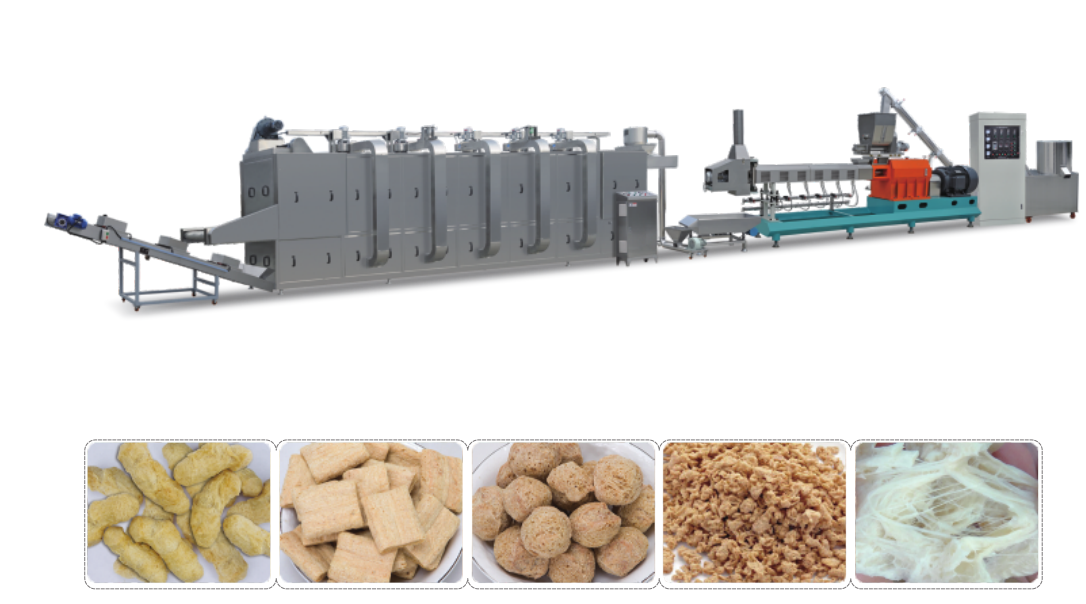
Picture a blend of plant-based proteins slowly threading their way into the heart of the extruder. It starts as a quiet, almost sleepy procession of dry ingredients, but the moment they hit that first turn of the screw, everything changes. Heat and mechanical energy begin to unravel the tightly coiled structures, breaking down native forms into something pliable. It's not just about melting; it's a deliberate disruption of protein architecture, setting the stage for what comes next.
As the barrel tightens and the temperature climbs, the real metamorphosis kicks in. Shear forces align those unraveled proteins into long, interwoven strands, while moisture subtly plasticizes the mass. You can almost feel the transformation – a sudden shift from crumbly powder to a cohesive, elastic dough. The die at the end doesn't just shape the product; it imparts texture, creating striations that mimic muscle fibers without any chemical bonding agents. It's a dance of physics and biochemistry, perfectly timed in a matter of seconds.
What emerges is a continuous ribbon of material that looks nothing like what went in. The rapid pressure drop at the exit causes steam to puff the structure, locking in a porous, chewy architecture. It's oddly quiet after the roar of the machine, but that's the sign of a successful run – proteins fully transformed, ready to be portioned into recognizable food formats. Each bite taken from the final product tells the story of that intense, hidden journey inside the barrel.
Drying Dynamics: Achieving Ideal Moisture Levels
The journey to perfect moisture levels starts with understanding how heat, airflow, and time combine to coax water out of delicate plant material. Too rapid a dry locks in chlorophyll and grassy flavors, while moving too slowly invites mold or a dusty, terpene-stripped finish. Striking that balance means watching the stems for a clean snap rather than a bend, and feeling the outer leaves turn papery while the inner core stays slightly pliable. It’s a subtle dance where intuition and observation matter more than rigid numbers.
Moisture distribution rarely stays uniform during the initial hanging phase, so many growers rely on a secondary sweat in sealed containers to even things out. Opening jars or bags for brief periods each day lets trapped humidity escape and remoistens drier pockets, slowly nudging the batch toward a stable internal humidity of 55–62%. Small digital hygrometers placed inside the containers remove the guesswork, but the nose often tells the story first—a sharp ammonia whiff warns of trouble, while a mellow, sweetening aroma signals progress.
Environment control ties the whole process together, especially when ambient conditions swing from dry winters to sticky summers. Dialing in a dedicated space with gentle, indirect fans and a dehumidifier or humidifier as needed keeps the drying zone steady around 60°F and 55–60% relative humidity. The goal isn’t to rush but to preserve fragile volatile compounds, creating a final product that breaks apart smoothly, burns evenly, and carries the full spectrum of its original character without harshness or damp spots.
Quality Checks That Go Beyond the Surface
True quality isn’t just about what meets the eye. While a smooth finish or clean welds might pass a casual glance, hidden inconsistencies often tell a different story. From micro-cracks that only ultrasound can reveal to material fatigue signs buried within the grain structure, our inspections dig into layers that cosmetic checks never reach. This means looking at cross-sections under magnification, running stress simulations on seemingly identical batches, and never trusting that “good enough on the outside” is good enough, period.
We’ve learned that surface-level checks create a false sense of security. That’s why we built a process that treats every component as a black box needing thorough diagnosis, not just a cursory glance. By combining targeted sampling with full traceability, we catch the kind of drift that would otherwise stay invisible until a product fails in the field. It’s the difference between finding a flaw and preventing the conditions that breed it.
What sets this approach apart isn’t just the advanced tools—it’s the mindset that no defect is too small to investigate. When a coating thickness varies by a few microns, we don’t tweak the number and move on; we ask why the variation occurred and what it says about the upstream process. That habitual curiosity turns routine checks into early warning systems, ensuring reliability that lasts long after the surface still looks brand new.
Automation at Every Turn: Speed Meets Precision
In modern manufacturing, automation isn't just a luxury—it's the backbone that keeps production lines humming with relentless efficiency. When speed merges with precision, the result is a symphony of synchronized robotics, intelligent sensors, and real-time decision-making systems that eliminate human error and slash cycle times. This isn't about replacing craftsmanship; it's about elevating it, allowing machines to handle the repetitive micro-movements while human expertise focuses on innovation and oversight.
What sets cutting-edge automation apart is its ability to adapt on the fly. Traditional automated lines were rigid, locked into single-product configurations that made changeovers a nightmare. Today's smart systems use adaptive algorithms and vision-guided robotics to seamlessly switch between products, adjust for material variations, and self-correct deviations before they become defects. The result is a floor where changeovers happen in seconds, not hours, and where precision isn't compromised even at breakneck speeds.
Ultimately, this convergence of speed and precision transforms not just throughput, but the entire value chain. It enables mass customization—offering personalized products at the cost of mass production. It ensures consistent quality that builds trust without added inspection costs. And it frees up human talent to chase the next breakthrough rather than monitor the mundane. When automation turns every corner, it's not just doing the job faster; it's redefining what's possible.
Eco-Conscious Operations: Minimizing Waste, Maximizing Output
Our approach to production starts with rethinking what waste really means. Instead of seeing leftover materials and energy as inevitable byproducts, we view them as resources waiting to be redirected. Through meticulous process design, we've built systems where one department's scrap becomes another's raw material, cutting landfill contributions dramatically while unlocking hidden value streams. This isn't just recycling—it's a complete reimagination of how materials flow through our facilities, with every step engineered to extract maximum utility before anything is considered spent.
We've moved beyond conventional efficiency metrics by embedding circular thinking into operational decisions. Equipment upgrades are chosen not just for speed, but for their ability to reduce resource intensity per unit produced. Water reclamation loops, heat capture networks, and predictive maintenance schedules all work together to ensure that nothing of value slips away unused. The result is a production environment where output growth no longer correlates with waste growth—a critical shift that proves commercial success and environmental responsibility can strengthen each other.
What truly sets our method apart is the feedback loop between operational data and everyday behavior. Real-time monitoring makes consumption patterns visible to every team member, turning abstract efficiency goals into personal challenges. When operators see exactly how their adjustments affect material usage, innovation bubbles up from the floor. This blend of smart technology and empowered people creates a culture where waste minimization becomes instinctive, not imposed. It's how we consistently achieve output increases while our environmental footprint keeps shrinking.
FAQ
It's a combination of automated extrusion systems, precise temperature controls, and continuous processing that minimizes downtime. The integration of real-time monitoring allows operators to instantly tweak parameters, ensuring consistent output without sacrificing speed.
Quality is embedded at every stage, from rigorous testing of raw materials to in-line sensors that check texture and moisture. Advanced optical sorters remove any off-spec particles, and final batch testing confirms protein content and fiber structure before packaging.
We use high-moisture extrusion with cooling dies that simulate meat-like fibrous structures. The twin-screw extruders have modular barrel designs, allowing rapid configuration changes for different product textures, from shreds to chunks.
It starts with blending protein flours and water into a dough. Then it passes through a preconditioner for hydration and pre-cooking. The mixture enters the extruder, where heat and mechanical shear create the textured matrix. After extrusion, the product is cut, dried, and cooled before packaging.
The system is built for flexibility. By adjusting extruder screw profiles, temperature zones, and water injection rates, it can process soy, pea, wheat gluten, or blends. Cleaning-in-place technology ensures rapid changeovers without cross-contamination.
We follow a HACCP-based plan with metal detectors, X-ray inspection, and microbiological monitoring throughout the line. The entire production area operates under positive air pressure with HEPA filtration to prevent airborne contaminants.
Heat recovery systems capture and reuse thermal energy from drying and cooling processes. Variable-speed drives on motors optimize power consumption based on load. The extruder itself is designed for low specific mechanical energy input while maintaining texture quality.
Today's lines are data-driven and highly automated. They use artificial intelligence to predict maintenance needs and optimize recipes. Downtime is rare, and product consistency is far superior due to closed-loop control systems that adjust in milliseconds, something manual operations can't match.
Conclusion
Stepping into a contemporary textured vegetable protein manufacturing facility reveals a seamless orchestration of science and machinery, where every gram of raw material is accounted for from the very first stage. The process begins with meticulous ingredient intake and blending, a phase where soy, pea, or wheat proteins are combined with water and other components in exact ratios. This precise mix is then fed into the heart of the operation—the extruder—where controlled heat, pressure, and mechanical shear work in tandem to transform the blend into fibrous, meat-like structures. The transformation is nearly instantaneous, yet it requires constant fine-tuning to ensure the desired texture, from tender shreds to chewy chunks. Once extruded, the still-moist product moves through a carefully calibrated drying system, where temperature and airflow are adjusted to achieve the perfect moisture level—low enough to prevent spoilage yet high enough to maintain a satisfying bite. At every step, sensors and automated controls monitor the line, making real-time adjustments that human hands could never match, slashing variability and boosting throughput.
Quality in this modern plant goes far beyond a simple visual check; it is an integrated, multi-layered protocol woven into production. In-line cameras and near-infrared analyzers scan each piece for density, color, and protein content, flagging any divergence instantly. Samples are regularly pulled for lab-based tests that assess rehydration capacity, tensile strength, and mouthfeel—metrics that define the eating experience. This data flows back into the system, enabling predictive tweaks that keep the line humming at peak consistency. Meanwhile, the entire facility hums with a quiet eco-consciousness: water is recycled in closed loops, waste trim is reprocessed back into the blend, and energy-efficient motors recover heat from the drying phase to pre-warm incoming air. Automation doesn't just speed things up; it makes this resource mindfulness possible, cutting material loss to a fraction of what older factories accepted. The result is a production line that doesn't just churn out plant-based protein—it does so with a remarkable blend of precision, quality, and environmental stewardship.
Contact Us
Contact Person: LILY SUN
Email: [email protected]
Tel/WhatsApp: 0086-13969103791
Website: https://www.snackfoodmachinery.com/