Injection Molding Masterbatch: Which Type Delivers Superior Results?
2026-08-07
In injection molding, the right masterbatch isn’t just an additive—it’s a decision that shapes your product’s durability, appearance, and bottom line. Color, additive, or filler: each claims performance, but which genuinely stands up to the heat? At Xinwancai, we’ve put them through real-world tests, and the gap between promises and results is wider than most realize. If you’re tired of second-guessing your process, this breakdown reveals the masterbatch type that consistently outclasses the rest.
Beyond Basic Color: When Additives Make the Difference
Coloring a plastic part might seem straightforward, but the real magic happens when additives step in to do more than just provide a hue. A pigment alone can't stop a dashboard from cracking under years of sunlight or keep a medical device from degrading after repeated sterilization. That’s where carefully chosen stabilizers, UV absorbers, and processing aids come into play, transforming a simple colorant into a high-performance solution.
Consider an outdoor electrical enclosure: without the right additive package, its vibrant red would fade to chalky pink within months. By incorporating advanced light stabilizers, the same part retains its color and structural integrity season after season. The additive selection becomes even more critical in applications like automotive interiors, where long-term heat resistance isn't just a preference—it's a safety requirement.
At the molecular level, these additives work quietly but relentlessly. They quench free radicals, neutralize acids, and improve dispersion so that the pigment particles are evenly protected. The result is a part that looks as good as it performs, with a color that stays true far longer than basic formulations would ever allow. It’s the difference between a product that simply meets the spec and one that exceeds expectations in the real world.
How Carrier Resin Choice Shapes Final Part Quality
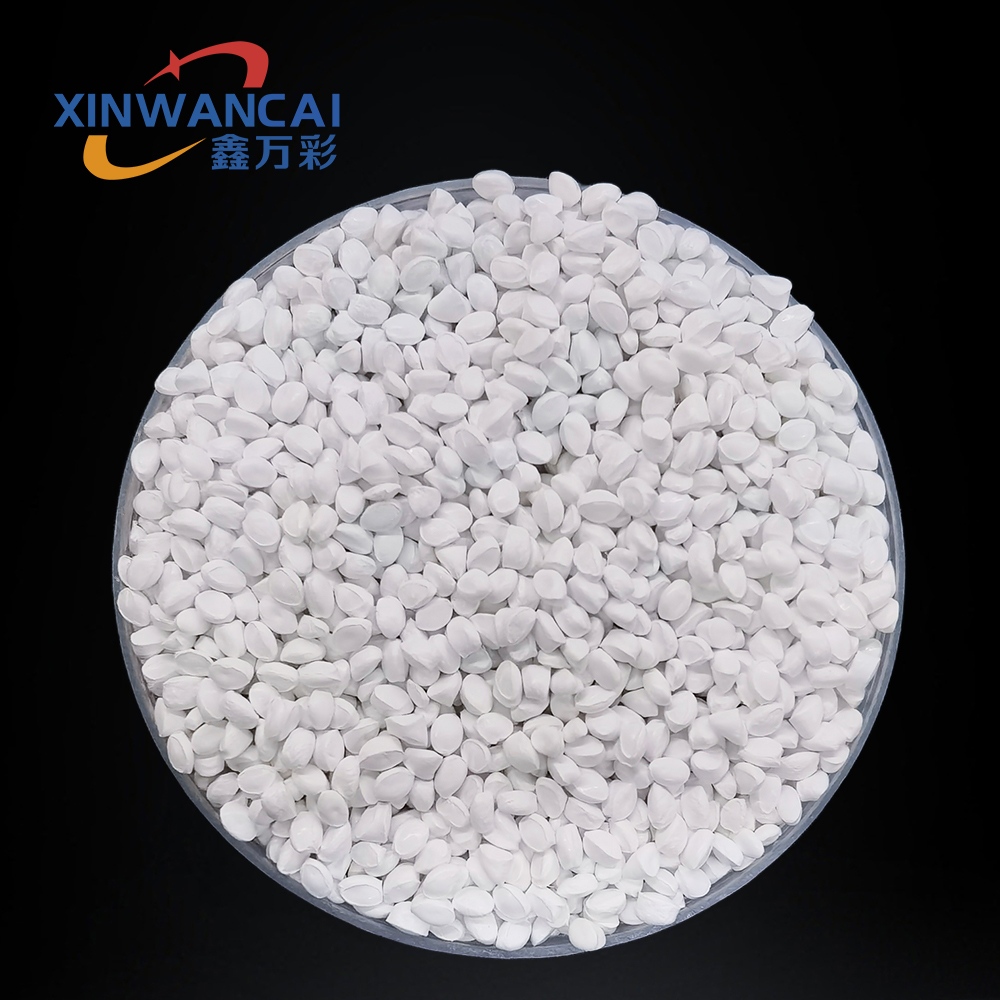
The selection of a carrier resin is far from a trivial exercise; it functions as the foundational matrix that binds pigments, additives, and fillers, directly dictating the dispersion uniformity and mechanical integrity of the final part. For instance, a carrier with high melt flow can quickly coat colorants, ensuring vibrant, streak-free surfaces in thin-wall injection molding, but may sacrifice impact resistance if the molecular weight is too low. Conversely, carrier resins with tailored molecular weight distributions can balance processability and toughness, giving parts the resilience to withstand repeated stress without micro-cracking or fading.
Beyond mechanics, carrier resin chemistry critically influences part aesthetics and long-term performance. Polypropylene carriers in automotive interiors, for example, must resist UV degradation to prevent chalkiness, while polyethylene carriers in outdoor furniture need exceptional weatherability to maintain color depth. The resin's compatibility with additives determines how well light stabilizers or nucleating agents integrate—poor compatibility leads to blooming or uneven gloss, which can ruin the perceived quality even if structural properties are intact. In this way, the carrier becomes a silent designer, shaping not just how the part looks upon release, but how it ages over years of use.
Finally, the economic and processing dimensions of carrier selection ripple through production efficiency and scrap rates. A carrier with a narrow processing window may cause burning or dimensional instability, forcing frequent line stops and higher reject rates, while a well-chosen resin flows smoothly, filling complex molds with minimal energy. Producers often overlook that the carrier's inherent shrinkage behavior can make or break precision fits in assemblies—without the right match, parts warp post-cooling, leading to hidden costs in quality control and customer returns.
The Fine Line Between Cost Savings and Performance Loss
Trimming operational expenses might seem like a straightforward win for the bottom line, but the reality is often more complicated. A decision that looks brilliant on a spreadsheet can quietly erode system responsiveness, employee productivity, or customer experience once it takes effect in the real world.
The trouble is that cost and performance don’t exist in separate silos. When you switch to a cheaper supplier, downgrade infrastructure, or cut back on maintenance cycles, the immediate savings are visible while the downstream impact can be diffuse and delayed. By the time the performance hit is obvious, the original decision might be months old and the connection between the two might not be surfaced.
Walking that fine line means looking beyond the price tag and getting comfortable with trade-offs that aren’t easily quantified. It’s about asking the right follow-up questions: where exactly will the slack be absorbed, who will feel the friction, and what does that creeping decline cost in terms of user trust or team morale. The best cost-saving moves are the ones that strengthen the core without silently bleeding capacity from the edges.
Color Consistency That Speeds Up Production Lines
When every batch of material arrives with the exact same shade, operators stop second-guessing and start moving. There’s no need to pause the line for manual adjustments or to scrap a run that drifted off-spec. That kind of predictability turns color from a bottleneck into a non-issue.
In fast-paced environments, even minor variations can trigger cascading delays. A slight shift in hue might force a shutdown to recalibrate mixing ratios or re-coat components. By locking in consistent color from the supplier, those disruptions vanish. Teams can run longer cycles, confident that what comes out at the end will match what went in at the beginning.
The real payoff shows up in throughput numbers. Without time lost to rework or quality holds, lines simply produce more in the same window. Consistent color also cuts down on rejected finished goods, which means less waste and smoother handoffs to packaging or assembly. It’s a subtle advantage that separates a frantic floor from one that hums along.
Why Some Black Masterbatches Outperform Others
Not all black masterbatches are created equal. The difference often lies in the carbon black dispersion quality. When pigment particles are uniformly distributed throughout the polymer carrier, the final product achieves deeper, more consistent color with lower loading levels. Poor dispersion leads to specks, streaks, and a dull finish that can undermine the perceived value of the final product.
Carrier resin compatibility is another critical factor. A masterbatch that uses a carrier mismatched to the base polymer can create processing headaches—screw slippage, uneven blending, or even delamination. The best performers are tailored to the specific resin family, ensuring smooth melting and homogeneous mixing during extrusion or injection molding. This compatibility also influences mechanical properties, preventing unexpected brittleness or surface defects.
Additive packages set premium masterbatches apart. Beyond basic coloring, top-tier formulations may include UV stabilizers, processing aids, or antioxidants that extend the life of the finished part. These additives must be carefully balanced to avoid blooming or plate-out on molds. When done right, they enhance both aesthetics and durability, making the masterbatch a multi-functional solution rather than a simple colorant.
Specialty Effects That Elevate Plastic Products
In the world of plastics, the difference between ordinary and extraordinary often lies in the specialty effects that are applied during manufacturing. Take, for instance, the subtle play of light achieved through metallic flake additives—these create a depth and shimmer that mimic the look of brushed metal or pearlescent surfaces, making everyday items feel premium. It's not just about aesthetics; it's about crafting an experience where the user can't help but run their fingers over the surface, drawn in by a silky soft-touch coating or a textured grip that adds both function and fascination.
Another technique that quietly transforms plastic products is in-mold decoration, where patterns and graphics are embedded directly into the material during the molding process. This isn't a surface sticker that peels off after months of use; it becomes part of the product itself, resistant to wear and capable of intricate visuals that would be impossible with traditional painting. Coupled with effects like translucent edges or gradients that catch the light, these methods turn a simple container or electronic housing into a piece of art that feels custom and considered.
The real magic, however, happens when these effects are paired with thoughtful design to address practical needs. A matte finish can hide fingerprints on frequently handled objects, while a high-gloss layer can make colors pop and seem to glow from within. From antimicrobial surfaces in healthcare devices to UV-resistant coatings that keep outdoor furniture looking new, specialty effects aren't merely decorative—they elevate the entire user experience, making the plastic product more durable, intuitive, and emotionally engaging.
FAQ
A masterbatch is a highly concentrated mixture of pigments or additives encapsulated within a polymer carrier that’s compatible with the base resin. In injection molding, it’s preferred over raw pigments because it eliminates dust, ensures precise and consistent dosing, and vastly improves dispersion. Direct pigment use often leads to specking, uneven color, and processing issues, whereas masterbatches flow freely, dissolve evenly in the melt, and maintain mechanical properties better.
The choice hinges on your base resin and performance requirements. Polymer-specific carriers—such as LLDPE-based for polyethylene parts—offer superior compatibility, better dispersion, and minimal impact on mechanical strength. Universal carriers are convenient when molding multiple resin types, but they often compromise on clarity, bonding, or heat resistance in demanding applications. For critical parts, always tailor the carrier to the polymer; for non-structural, multi-material jobs, a well-formulated universal grade can suffice.
Liquid colorants can be messy, requiring thorough cleaning and posing slip hazards. They also tend to separate during storage, risk pump clogging, and often leave a sticky residue in hoppers and feed throats. Additionally, some liquids can cause screw slippage or degrade resin impact strength over time. While they might offer fast color changes, the maintenance overhead and potential for inconsistent dosing often outweigh those quick-change benefits in high-volume production.
Absolutely. Beyond color, functional masterbatches can dramatically enhance properties. UV stabilizers prevent outdoor fading and embrittlement; antistatic grades reduce dust attraction on electronic housings; nucleating agents speed cycle times and boost stiffness; slip and antiblock additives ease demolding and prevent film sticking. Choosing the right additive masterbatch can increase part longevity, processing efficiency, and end-user safety, turning a simple colorant into a performance upgrade.
Short-term trial success often hides long-term costs. Cheaper masterbatches may use inconsistent pigments or fillers that cause die buildup, frequent purge cycles, and higher scrap rates over time. They can also vary in concentration, leading to color drift and rejected batches. A premium masterbatch with tight viscosity match, precise pigment loading, and consistent throughput will reduce downtime, rework, and customer complaints, often delivering a lower total cost per good part produced.
The key is to match the masterbatch carrier to the continuous phase of your blend. If polypropylene dominates, use a PP-based masterbatch; if polyethylene, use an PE carrier. Avoid universal carriers that sit between the phases and cause weak interfaces. Also, request low-viscosity masterbatches that blend easily without cooling the melt, which strengthens weld lines. A process audit—checking melt temperature and injection speed at the weld area—further helps prevent delamination.
For transparent applications, pigment particle size is critical. Large or agglomerated particles scatter light, causing haze and reduced clarity. Masterbatches with micronized pigments—often below 1 micron—dissolve completely, preserving light transmission. Additionally, the carrier must have a refractive index close to the base resin. Even minor mismatches create visible cloudiness. High-clarity masterbatches undergo stringent filtration and dispersion testing to ensure they don’t compromise the part’s optical properties.
Request the masterbatch’s thermal stability data from the supplier, specifically the weight loss curve from TGA analysis at your processing temperature and residence time. Perform a ‘plate-out’ test: run the material for an extended period and inspect the mold for deposits. Also, mold tensile bars and compare break strength and elongation to neat resin—any significant drop indicates thermal degradation. A robust masterbatch should show no yellowing, no release of volatiles, and less than a 5% change in mechanical properties under your actual conditions.
Conclusion
Selecting the right masterbatch for injection molding goes far beyond simple pigmentation. Additives can fundamentally alter part behavior—UV stabilizers prevent outdoor degradation, antistatic agents reduce dust attraction, and processing aids improve mold release. The carrier resin is equally critical: using a polyethylene carrier in polypropylene can compromise impact strength and weld-line integrity, whereas a perfectly matched carrier ensures uniform dispersion and mechanical performance. Yet, many processors still prioritize upfront cost, often unaware that an incompatible masterbatch can lead to higher scrap rates, clogged molds, or longer cycle times, eroding any initial savings. Spotting the fine line between a bargain and a hidden production risk demands a closer look at lot-to-lot consistency and pigment stability under high heat.
Color consistency directly affects production speed—frequent shade adjustments halt lines and waste resin. Top-tier masterbatches use tightly controlled pigment particle sizes and dispersion quality to deliver the same ΔE batch after batch, eliminating downtimes for tweaking. Even black masterbatches differ markedly: some rely on coarse carbon black that abrades molds and yields a brownish tinge, whereas premium versions incorporate fine, surface-treated particles for jet-black depth and better gloss retention. Beyond monochrome, specialty effects like metallic flake, pearlescence, or photochromic pigments can transform identical base polymers into premium branded products, adding perceived value without altering the molding process itself. The superior result ultimately comes from a masterbatch tailored to both the polymer system and the end-use demands, balancing processing behavior, aesthetics, and long-term durability.
Contact Us
Contact Person: JACK
Email: [email protected]
Tel/WhatsApp: 86 18650130917
Website: https://www.xinwancai.com/