
Import Coal-Based Activated Carbon for Reliable Industrial Purification
2026-11-02
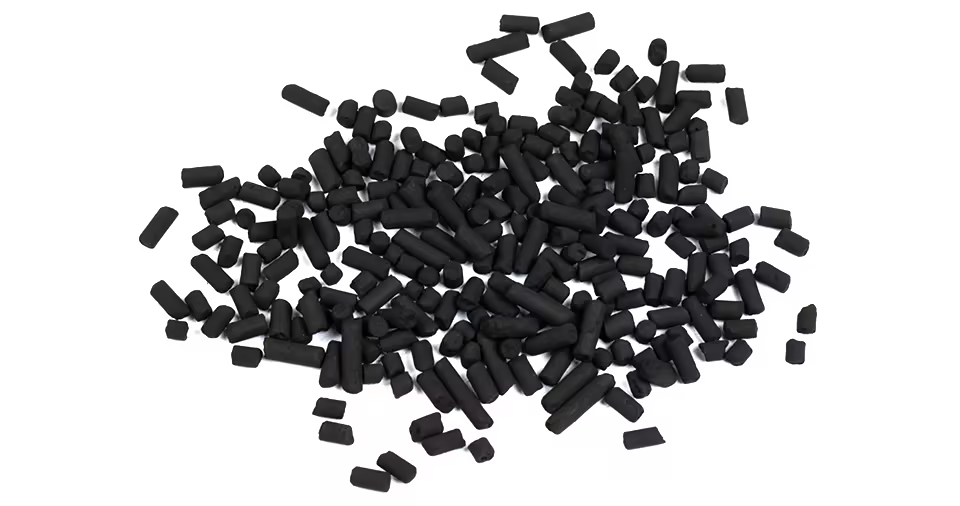
Industrial purification demands an adsorbent that doesn't just work—it works relentlessly. Coal-based activated carbon offers exactly that: deep pore structures, high mechanical strength, and consistent performance under exacting conditions. Yet not all suppliers deliver on that promise. At Tundrr, we cut through the guesswork with batch-tested, application-ready carbon that keeps your process stable and your overhead predictable. So before you settle for ‘good enough,’ ask yourself: what’s really inside your purification bed?
Why Coal-Based Carbon Still Outperforms in Harsh Industrial Streams
When a refinery or chemical plant sends a hot, acidic stream loaded with heavy hydrocarbons through an adsorption bed, the carbon material itself becomes a process variable. Coal-based grades hold up because their dense, abrasion-resistant structure survives backwashing and thermal cycling that can turn coconut shell or wood carbon into fines. The result is a bed that maintains hydraulic integrity instead of collapsing into channels or clogging downstream filters.
Beyond mechanical toughness, coal-based carbon offers a pore network skewed toward the micropore range, which is exactly where small, troublesome molecules like phenols, mercaptans, and chlorinated solvents get trapped. In streams that fluctuate between high pH and oxidative conditions, this carbon does not leach excessive ash or lose surface area the way some plant-derived alternatives do. Operators often find that a coal-based bed can run longer between replacement cycles, even when inlet temperatures push past what softer carbons tolerate.
None of this means coconut or wood carbon is useless—they shine in low-fouling, ambient-temperature applications. But when the stream is aggressive, the choice usually comes down to how much downtime you are willing to accept. Coal-based carbon's combination of hardness, tailored porosity, and chemical stability makes it the default for harsh industrial service, not because it is the cheapest upfront, but because it continues to perform when other media start to break apart.
Reading Between the Lines of a Supplier Spec Sheet
A supplier spec sheet is a curated advertisement as much as a technical document. The headline parameters on page one are usually true only at room temperature, with nominal input voltage and a gentle load. The real operating window hides in the footnotes: output tolerance over temperature, line and load regulation across the full range, and any note that says “guaranteed by design” rather than production tested. That phrase often means no one is actually measuring it on every part.
Cross-check the summary table against the characteristic curves. A graph's y-axis may be normalized, not absolute, or the x-axis may stop just before the device enters thermal throttling. If a switching regulator touts 95% efficiency, find the curve at your input-to-output ratio and your switching frequency; the number may drop by eight points at light load. Also look for derating curves for maximum power dissipation versus ambient temperature, because the bold “2A output” claim is rarely valid at 85°C without significant airflow.
Omissions matter as much as numbers. If there is no unclamped inductive switching rating on a MOSFET, no ESD classification on an interface chip, or no moisture sensitivity level, the part may not be intended for production environments. When in doubt, request the full characterization report or qualification data from the manufacturer. A supplier that cannot provide it is telling you something the first page of the spec sheet never will.
What Actually Changes When You Switch to Imported Grades
Switching to imported grades often means more than just a different name on the certificate. You'll notice tighter control over trace elements like sulfur and phosphorus, which directly affects weldability and corrosion resistance. The real shift shows up in the mill test report: imported material frequently comes with full ladle analysis and impact test values at lower temperatures, whereas domestic stock might only list the basics. This matters when your part sits near a stress riser or operates in a marine environment.
Dimensional consistency is another area that changes quietly. Imported bars and plates tend to have a narrower thickness tolerance across the full length, so your machining setup doesn't need constant adjustment for taper or crown. You also see fewer hard spots from uneven cooling because many overseas mills run accelerated cooling with better pass control. If your shop has struggled with tool wear or inconsistent finish on the same nominal grade, this difference shows up fast.
One less obvious change is batch-to-batch repeatability. Imported grades often come from single-source mills with tighter heats, meaning the chemistry and grain size stay closer to the median rather than bouncing between the upper and lower spec limits. For a production run that relies on predictable springback or heat-treat response, that narrower distribution can cut scrap rates without any change to your process parameters.
Moisture, Mesh, and the Metrics That Matter Most
In the world of performance footwear, the interplay between moisture and mesh often gets boiled down to a single marketing line. But the real story is far more nuanced. Instead of asking whether a shoe breathes, we should be asking how effectively it moves sweat away from the skin, how quickly the mesh dries after a rain-soaked run, and how well it holds up when wet. These are the unglamorous details that separate a shoe that feels great on a dry, mild day from one that remains comfortable through a humid summer workout or a surprise downpour.
Mesh itself is not a monolith. A tightly woven double-layer mesh might offer more structure and durability, but it can trap heat. An open, engineered knit might excel at ventilation but let in too much debris or water. The metrics that matter most here are less about lab-perfect breathability scores and more about real-world performance: moisture vapor transmission rate under load, dry time after saturation, and the degree to which the upper retains its shape when soaked. A shoe that drains quickly but stretches out of fit is no better than one that stays damp for hours.
What often gets overlooked is how moisture interacts with the rest of the shoe. Even the most breathable mesh upper will feel clammy if the insole or midsole traps water. The best designs treat moisture management as a system, not a single feature. That means pairing open mesh zones with hydrophobic liners, gusseted tongues that keep water from pooling at the entry, and drainage channels in the midsole. Ultimately, the metric that matters most is not any single number on a spec sheet, but the subjective comfort of a runner who has just finished a hot, wet mile and still isn't thinking about their feet.
Avoiding the Hidden Costs of Cheap Bulk Activated Carbon
The sticker price on a bulk shipment of activated carbon rarely tells the whole story. Low-cost material often arrives with a lower iodine number or a wider particle size spread than the datasheet suggests, which means your adsorption beds work harder for shorter stretches. The result is not a bargain—it's a quiet tax on every cubic meter you treat, paid out in higher dosing rates and more frequent carbon changeouts.
Cheap carbon also introduces unpredictability. A batch that performs well in one delivery can be followed by a batch with inconsistent activation, leaving operators to chase breakthrough curves instead of running a stable process. That variability can trigger overfeeding, emergency shutdowns, or even discharge violations when effluent limits are tight. The real expense shows up in lab retests, overtime labor, and the uneasy feeling that your system is one bad pallet away from an incident.
Finally, look at the full lifecycle: more frequent replacement means more spent carbon to handle, haul, and possibly classify as hazardous waste. Downtime for changeouts multiplies the lost production cost, and unplanned maintenance erodes the savings you thought you captured. Before switching suppliers on price alone, run a side-by-side pilot with your actual stream, check the moisture and ash content, and ask for batch-level quality data. A few cents saved per pound up front can easily become dollars lost per gallon downstream.
How Imported Carbon Holds Up from Port to Plant
Once a shipment of imported carbon clears the docks, the real test begins. Unloading cranes lower bulk bags or supersacks onto flatbeds, but the material inside has already endured weeks at sea—humidity shifts, salt air, rough handling. Quality checks at the port gate rarely tell the whole story. What matters is how the carbon behaves during transfer to silos, blending lines, or day bins. Dust generation, moisture pickup, and particle attrition can quietly erode the specifications that looked perfect on the bill of lading.
From the port, the journey often involves multiple handoffs: truck to rail, rail to plant siding, then pneumatic conveyance into storage. Each step introduces friction. Imported activated carbon or metallurgical coke may arrive with a higher fines content than domestic material, simply because of the longer supply chain. Smart plants compensate by adjusting receiving hoppers, slowing conveyors, or using dense-phase conveying to minimize breakage. Some operators pre-screen at the port and reject loads with excessive degradation before they even leave the terminal.
At the plant, the final proof comes when carbon hits the process. A load that held up well in transit will show consistent particle size distribution, predictable moisture, and no unexpected clumping. If it doesn't, the symptoms are usually obvious: bridging in silos, erratic feeder rates, or off-spec product. That's why forward-thinking buyers don't just inspect at the source—they track the entire handoff chain, from ship's hold to the first process vessel, and adjust handling practices to protect the carbon's integrity all the way through.
FAQ
Coal-based activated carbon offers a dense pore structure and high mechanical strength, so it holds up well under continuous flow and pressure. Its broad micropore distribution is especially effective for adsorbing low-molecular-weight organics, chlorinated solvents, and taste-and-odor compounds that other carbons may miss.
Water treatment plants, chemical processors, pharmaceutical manufacturers, and food and beverage producers commonly rely on it. It is also used in flue gas treatment, solvent recovery, and groundwater remediation where consistent adsorption capacity matters more than initial cost.
Look beyond the iodine number. Request a full specification sheet covering molasses number, hardness, ash content, moisture, and particle size distribution. Pilot testing with your actual process stream is the only reliable way to confirm performance under real operating conditions.
Often yes for large-volume industrial applications. Coal-based grades typically have a lower unit cost and longer service life in liquid-phase duty, though coconut shell may win for very high micropore volume in air treatment. The best choice depends on the contaminant profile and regeneration plans.
Verify the manufacturer's raw material source, production capacity, and export track record. Insist on batch-level quality certificates and independent third-party testing. A consistent supply from a single mine or coal seam reduces variability that can upset downstream treatment.
Yes, most coal-based grades reactivate well. Because they are harder and less friable than many biomass-based carbons, they lose less material during handling and regeneration cycles. This makes them a practical choice for systems designed around multiple reactivation cycles.
Buying on price alone without matching the carbon's pore structure to the target contaminants. Ignoring moisture content can also inflate shipping weight and reduce actual carbon received. Finally, skipping a pilot trial often leads to over-specifying or under-specifying the product.
Conclusion
Imported coal-based activated carbon continues to earn its place in demanding industrial purification because the base material itself brings a hardness and pore structure that many alternatives struggle to match when streams turn aggressive. A careful read of supplier spec sheets reveals why: parameters like moisture content and mesh distribution are not just paperwork, they directly control how the carbon handles in feed systems and how much usable surface area actually reaches the adsorption zone. When buyers switch to a well-sourced imported grade, the difference shows up in tighter lot-to-lot consistency and fewer surprises during unloading, storage, and feeding from port to plant.
That consistency is what keeps hidden costs from creeping in. Cheap bulk activated carbon often looks attractive on a per-ton basis, but higher fines, excess moisture, or unpredictable hardness can lead to filter clogging, dust losses, and more frequent changeouts. Imported coal-based grades that are properly specified and handled from port to plant give operators a more predictable bed life and lower total purification cost per unit of treated stream. For plants that cannot afford unplanned downtime, the case for importing a reliable coal-based activated carbon is less about the label and more about the measurable performance it holds onto under real industrial conditions.
Contact Us
Contact Person: Ellen Zhang
Email: [email protected]
Tel/WhatsApp: +86(21) 2287 6756
Website: https://www.tundrr.com/en/