
High Evaluation Compact Substation: Key Benefits and Installation Insights
2026-08-17
不是所有紧凑型变电站都能获得“高评价”。真正出色的产品需要在设计、效率和安装便捷性之间找到平衡。接下来,我们将探讨这些设备为何备受青睐,以及如何正确安装以避免常见陷阱。其中,Chang Song提供了一个值得研究的案例。
What Actually Changes When You Shrink a Substation Footprint
A smaller substation footprint forces the design away from sprawling air-insulated layouts toward gas-insulated switchgear or hybrid modules, and that switch ripples through nearly every engineering decision. Busbars get stacked vertically, disconnectors and earthing switches move into shared enclosures, and cable terminations are pulled tighter against the transformer bays. The result is not just a scaled-down yard; it is a different electrical architecture where phase clearances shrink, insulation coordination becomes less forgiving, and transient voltage stresses have to be absorbed inside compact compartments. Maintenance access also changes: the wide drive lanes and open walkways give way to narrow service corridors, so routine inspection and fault response rely on front-access panels and removable bus sections rather than moving a crane across open ground.
Thermal behavior shifts as well, because the same losses now dissipate into a much smaller volume. Ventilation louvres and forced-air systems replace natural convection, while transformer bunds and fire barriers are pushed closer together, demanding stricter separation logic for oil containment and blast pressure relief. On the civil side, the reduced plot often translates into deeper foundations and more complex drainage routes rather than cheaper construction, since equipment weight per square metre rises and cable trenches become multi-layered. The practical takeaway is that shrinking the footprint saves land and can ease permit negotiations, but the real change is a move from a forgiving outdoor yard to a tightly packed, thermally and electrically interdependent machine.
Installation Pitfalls That Only Show Up After Energization
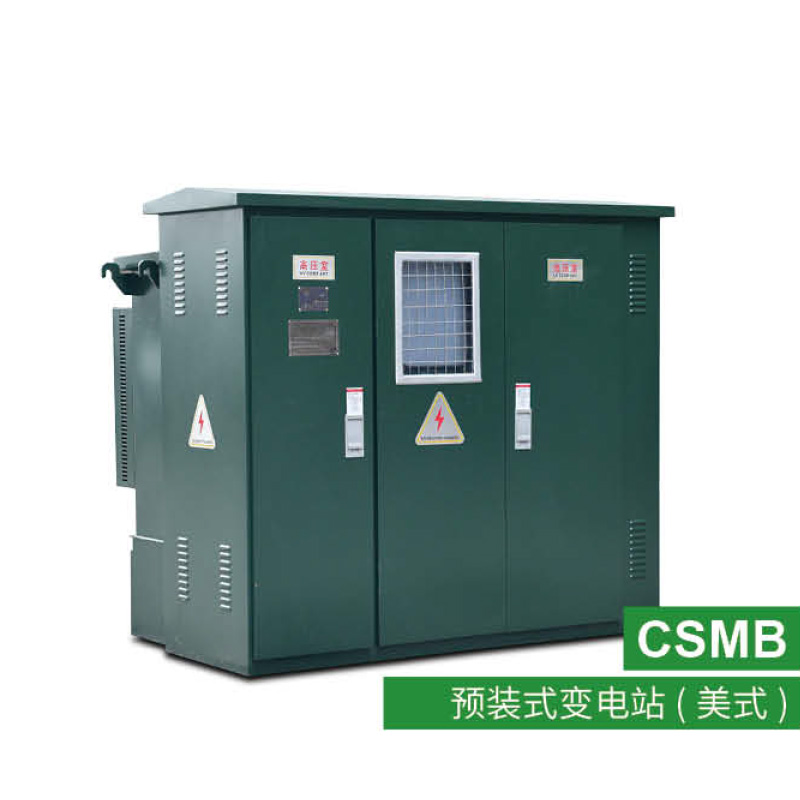
Many commissioning checklists treat energization as the finish line, but certain installation errors stay dormant until current actually flows. Loose busbar bolts that passed torque checks can heat unevenly under load; a control wire pinched in a cabinet door hinge may not short until vibration shifts it into a grounded frame weeks later. These are not abstract risks—they are the kind found by thermal cameras during the first anniversary inspection.
Another set emerges from phase rotation and grounding assumptions. A motor wired correctly on the bench may run reverse once connected to the site feeder because the incoming utility rotation differed from the drawings. Likewise, a neutral-ground bond installed in a subpanel, though harmless during de-energized testing, creates objectionable current and trips residual current devices only when circuits draw load. The equipment appears fine until a specific combination of load, temperature, or switching event exposes the flaw.
Perhaps most frustrating are protective device settings left at factory defaults because everyone assumed the commissioning engineer would adjust them later. A breaker with a too-short instantaneous pickup remains quiet through no-load checks, then trips the moment a downstream transformer inrush occurs. Or an undervoltage relay set for 0.8 per unit holds during steady-state voltage, but drops out during a motor start that wasn't simulated. These failures often get blamed on "bad equipment" when the real issue was never validating settings under energized conditions.
Reading High Evaluation Scores Without the Marketing Hype
A high score on a review site can feel reassuring, but those numbers rarely tell the whole story. Some platforms weigh recent reviews more heavily, while others count every rating equally regardless of how long ago a customer actually used the product. Before trusting a 4.8 average, look at the total number of reviews, the date range, and whether the company actively solicits feedback only from happy buyers. A smaller sample with a perfect score can be far less reliable than a larger one with a few complaints.
Another layer to peel back is who is leaving the review. Businesses sometimes offer discounts or loyalty points in exchange for a five-star post, which skews the average upward without reflecting genuine satisfaction. Check if the reviewer has a history of only praising everything or if their account was created just to leave one glowing comment. Verified purchase badges help, but they are not foolproof since some platforms mark reviews as verified based on minimal criteria.
Finally, read the text of the middle and low ratings instead of focusing exclusively on the score. A three-star review often points out specific, fixable issues that a five-star fan might overlook, such as slow shipping or confusing instructions. Those details give you a clearer picture of the everyday experience than the numerical headline. Treat the score as a starting point, not the final word, and you will make a more confident decision without being swayed by marketing gloss.
Making Cooling and Ventilation Work in Tight Enclosures
Cramped equipment rooms and sealed enclosures don't forgive poor airflow decisions. The moment you enclose heat-generating hardware, you're fighting a slow pressure cooker: stagnant pockets form near exhaust ports, and recirculation turns your carefully planned intake into a warm loop. The trick isn't simply adding more fans—it's forcing a deliberate path from cold source to hot exit, even when the physical gap between them is only a few inches. Start by mapping the dominant heat sources and their thermal plume direction, then place intake vents low and exhaust vents high on opposite sides. If the enclosure has to be dust-tight, use a ducted fan that pulls outside air through a filtered port and pushes it across the hottest components before venting upward.
Pressure balance matters more than raw airflow volume. A tight enclosure with a strong exhaust fan but restricted intake will drop below ambient pressure, pulling unfiltered air through every cable gland and seam—fast-tracking dust ingress and defeating the whole purpose. Instead, aim for a slight positive pressure inside: slightly more intake flow than exhaust, with the difference leaking out through designated filtered vents. This keeps contaminants outside while maintaining steady velocity across heatsinks. You can verify the setup with a piece of tissue paper at a vent; it should flutter outward, not get sucked inward. For high-density racks, add small internal baffles to direct air around large components rather than letting it short-circuit from intake to exhaust.
Finally, match your fan choices to the enclosure's acoustic and thermal reality. Thicker, slower-spinning fans move more air per decibel than thin, screaming ones, and they maintain static pressure better in constricted paths. Consider temperature-controlled fan curves—not just on/off—to avoid the whine of sudden RPM jumps. If the enclosure lives in a hot ambient environment, a bare air exchange might not be enough; a small thermoelectric cooler or an external heat exchanger can drop incoming air below ambient. But before adding complexity, log internal temperatures over a full load cycle. Often the difference between a quiet, stable enclosure and an overheating box is simply relocating one fan four inches to the left, right where the air actually wants to go.
The Upfront Cost Story Nobody Tells About Compact Units
Shoppers often walk into a store expecting a smaller footprint to mean a smaller price tag. Flip that assumption on its head in the compact appliance aisle. A 24-inch washer frequently carries a higher sticker price than a full-size model sitting two rows over. The reason isn’t greed. Compact units demand tighter tolerances, reinforced suspension, and higher spin speeds to handle loads efficiently in a cramped drum. Those engineering costs don’t shrink just because the cabinet does.
Volume plays the quiet villain here. Full-size machines roll off assembly lines by the million, spreading tooling, testing, and component costs across enormous batches. Compact models are a niche product. They share few parts with their larger siblings, so suppliers produce smaller runs of motors, pumps, and control boards. Every low-volume order adds a premium that lands directly on the price tag before the unit ever reaches a warehouse.
Then there’s the accessories nobody mentions until checkout. A stacking kit for a compact washer-dryer pair is often sold separately, adding $150 to $250. Ventless dryer installations may require a drain hose adapter or a longer power cord. In the kitchen, a compact dishwasher might need custom cabinetry fillers or European-style mounting brackets. These unadvertised extras quietly erase any upfront savings a buyer thought they were getting.
Planning Service Access Before You Need It
Most people don't think about how they'll reach a service until the moment they need it. By then, the pressure is on—you're calling around, comparing options with a headache or a deadline, and settling for whatever's available. Planning ahead flips that. You give yourself room to check what's actually offered, what it costs, and whether there are quieter alternatives you'd miss in a rush. It's less about being overly cautious and more about making the future version of your life a little easier.
A practical way to start is simple: pick one service you rely on regularly—healthcare, transport, banking, anything—and write down the access details you always scramble for. That might mean office hours, the direct number that skips the menu, or the exact documents you need to bring. Store it somewhere you'll actually look, like a note on your phone or a paper tucked into your wallet. If the service has an app or online portal, set up your account now while you're calm and can reset a password without frustration. It takes ten minutes and removes a whole layer of friction later.
There's another payoff that rarely gets mentioned: planning service access often reveals better options that only appear when you're not in a hurry. You might find a clinic with evening hours, a transit route that avoids the busy interchange, or a billing plan that fits your cash flow. None of that surfaces when you're desperate. Giving yourself that head start means the next time something goes sideways, you're not starting from zero—you're just following a path you already cleared.
FAQ
The main difference comes down to footprint and integration. Instead of spreading transformers, switchgear, and protection equipment across a large open yard, a compact substation packages them into a single enclosed, factory-tested unit. High evaluation models go further by using verified thermal performance, reduced internal clearances with proper insulation, and modular busbar connections that keep the overall size down without sacrificing reliability.
In tight urban locations, the smaller footprint means you can place the unit on a prepared concrete pad in a parking lot, basement vault, or between buildings where a conventional substation simply would not fit. The enclosure also reduces visual impact and noise, which can matter for nearby residents. Installation still requires proper ventilation clearance and cable entry planning, but the overall site preparation is often less invasive.
Look for interlocking mechanisms that prevent access to live parts while the transformer is energized, pressure relief devices on the transformer tank, and arc-resistant switchgear compartments. Good grounding pads and a continuous earth bar are also important, along with insulated bushing covers and clear labeling of isolation points. During installation, verify that all interlock testing is repeated after transport, because vibration can shift mechanical alignments.
Yes, most manufacturers offer modular configurations. You can specify the transformer rating, the number of outgoing feeders, protection relay brands, and even the enclosure material to match site conditions. For unusual load profiles, forced-air cooling or larger cable boxes can be added. Just keep in mind that high evaluation units usually have fixed internal layouts to maintain the tested safety parameters, so changes are typically limited to external terminations and accessories rather than core busbar geometry.
Maintenance is generally less demanding because many components are protected from weather, dust, and wildlife inside the enclosure. Instead of inspecting open busbars and insulators, crews mostly check door seals, heater operation, and torque on accessible connections. Thermographic inspections are easier when there are built-in viewing windows. However, some tasks, like replacing a transformer, can be more involved because the compact layout leaves little extra room for maneuvering.
Ambient temperature, humidity, and flood risk are the big three. High evaluation units often have climate class ratings, so you need to match the unit to local conditions. Salt-laden coastal air may require a special paint system or stainless steel hardware. Poor drainage can lead to water ingress at cable entries, so site grading matters. Also check noise limits and any local restrictions on electromagnetic fields if the unit is close to occupied buildings.
Yes, portability is one of the design advantages. Because the unit is skid-mounted or has lifting lugs built into the base frame, it can be moved with a crane or low-loader trailer. You still need to disconnect all cables, re-test the protection settings at the new location, and confirm that the new foundation meets the same load-bearing and grounding requirements. The internal equipment usually remains intact, which saves time compared to rebuilding a conventional substation.
Before earning a high evaluation label, the unit normally goes through routine factory tests such as winding resistance, insulation resistance, dielectric strength, and functional checks on all interlocks and protection devices. Type tests may include temperature rise under full load, short-circuit withstand, and internal arc classification for the switchgear compartment. Some buyers also request partial discharge measurements on the transformer and verification of enclosure ingress protection, especially for outdoor or dusty environments.
Conclusion
Shrinking a substation footprint is not just about saving square meters; it reshapes how the equipment handles heat, maintenance, and fault response. Compact units with high evaluation scores earn those ratings through verified thermal performance and internal layout, not glossy brochures. In tight enclosures, effective cooling and ventilation become the real engineering challenge—passive airflow often falls short, so designers rely on forced-air paths and carefully placed vents to keep components within safe limits. The result is a substation that fits into constrained urban sites without sacrificing reliability.
Installation surprises, however, tend to surface only after energization, such as unexpected harmonic resonance or nuisance tripping from confined grounding paths. The upfront cost story is equally murky: a compact unit may look cheaper on paper, but specialized lifting, custom buswork, and tighter commissioning tolerances can erase those savings. Planning service access before you need it is the quiet difference between a five-minute breaker check and a half-day shutdown. Reserve clearance for cable trays, relay panels, and cooling fans from day one, and the long-term ownership picture shifts from hidden headaches to predictable operation.
Contact Us
Contact Person: Tonglun Chen
Email: [email protected]
Tel/WhatsApp: 8618906642555
Website: https://www.cncsele.com