
High Containment Valve Factory Solutions for Critical Process Safety
2026-11-03
When critical process safety hangs in the balance, the last thing you want is a containment valve that merely meets the spec sheet. At AVM, we build high containment valve factory solutions that go beyond compliance—they're engineered for the unexpected. From toxic gas handling to sterile pharmaceutical lines, every valve is a silent sentinel against leaks, contamination, and catastrophic failure. But what really sets AVM apart isn't just the hardware; it's a manufacturing philosophy that treats every tolerance, every seal, and every test as a promise. In this post, we'll pull back the curtain on how our factory turns raw alloys into the last line of defense for your process—and why more plants are quietly making AVM their first call.
Containment Integrity Without Compromise
True containment integrity isn’t a single feature—it’s the refusal to accept weak points anywhere in the system. Every seal, weld, joint, and material interface must be treated as a potential failure path until proven otherwise. This means selecting elastomers and metals that resist chemical attack, thermal cycling, and mechanical fatigue not as separate criteria, but as simultaneous demands.
Validation happens not on paper, but through repeated stress tests that mirror real operating conditions. Pressure cycling, vacuum hold, leak detection with trace gases, and long-term aging exposures are all part of the same uncompromising protocol. A containment solution that passes only the minimum standard is never considered finished; it’s simply not ready.
In practice, this means no shortcuts on gasket thickness, no substitution of untested fasteners, no tolerance for drift in torque specifications. When the cost of failure is measured in product loss, environmental harm, or human safety, containment integrity cannot be negotiable. It either holds under every expected condition—or the design goes back to the drawing board.
Safety by Design, Not by Accident
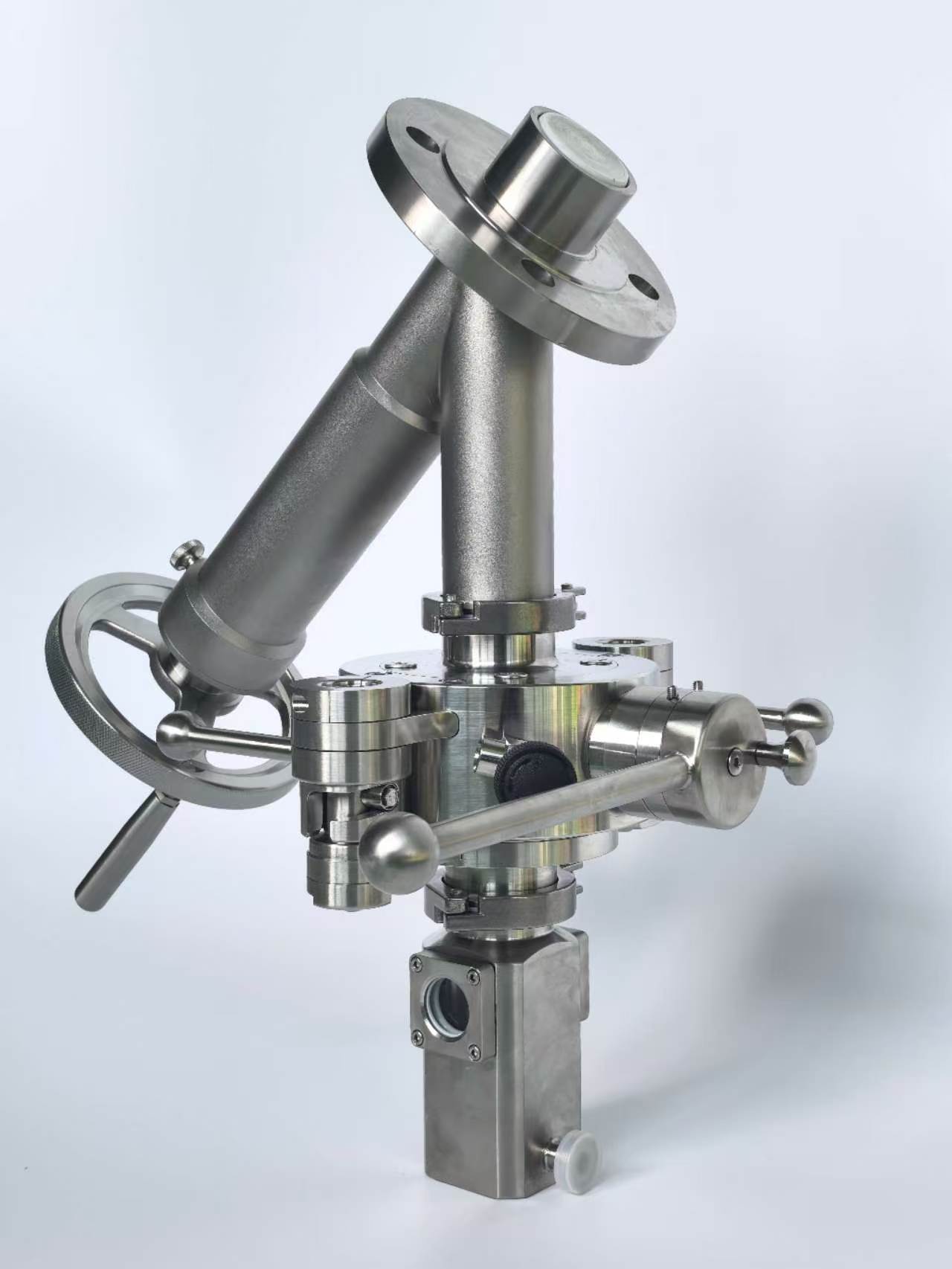
Most safety failures aren't born from a single oversight; they're the result of treating protection as an afterthought. When engineers and designers treat safety as a checklist item to be bolted on at the end of a project, they inherit the weak points that were baked in months earlier. Real safety is a habit of thought — it shows up in the way a guardrail is shaped, how a software system fails gracefully, or why a factory floor leaves space for human error. It doesn't wait for an incident report to justify its existence.
Building safety into the design process means making uncomfortable questions part of the earliest sketches. What happens when the power cuts out mid-operation? How does the interface behave when a tired worker misreads a label? These questions shift the work from reacting to damage toward anticipating it. The best teams don't just run a final safety review; they argue about material choices, test prototypes against absurd misuse, and pull operators into the design room before the first component is machined. That ongoing friction is what turns safety from a policy into a property of the product.
The payoff is rarely loud. There are no headlines for the accident that didn't happen, no bonus for the guard that never needed to trigger. But the alternative is a slow leak of trust — recalls, downtime, injuries that could have been prevented by a different curve on a handle or an extra few lines of code. Designing for safety means accepting that the most important work often looks invisible. It's the difference between hoping nothing goes wrong and knowing, from the very first drawing, that the system can withstand more than you expect it to.
Handling Hazardous Media with Confidence
Confidence in handling hazardous media doesn't come from a safety poster or a generic checklist. It starts with knowing exactly what you're moving, at what temperature, and under what pressure. Too many operations treat a caustic slurry the same way they'd treat a solvent, and that's where small leaks become big problems. When you stop relying on assumptions and start documenting every property that matters—viscosity, vapor pressure, compatibility with seals and gaskets—you begin to build a system that doesn't just survive contact but stays predictable.
The hardware matters only after the behavior of the media is understood. Pumps, valves, and liners that work beautifully with one chemical can fail quietly with another. We've seen installations where a pump was selected for its flow curve without checking whether the elastomers could handle trace amounts of acid in the stream. Six months later, the maintenance team was replacing seals on a monthly schedule. Confidence comes from matching materials and monitoring points to actual exposure, not from buying the most expensive option or copying a previous project.
Field teams also need more than a manual. They need to see what failure looks like before it happens. That means clear labeling, accessible isolation points, and realistic spill drills that don't assume perfect weather or a full crew. A confident operator can shut down a line in the dark, with one hand, because the layout makes sense and the training didn't skip the messy parts. When those pieces align—accurate media data, properly matched equipment, and people who know the equipment's limits—hazardous media stop being a constant threat and become just another parameter you control.
Built for the Toughest Process Conditions
When a reactor runs hot enough to soften standard alloys and pressure swings arrive without warning, most equipment quietly gives up. This system does not. Every seal, flange, and flow path is specified for thermal shock, abrasive slurries, and aggressive chemistry that would chew through ordinary internals in weeks.
Instead of adding layers of fragile safety margins, the design removes common failure points. Hard-faced trim, staged pressure letdowns, and self-draining geometries keep solids from packing into dead zones. The result is less unplanned downtime, fewer bypass loops, and a process line that holds its setpoints long after competitors have shut down for cleaning.
Field reports from sour gas, mining leach, and high-solids polymer lines show the same pattern: clean startups, stable mid-campaign performance, and maintenance intervals measured in years rather than shifts.
Customized Sealing Solutions for Critical Lines
Every critical production line carries its own set of pressures, temperatures, and chemical exposures. Off-the-shelf seals rarely hold up under those combined demands. We start by mapping the actual operating conditions, then tailor geometry, material grade, and surface finish to match the specific stress points on your line. The result is a seal that fits not only the flange or groove but also the reality of how your line runs day after day.
Rather than forcing your process to adapt to a standard part, our engineers adjust hardness, compression set, and reinforcement layers so the seal performs predictably through thermal cycling, vibration, and aggressive media. For lines that cannot tolerate unplanned downtime, we also provide pre-compressed designs and installation-ready kits that cut changeover time while reducing the risk of misalignment.
Testing happens on your terms, using samples of your actual media and operating envelope wherever possible. From first article inspection to ongoing batch verification, each sealing solution is documented and traceable, so you know exactly what is in place at every critical joint.
Where Process Safety Meets Manufacturing Precision
Process safety and manufacturing precision are often treated as separate disciplines, yet in high-stakes production environments they cannot function independently. Safety protocols that ignore the tolerances of precision machining create hidden risks, while tight process controls that disregard human or chemical hazards eventually undermine their own consistency. The real challenge is designing operational workflows where every micrometer adjustment and every safety interlock reinforce the same outcome: reliable parts made without incident.
Consider a chemical reactor feeding a continuous casting line. A slight variation in feedstock purity might be within the stated specification for the finished alloy, but it can alter reaction kinetics just enough to push a relief valve closer to its set point. Here, manufacturing precision is not just about dimensional accuracy; it is about keeping the entire system inside a safe operating envelope. When operators, engineers, and safety specialists share a common language around process limits, deviations are caught earlier, adjustments are smaller, and the line between "acceptable variation" and "emerging hazard" stays visibly clear.
In practice, this convergence shows up in the details: calibrated sensors that trigger both a quality alert and a safety response, maintenance schedules that account for wear without assuming perfect performance, and change management procedures that ask what could go wrong mechanically before approving a new cutting path or temperature profile. The companies that get this right rarely advertise it, because the result is simply an unremarkable shift where nothing fails, no one is hurt, and every batch meets its spec. That quiet consistency is the real benchmark.
FAQ
We don't rely on a single seal or a clever design on paper. Every valve gets tested with helium leak detection at the factory, then cycled under pressure and temperature swings that mimic real process upsets. The body, bonnet, and stem seals are all verified together as an assembly, not as separate components.
Beyond the standard hydrostatic shell test, we run fugitive emission tests per ISO 15848-1, helium mass spectrometer leak tests, and in some cases full vacuum retention checks. Each valve also gets a documented pressure test with live data, so the certificate you receive reflects what actually happened on that specific unit, not a batch sample.
Yes, and that's where a focused factory makes a difference. We've built containment valves in Hastelloy, titanium, and lined carbon steel for sizes from half an inch to twenty-four inches. The machining and welding procedures are qualified for each material, and clean assembly areas are adjusted to prevent cross-contamination between alloys.
Because a good design can be ruined by a dirty assembly bench, mixed tooling, or an untrained technician. A containment-focused factory controls the entire flow path: parts are cleaned and bagged before entering assembly zones, assembly is done in isolators or laminar flow hoods, and final packaging keeps the internals clean until installation. That's not something you can retrofit into a standard plant.
Every pressure-containing part is traced back to its heat number and original mill certificate. We also record which machine, which operator, and which inspection steps were involved. If a material issue ever arises in the field, we can identify the affected serial numbers in hours, not weeks. For pharma or nuclear applications, that level of traceability is often mandatory.
The factory is laid out so that hazardous media are handled only in sealed test cells with local exhaust and continuous monitoring. Operators use closed transfer systems for cleaning solvents and test fluids. For highly potent compounds, assembly and testing happen inside glovebox isolators, and all waste streams are captured and disposed of under permit.
It's the difference between a building where valves happen to be made and a facility designed around contamination control. We have separate zones for raw machining, precision lapping, clean assembly, and final testing, with positive air pressure cascades and HEPA filtration in the critical areas. Tooling is dedicated to specific material classes, and technicians are trained specifically on containment sealing principles rather than general valve assembly.
Conclusion
In critical process environments, containment is not a feature—it is the entire point of the system. A high containment valve factory has to treat every machined surface, every seal seat, and every pressure boundary as a potential leak path that cannot be allowed to fail. The engineering starts with containment integrity without compromise, where valve bodies and bonnets are designed so that fugitive emissions have no practical escape route. This is safety by design, not by accident: the geometry, material selection, and assembly sequence are all chosen to prevent a release before one can even occur. Handling hazardous media with confidence means the factory must prove, through hydrostatic testing, helium leak detection, and cycle endurance runs, that the valve can hold toxic, corrosive, or flammable fluids under rated pressure without drifting out of spec.
The second layer of assurance comes from building for the toughest process conditions. High containment valves often sit in lines that see thermal cycling, abrasive slurries, polymerization fouling, or extreme pH swings. Off-the-shelf designs rarely survive these realities, so the factory offers customized sealing solutions for critical lines—from live-loaded packing systems to metal bellows seals and specialized seat materials that match the exact media and temperature profile. This is where process safety meets manufacturing precision. Every trim component is verified with coordinate measuring machines, every weld is documented, and every final assembly is tested against the customer’s worst-case operating scenario rather than a generic standard. The result is a valve that behaves predictably when it matters most, giving operators one less variable to worry about in an already unforgiving process.
Contact Us
Contact Person: Ananda
Email: [email protected]
Tel/WhatsApp: 8619016718200
Website: https://www.wzaomi.com