
Germany Bidirectional Power Modules Transform Energy Management
2026-09-06
Germany’s push toward smarter grids has found an unexpected hero: bidirectional power modules. These compact devices are quietly rewriting the rules of energy flow—allowing power to move both ways with unprecedented control. At the heart of this shift is TPS, whose engineering is helping businesses turn energy waste into a strategic asset. But how exactly does a module the size of a lunchbox reshape entire infrastructure? The answer lies in a quiet revolution that’s already underway across German factories and substations.
Rethinking Energy Flow with Germany's Bidirectional Modules
Germany's push toward bidirectional modules changes how households and small businesses handle electricity. Instead of one-way flow from grid to home, these units let surplus solar power move back into the network or into electric vehicle batteries during peak demand. That flexibility turns a typical rooftop installation into a small scale balancing asset.
The real difference is in control. Older systems simply curtailed excess generation; bidirectional modules can store, shift, or return energy based on price signals or grid requests. Pilot programs in Bavaria and Baden-Württemberg have already shown that residential storage paired with bidirectional inverters can offset evening load spikes without requiring new transmission lines.
There are still hurdles, including outdated metering rules and grid codes that treat every feed-in as a potential risk. But as Germany updates its energy policy, bidirectional modules are moving from niche demonstration to a practical part of local energy resilience.
The Quiet Rise of Two-Way Power Conversion
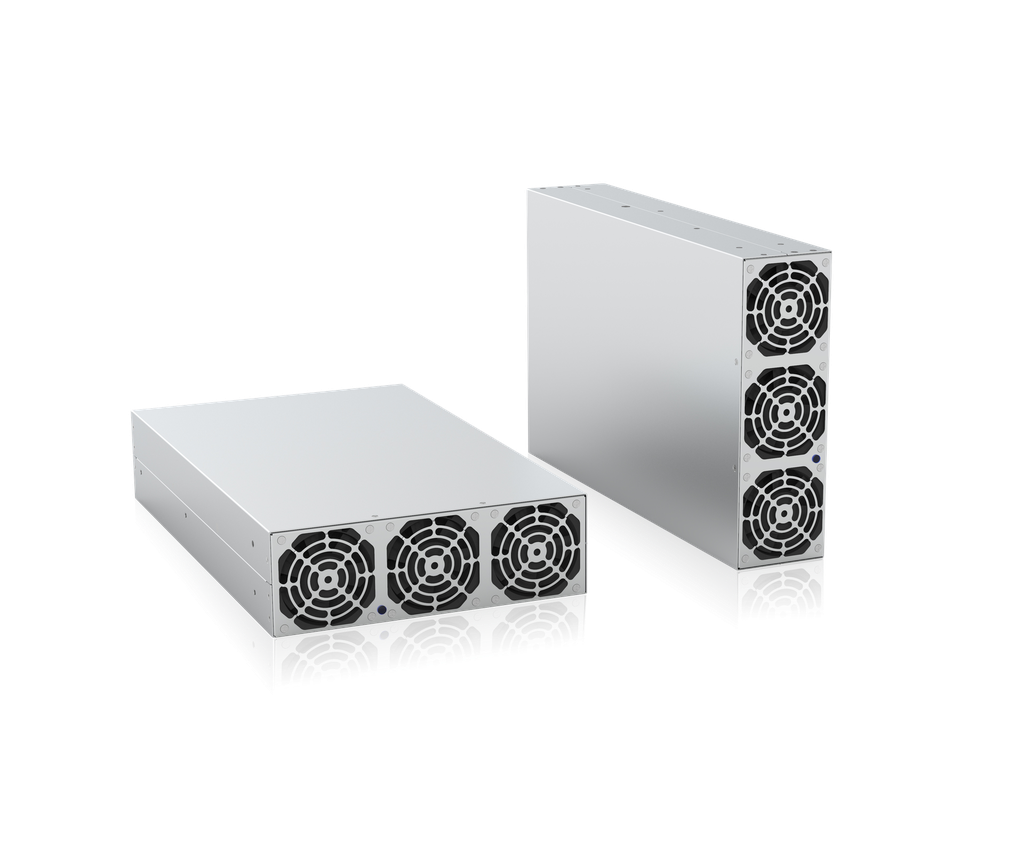
Bidirectional power conversion has been quietly reshaping how devices interact with the grid, without much fanfare. The same inverter that once only pushed solar energy into a home can now pull power back out of an electric vehicle battery during peak hours. This dual-role capability is no longer confined to experimental labs or high-end industrial equipment; it is appearing in wall chargers, residential battery systems, and even portable power stations.
The shift is driven less by a single breakthrough and more by the steady maturation of wide-bandgap semiconductors. Silicon carbide and gallium nitride switches tolerate higher voltages and switch faster than their silicon predecessors, which reduces heat and shrinks passive components. As a result, engineers can now design a single power stage that handles both rectification and inversion without doubling the bill of materials or the enclosure size.
What makes the rise quiet is that most users never notice the change. A vehicle-to-grid pilot, a backup power unit, or a solar-plus-storage setup just works in both directions without requiring a manual transfer switch or a technician to reconfigure the hardware. Utilities and manufacturers are adopting these bidirectional systems because they simplify wiring, cut peak demand, and turn idle batteries into distributed grid assets—all while the only visible sign is a slightly smaller, cooler-running box on the wall.
Where German Engineering Meets Grid Flexibility
The phrase only sounds like marketing until you open a cabinet and find wiring looms that follow the same colour-coding logic as a Stuttgart assembly line. That level of order matters when grid flexibility has to be achieved under fault conditions, not just during scheduled maintenance. German engineering tends to treat grid instability as a design load, not an exception.
Much of the real work sits between the battery cells and the substation. Smart inverters with sub-20-millisecond response, tap-changing transformers that hold voltage in a narrower band than most grid codes require, and flywheel storage that covers the first seconds after a frequency drop before slower assets ramp. These are not futuristic prototypes; they are operational equipment being asked to absorb solar forecast errors and industrial load steps every day.
What makes the approach distinctive is the refusal to paper over physical limits with software alone. Controls are designed around the machine, not the other way around. That is why grid operators here speak less about calling it smart and more about calling it controllable—a small linguistic shift that reveals a deeper commitment to building flexibility that survives real operating conditions, season after season.
From Storage to Source: Bidirectional Modules in Practice
For years, most data platforms treated storage as the final resting place: pipelines pushed everything in, and nothing meaningful came back out. The shift to bidirectional modules changes that assumption. A table or bucket can now publish events when rows appear, schemas drift, or retention policies kick in. This turns a warehouse into something closer to a live participant in the system rather than a passive archive.
In practice, this usually means pairing change data capture with lightweight adapters. A Postgres instance can stream its write-ahead log, a Parquet file in S3 can trigger a Lambda, and a Kafka topic can feed back into a feature store. The tricky parts are idempotency, ordering, and partial failures. Teams that get it right often keep a small sidecar per storage engine, one that knows how to translate internal events into a common envelope without forcing every consumer to speak the same dialect.
The payoff shows up quietly. Schema migrations stop being panic-driven because a downstream module can advertise its compatibility window before a breaking change lands. Data quality checks become loop-aware instead of fire-and-forget. Even debugging shifts: you can follow a value from a mobile app into cold storage and back out to a training set, seeing where it was transformed and why. That round-trip visibility is what separates a real bidirectional architecture from a pile of connectors.
Energy Management Gets a Reversible Upgrade
Most energy systems still treat power generation and storage as separate problems. A reversible upgrade changes that by letting the same hardware run in both directions. When electricity is cheap or abundant, the unit splits water into hydrogen and oxygen; when demand peaks, it reverses and feeds electricity back from the stored gas. This single-machine approach removes a layer of conversion losses and cuts the footprint of a typical installation.
The practical effect shows up fastest in places where renewable output swings hard. A building with rooftop solar can park midday surplus in chemical form, then draw it down after sunset without switching to a separate battery stack. Because the same stack handles both charge and discharge cycles, maintenance routines and control software become simpler rather than more complex.
That does not mean reversible equipment is a drop-in replacement yet. Thermal cycling still wears out seals and electrodes, and round-trip efficiency depends heavily on how often the system flips direction. Engineers are responding with ceramic architectures and pulsed operating modes that keep degradation predictable. What used to be a lab curiosity is turning into a controls problem, and that is exactly the kind of problem energy managers know how to solve.
Building Smarter Grids with Bidirectional Power Electronics
The traditional power grid was designed for a one-way flow of electricity, from large centralized generators down to passive consumers. Bidirectional power electronics disrupt that model, allowing energy to move in multiple directions with precision and speed. This shift enables a more resilient architecture where distributed resources such as rooftop solar, battery storage, and electric vehicles can actively participate in grid balancing rather than simply drawing power.
At the heart of this transformation are converters that can switch between rectification and inversion on demand, often within microseconds. Unlike mechanical switches or older thyristor-based systems, modern silicon carbide and gallium nitride devices reduce switching losses and thermal stress, making frequent bidirectional operation practical. These power stages coordinate with local controllers to manage voltage, frequency, and reactive power, effectively turning every connected asset into a flexible grid node.
The result is not just smarter hardware but a smarter operational philosophy. Instead of relying on large spinning reserves to handle sudden load changes, grid operators can dispatch distributed bidirectional converters to absorb or inject power where it is needed most. This reduces curtailment of renewables, extends the life of existing transformers, and creates new economic models where prosumers are compensated for the grid services their power electronics quietly provide throughout the day.
FAQ
Germany already has a large base of distributed solar and wind capacity that often produces more power than local grids can absorb at peak times. Bidirectional modules let that surplus flow back into batteries or vehicles instead of being curtailed, which eases strain on aging distribution lines and reduces the need for expensive grid upgrades.
Rather than treating a building as a passive consumer, a bidirectional power module turns it into a controllable node that can import, store, and export electricity. This means a commercial site can charge a battery when prices are low and discharge it when tariffs spike, without switching between separate pieces of hardware.
The country's grid codes and high renewable penetration force manufacturers to meet unusually strict safety and synchronization standards. That regulatory pressure, combined with a strong automotive sector working on vehicle-to-grid, pushes German firms to refine bidirectional designs faster than in markets where one-way power flow is still the norm.
They act as the interface between a vehicle's high-voltage battery and the AC grid, handling conversion in both directions as well as islanding protection and reactive power support. Without a robust bidirectional module, an electric car cannot safely feed energy back into a home or grid during peak demand.
Heat management and switching losses become much harder to control when current flows both ways at high frequency. Engineers are moving toward silicon carbide semiconductors and more compact liquid-cooled layouts to keep efficiency above 98 percent without making the modules too bulky for residential use.
A household with rooftop solar and a bidirectional module can shift more of its own generation into evening hours instead of exporting it for a low feed-in tariff. Over time this reshapes the economics of home storage, because the same hardware that charges a wall battery can also pull from an electric car or sell back to the grid when local prices justify it.
Conclusion
The assumption that electricity only moves from central plants to passive consumers is quietly falling apart. Germany's bidirectional power modules are at the heart of that shift, turning what used to be a rigid one-way street into a two-way exchange. These compact power electronics let energy flow back from batteries, vehicle-to-grid setups, or industrial drives whenever the grid needs support. It's not about dramatic disruption; it's about German engineering making reversal feel natural—high switching frequencies, robust thermal management, and control algorithms that respond in milliseconds. Grid flexibility stops being a policy slogan and becomes a physical capability packed into a module.
In practice, a battery storage unit can charge during cheap solar hours and push power back in the evening peak. An electric vehicle becomes a rolling energy source. Even factory equipment can recover braking energy and feed it upstream. That reversible upgrade changes how energy management is planned: instead of treating consumption and generation as separate worlds, one device handles both. As these modules spread across residential, commercial, and utility-scale projects, they quietly build smarter, more resilient grids—not through huge infrastructure projects, but through thousands of small two-way nodes that respect the physics of the network.
Contact Us
Contact Person: Lily
Email: [email protected]
Tel/WhatsApp: +49 (0) 2161 49526-0
Website: https://tps-elektronik.com/en/