Electric Wheelchair for the Elderly Production: Key Manufacturing Insights
2026-08-14
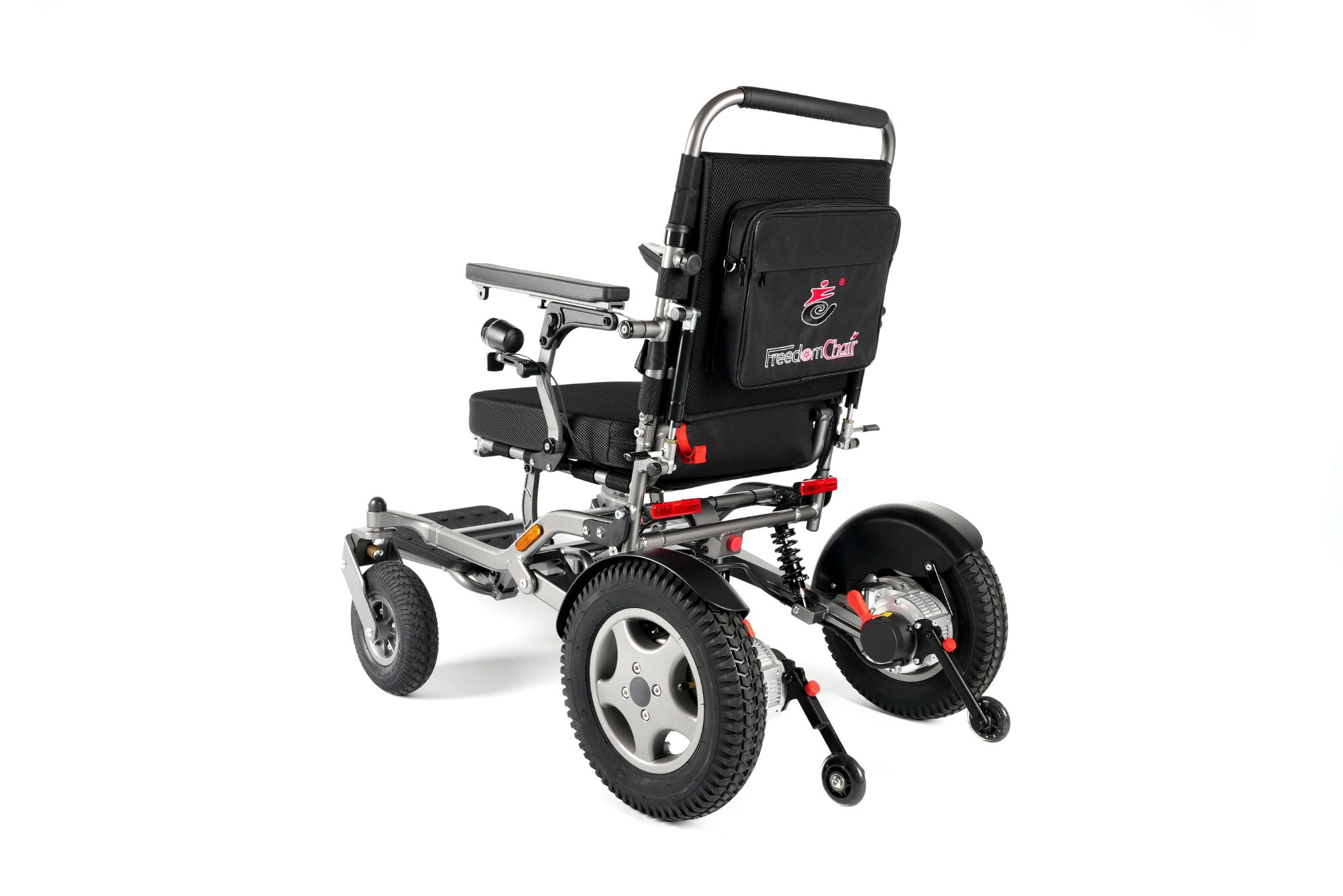
Behind every reliable electric wheelchair lies a manufacturing process that balances safety, comfort, and precision—yet few people ever see how these essential mobility aids are made. At Freedomchair, that balance isn't left to chance. In this post, we break down the key manufacturing insights shaping electric wheelchairs for the elderly, from frame durability to battery integration, and reveal why those details matter more than you think.
Why Most Electric Wheelchair Frames Fail Too Early
The anatomy of an early frame failure rarely traces back to a single dramatic moment. Instead, it accumulates quietly in the joints where tubing meets brackets, where repetitive micro-flexing goes unnoticed until a crack propagates across a weld. Many manufacturers opt for thinner-walled aluminum or low-grade steel to shave shipping weight, but this choice transfers every curb drop and uneven sidewalk impact into the frame’s weakest points. The result is a chair that feels solid on day one yet develops a subtle looseness within months—a looseness that eventually becomes a structural fracture.
Another overlooked culprit is the mismatch between frame geometry and real-world driving habits. Users who navigate tight indoor spaces or frequent ramps put torsional stress on the chair’s crossbars and caster mounts. When designers prioritize a compact folded footprint over reinforcing these high-load zones, the frame twists in ways its original stress analysis never anticipated. Powder coating can hide hairline cracks for a while, but once moisture seeps into raw metal, corrosion accelerates the fatigue cycle far faster than any warranty can respond.
Perhaps the most avoidable failure stems from inconsistent manufacturing tolerances. A frame that leaves the factory with even a 0.5° misalignment in the fork stem or a slightly off-center axle plate will load one side disproportionately. Over thousands of revolutions, this imbalance works like a slow jackhammer on the frame’s connection points. Quality control that relies on visual inspection rather than jig-based dimensional checks lets these defects slip through, condemning otherwise sound designs to premature retirement.
The Battery Compartment Is the Real Safety Frontier
Most safety conversations stop at the cell chemistry, but the enclosure around those cells does the unglamorous work of keeping a device from turning hazardous. A poorly sealed battery compartment lets moisture creep in, invites corrosion across terminals, and can turn a minor drop into a short circuit. The real front line is not the battery itself—it's the latch, gasket, and contact layout that decide whether everyday abuse stays boring.
Designers who treat the compartment as an afterthought often inherit field failures that no battery spec sheet can explain. Tabs that flex too much, springs that lose tension after a few dozen insertions, or plastic that warps near heat sources all create the kind of intermittent contact that leads to arcing. A robust compartment uses captive screws or child-resistant doors not as features, but as basic hygiene.
What separates a forgettable compartment from a safe one is how it handles the moment things go wrong. Vents that direct gas away from the user's face, flame-retardant walls that contain a thermal runaway, and terminals that break contact when the cover opens—these details rarely show up in marketing, but they are the difference between a scare and a serious injury.
Designing Joysticks for Arthritic Hands, Not Just Spec Sheets
Most joystick datasheets list force, throw distance, and cycle life, but none of that tells you if a person with swollen knuckles can actually wrap their fingers around the grip. The real design work starts with watching how arthritis changes a hand's resting shape and range of motion. A gentle cone taper, a slightly oversized palm rest, and buttons that fire with a light press can make more difference than a marginally better potentiometer.
Grip force is where early prototypes usually fail. A healthy tester will happily squeeze a stiff spring, while someone with joint pain may avoid the stick altogether. Designers need to test with users who have reduced pinch strength, not just read ergonomic guidelines. That often means replacing the traditional top-mounted trigger with a side paddle or adding programmable dwell controls so a user never has to hold a button while moving the stick.
Durability matters too, but not in the way spec sheets suggest. A joystick rated for five million cycles is worthless if its boot requires a hard pinch to keep clean or its base plate digs into a wrist after ten minutes. Rounded edges, a matte non-slip surface that doesn't rely on firm grip, and easy access to the USB port can turn a painful device into one that disappears into the work.
Foam, Fabric, and the Fight Against Pressure Sores
Pressure sores don't announce themselves loudly. They begin quietly under the skin, in places where bone presses against a chair or mattress for too long. The materials meant to cushion us—foam and fabric—carry a responsibility most people never consider. A poorly chosen foam collapses after weeks of use, losing the very resilience that once lifted weight off vulnerable areas. Fabric, too, matters more than its softness suggests. If it traps heat and moisture, skin weakens without visible warning. The right combination, however, works invisibly: foam that redistributes pressure rather than concentrating it, fabric that breathes and glides instead of gripping the skin. That is where prevention truly starts.
What makes one foam outperform another isn't thickness alone; it's how the material responds over hours, not minutes. High-density varieties hold their shape under constant load, while low-resilience options gradually flatten into useless slabs. Then there's the surface layer—the fabric covering the foam. A stiff or coarse textile creates friction every time a person shifts, and friction tears at skin already stressed by pressure. But a smooth, low-shear cover allows movement without that hidden damage. Manufacturers often test these materials with pressure-mapping systems, but real-world use tells a different story. People sweat, spill drinks, and sit for far longer than lab protocols assume. Foam and fabric need to survive that reality, not just a clean test bench.
The fight against pressure sores isn't won with a single product or a perfect spec sheet. It's a quiet negotiation between material science and daily habit. Foam must recover overnight after being compressed all day. Fabric must dry quickly, resist pilling, and stay cool against skin. When both work together, the risk drops dramatically—but that requires designers to respect the body's needs over marketing shortcuts. A cushion that feels plush in the showroom may become a hazard by the third month. Conversely, a firmer, seemingly less comfortable option might save someone from a wound that takes months to heal. In the end, the best defense is material honesty: foam that doesn't pretend to be soft, and fabric that doesn't pretend to be more than a second skin.
Testing on Gravel, Grass, and Grocery Store Floors
Taking a machine that claims to handle any surface out onto a gravel driveway feels like asking for trouble. The loose stones shift under the wheels, but the rubber treads bite down and keep the unit from sliding sideways. Small rocks do get kicked up against the lower chassis with a sharp ping, yet the steering stays true and the traction never wavers. The main hassle is cleaning out the crevices between the gravel pieces—the vacuum has to make several extra passes at odd angles before the grit finally gets pulled free.
Grass is a completely different story. On a damp lawn right after a rain, typical wheels would spin and sink, but this machine uses wide, soft contact pads that slowly press the blades flat and then let them spring back without leaving ruts. The mowing attachment, however, does tend to wrap a few tough grass stems around its shaft in taller patches, so you have to stop and clear it by hand now and then. By contrast, a dry, short lawn poses almost no challenge, and the machine moves up to a third faster there than on gravel.
Inside a grocery store, the mood shifts again. The polished ceramic tiles meet the rubber mats at the checkout with a raised edge, and the machine gives a slight jolt each time it crosses that seam before automatically adjusting its suction. What's really unexpected is how it handles the wet produce section—no skidding, no smearing water across the floor, just a clean narrow strip left behind. The only annoyance is the store traffic: the obstacle sensors sometimes slam to a stop when a kid darts across the aisle, but a quick restart puts it right back on the original path.
How Modular Assembly Cuts Repair Wait Times for Seniors
Waiting weeks for a simple repair can be especially hard on older adults, many of whom rely on daily-use medical equipment or struggle with mobility and transportation. Modular assembly changes that dynamic by pre-building key components off-site, so a technician arrives with ready-to-fit parts instead of ordering piece by piece after diagnosing the problem. For seniors, this means a broken stairlift, shower chair, or adjustable bed can often be fixed in a single visit rather than dragging on across multiple appointments.
The real time savings come from standardizing the most failure-prone modules—motors, control panels, mounting brackets, and wiring harnesses. Instead of troubleshooting an entire device on the kitchen table, technicians swap out a tested module in minutes. That kind of speed matters when a senior is stuck without a working wheelchair ramp or oxygen concentrator stand. It also reduces the need for follow-up visits, which can be exhausting and costly for people on fixed incomes.
Repair shops that adopt modular assembly often keep a small inventory of common modules in their vans, letting them cover a wide range of brands and models without waiting for special orders. This approach shifts the bottleneck from parts delivery to skilled labor, and even then, the labor is far more predictable. For seniors, the benefit is clear: fewer days of disruption, less time spent coordinating appointments, and a quicker return to the routines that keep them independent and safe at home.
FAQ
Most manufacturers land on a combination of 6061 aluminum for the main frame and reinforced nylon or steel inserts at high-stress joints. Aluminum keeps the total weight low enough for caregivers to lift into a car trunk, while the inserts prevent cracking around the seat post and footrest mounts. Carbon fiber appears in premium models, but the cost rarely justifies the marginal weight saving for this demographic.
A 24V or 36V lithium iron phosphate pack is usually a smarter choice than standard lithium-ion. The energy density is slightly lower, but the thermal stability is far better, which matters when the chair is parked indoors overnight. Aim for a modular pack with a handle and keyed connector so a family member can swap it without bending down. Continuous discharge rates should stay conservative to avoid voltage sag on ramps.
The seat cushion material and contour matter more than the width adjustment. A multi-layer foam with a memory foam top and firmer base spreads pressure across the ischial bones. Add a slight anterior tilt of two to three degrees to stop the pelvis from sliding forward. Breathable spacer fabric on the cover keeps moisture down, which is often the bigger cause of skin breakdown than pressure alone.
Beyond the standard motor and brake checks, every unit should run a loaded test on an incline of at least six degrees with a simulated user weight. Electromagnetic brake engagement should be verified with the motors under load, not just in free spin. A 24-hour soak test with the controller powered on catches intermittent faults that a five-minute bench test will miss. Finally, inspect the wiring harness at full steering lock in both directions because that is where insulation tends to rub through.
One practical approach is to keep the base frame identical and use a seat pan kit with three or four width options that mount to the same bolt pattern. The backrest caning and armrest spacing become the variable part, assembled in a separate cell. This prevents the main line from slowing down while still accommodating hip widths from 40 to 60 centimeters. Upholstery patterns are cut by CNC so custom dimensions do not require hand trimming.
The brushed DC motors are relatively easy to source from multiple suppliers, but the joystick controller and its firmware tend to be single-sourced. If the controller supplier revises a chip or goes out of stock, the whole line stalls. Dual-sourcing controllers with identical CAN protocols is worth the engineering effort. Also pay attention to the wiring harness connectors; a cheap connector can cause more field failures than the motor itself.
These chairs are used around hospital beds, oxygen concentrators, and pacemakers. A poorly shielded motor controller can emit noise that interferes with other medical equipment. Testing to IEC 60601-1-2 is not just a regulatory checkbox; it directly affects user safety in the home environment. The cost of adding ferrite beads and shielded cables is small compared to the liability of a malfunction near sensitive devices.
Conclusion
Manufacturing electric wheelchairs for elderly users demands attention to failure points that standard designs overlook. Frame durability is rarely about raw material strength—most premature failures trace back to stress concentrations near weld joints and folding mechanisms where repeated loading creates microcracks. A better approach is to reinforce those zones with gussets and use heat-treated aluminum tubing, then validate with accelerated cycle testing that mimics years of curb drops and doorway impacts. Battery enclosures deserve equal scrutiny: they need sealed compartments with drainage channels, crush-resistant walls, and thermal isolation from the motor controller so a single wiring fault cannot escalate into a fire risk. Testing cannot stop at lab benches; prototypes should be pushed across gravel, wet grass, and uneven grocery store flooring to expose rattles, wheel scrub, and caster flutter before production tooling is locked.
Comfort and serviceability matter as much as structural integrity. Joystick controls should be designed around swollen, arthritic fingers—larger paddle surfaces, low actuation force, and programmable dead zones reduce unintended movements without dumbing down responsiveness. Seat materials are another quiet safety system: multi-layer foam with pressure-relief cutouts, breathable cover fabrics, and adjustable back angles help prevent pressure sores during long sitting periods. Finally, modular assembly pays off downstream. When the battery tray, drive wheels, and controller module can be swapped with basic tools, technicians can handle most repairs in a home visit instead of shipping the chair back to a depot. That means fewer days without mobility for seniors, which is ultimately the metric every manufacturing decision should serve.
Contact Us
Contact Person: Calvin Fan
Email: [email protected]
Tel/WhatsApp: 8618913265607
Website: www.freedom-chair.com