
Custom Vacuum Circuit Breaker Solutions for Your Unique Needs
2026-11-16
Standard vacuum circuit breakers are built for the average installation, but your system probably isn't average. Unusual load profiles, tight enclosures, or harsh environments demand more than a catalog pick. That's why XIAOPAI provides custom vacuum circuit breaker solutions engineered around your actual operating conditions. Instead of adapting your project to the breaker, we adapt the breaker to your project—improving fit, reliability, and long-term performance. Here's what this tailored approach means for your switchgear.
Tailored Interruption for Specialized Grid Demands
Grid operators have long relied on broad interruption schemes that treat every load as interchangeable. Yet real-world demands rarely fit that mold. A specialized data center may tolerate a brief voltage sag but cannot handle a full disconnect, while a cold storage facility can ride through an outage for hours if given advance warning. Tailored interruption means shifting from blanket curtailment to granular, context-aware decisions that respect each consumer's technical limits and operational rhythms.
The approach draws on real-time telemetry and contractual signals rather than a single emergency threshold. For instance, an industrial arc furnace might be asked to pause for fifteen minutes during a transmission constraint, whereas a hospital's backup circuit stays untouched because its load profile is flagged as critical. These distinctions are not arbitrary; they come from negotiated parameters that reflect how different facilities interact with voltage fluctuations, frequency deviations, or scheduled maintenance windows.
Implementing this level of specificity requires close collaboration between grid planners and end users. Utilities that adopt tailored interruption often find that voluntary participation rises sharply once customers see their own constraints being honored. Instead of imposing a generic rolling blackout that frustrates everyone, the grid sheds exactly the flexible capacity available at that moment, keeping essential services running and reducing the economic sting of supply shortfalls.
When Standard Ratings Fall Short: A Closer Look at Custom Configurations
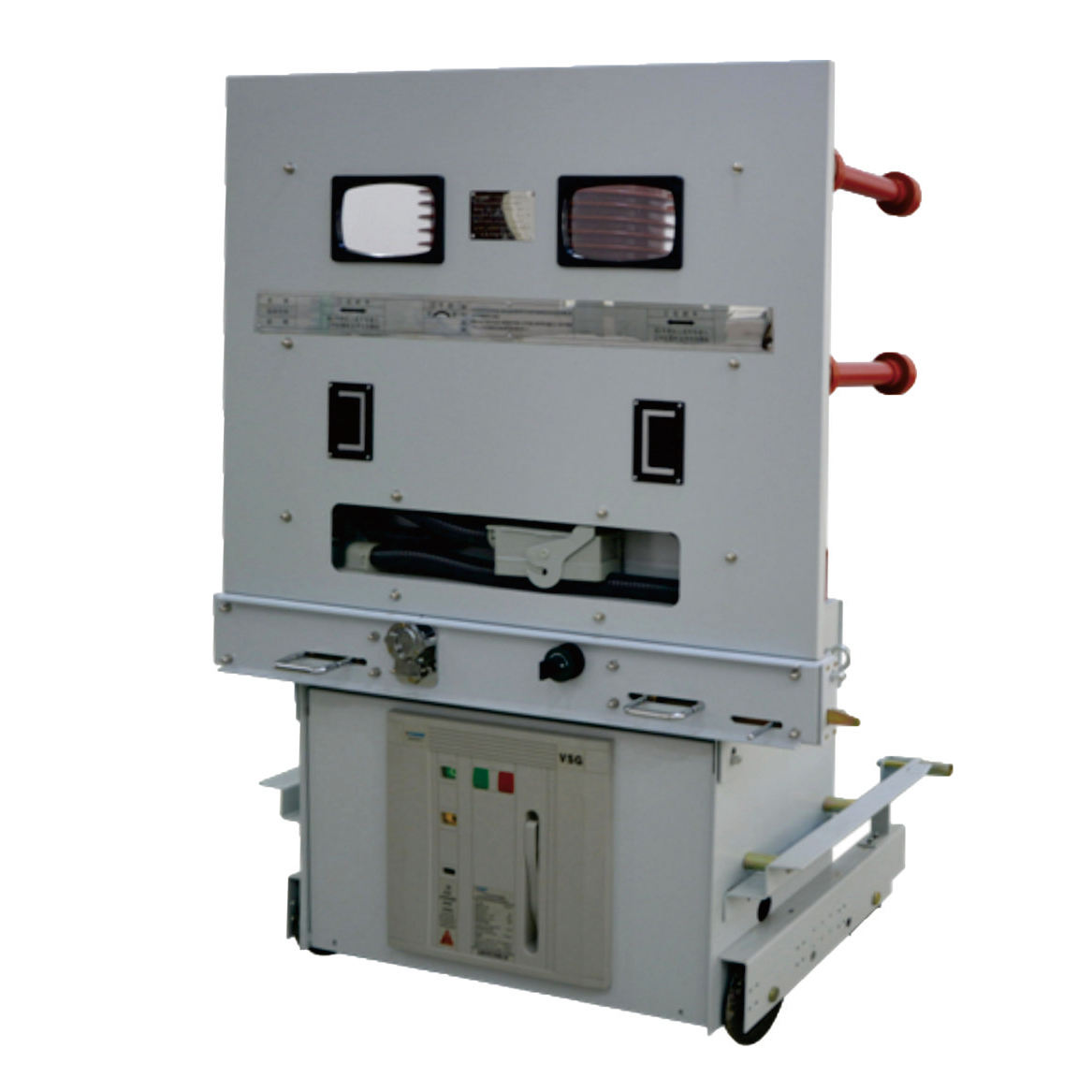
Off-the-shelf ratings promise a quick way to compare products, but they rarely capture the conditions that matter most to a specific installation. A device might earn top marks for efficiency under ideal lab settings, then struggle in a humid or high-vibration environment. Custom configurations start from those real-world constraints, not from a one-size-fits-all scorecard.
The gap becomes clearer when you look at how standard tests are structured. They often isolate single variables, leaving interactions unexamined. In a custom setup, engineers can push multiple parameters at once—temperature swings, duty cycles, load profiles—and observe failures that no published rating would reveal. That closer look turns vague marketing numbers into data you can actually trust for a particular deployment.
None of this means standard ratings are useless. They offer a baseline. But relying on them alone is like choosing hiking boots by how they look on a store shelf. A custom configuration walks the trail first, so the final recommendation fits the terrain, not the brochure.
From Blueprint to Breaker: Engineering Around Your Operating Constraints
When a process lives only on paper, every constraint looks like someone else’s problem. The real work begins once you trace the line between the schematic and the shop floor, the sprint board and the support queue, the budget forecast and the broken sensor. That gap is where operating constraints hide—not in the design, but in the handoffs, the exceptions, the quiet workarounds people invent to keep things moving.
Engineering around those constraints rarely means adding more capacity or issuing another policy. It means reading the system as it actually behaves, then changing the shape of the work: batching tasks differently, reordering approvals, cutting a dependency that no longer earns its keep. The goal is not to eliminate friction—some friction is useful—but to keep it from becoming the defining feature of your team’s day.
A good breaker doesn’t swing harder; they find the stress point. That applies to code, to infrastructure, to schedules, and to the unspoken rules that govern how decisions get made. Once you accept that constraints are part of the material you’re building with—not a flaw in the plan—you can design for them instead of around them.
Compact Footprints, Uncompromised Arc Control
Shrinking the chassis doesn't mean sacrificing the arc's authority. The internal layout prioritizes a short, shielded power path so that every strike feels immediate and controlled, even when space around the machine is tight.
Users working in cramped corners or mobile rigs will notice how the reduced footprint never interferes with fine-tuning the arc characteristics. The controls are placed for instinctive reach, and the arc remains steady through long, irregular joints where larger units often struggle.
This balance comes from rethinking the cooling and magnetic field management rather than trimming corners. The result is a machine that sits unobtrusively on the bench or in the van, yet still delivers the crisp starts and stable puddle control expected from far bulkier equipment.
Material Choices That Withstand Harsh Switching Cycles
Repeated switching cycles punish materials in ways that static components never experience. Each make-and-break event brings a flash of arc heat, a surge of mechanical stress, and a burst of localized erosion. Over thousands or millions of operations, these small insults accumulate. Choosing the right material isn't about picking the strongest option on a datasheet—it's about matching degradation profiles to the actual duty cycle, including inrush currents, contact bounce, and ambient temperature swings.
For contact surfaces, the classic trade-off sits between hardness and conductivity. Pure silver carries current beautifully but welds and transfers metal under sustained arcs. Silver-nickel alloys resist welding far better, though they run warmer at high currents. For the harshest switching environments—think motor starters or capacitive loads with severe inrush—silver-tin-oxide or silver-cadmium-oxide composites hold up because the oxide particles interrupt molten metal flow and keep the contact face rougher, which shortens arc duration. Meanwhile, silver-tungsten and silver-molybdenum blends survive extreme arc erosion, but they demand higher contact force to overcome their surface resistance.
Beyond the contacts themselves, springs and structural elements need equal attention. Beryllium copper remains a workhorse for movable contact arms because it keeps its spring force after millions of flex cycles, whereas phosphor bronze loses tension sooner. For insulators and arc chambers, ceramics and high-temperature thermoplastics like polyetherimide (PEI) or liquid crystal polymer (LCP) prevent carbonized tracking paths from forming across narrow gaps. Even small choices—like using a low-outgassing epoxy instead of a standard potting compound—can determine whether a switch survives its rated electrical life or fails early from surface leakage and restrikes.
Integrating Custom Vacuum Technology into Existing Switchgear
Upgrading aging switchgear with custom vacuum interrupters often trips up on dimensional mismatches, but the real constraint sits deeper. The vacuum bottle's stroke length, contact wipe, and mounting flange geometry need to match the existing operating mechanism's force curve, not just its bolt pattern. A retrofitted 12kV breaker might close with too much impact if the interrupter's spring force was tuned for a different cam profile, leading to premature bellows fatigue or contact bounce under short-circuit conditions.
Rather than forcing an off-the-shelf interrupter into place, successful integrations start by mapping the mechanism's travel, velocity, and torque across the full open-close cycle. Custom vacuum technology then adjusts the interrupter's internal buffer springs, the contact gap, and even the arc-control geometry so the modified switchgear behaves like the original, only with a sealed interrupting medium. This kind of reverse-engineering approach sidesteps the need to rebuild the entire panel or change relay protection settings.
Field teams sometimes overlook that custom vacuum retrofit also changes the dielectric coordination inside the tank. Partial discharge levels at the bushing roots or cable terminations can creep upward once the old oil or air interrupters are gone, simply because the vacuum gap recovery is so fast. Checking the insulation margins with a hand-held PD detector after the retrofit, not just the factory test report, catches issues that lab conditions never reproduce.
FAQ
A custom unit is designed around your specific voltage, current, interrupting capacity, physical footprint, and environmental conditions. Instead of forcing your application to fit an off-the-shelf breaker, the breaker is built to fit your application. This often means better performance, fewer compromises, and easier integration with existing switchgear or enclosures.
Yes, that's one of the most common requests. We can modify busbar orientation, terminal type, mounting points, and overall dimensions to match your existing layout. We can also work with your drawings or do a site survey to make sure the replacement drops in without major rework.
Every design goes through type testing and routine production tests relevant to your region and industry, whether that's IEEE C37, IEC 62271, or specific marine, mining, or utility requirements. We provide full documentation, test reports, and certification so you're not left guessing about compliance.
Typically we need rated voltage, rated current, short-circuit breaking current, operating sequence, ambient temperature range, and any physical constraints or communication protocols. If you have existing drawings or photos of the installation, that helps a lot. We usually send a detailed questionnaire to capture everything in one pass.
Absolutely. We can build in temperature sensors, partial discharge monitoring, motorized racking, and communication interfaces like Modbus, IEC 61850, or DNP3. This lets you track breaker health, operate it remotely, and schedule maintenance before failures occur.
It depends on complexity, but most custom designs ship within 8 to 14 weeks after drawing approval. Rush options are sometimes available for urgent replacements. We'll give you a firm delivery date as part of the proposal so you can plan your outage or installation window.
Yes, we can provide remote guidance, on-site supervision, or full turnkey commissioning by our engineers. We also supply detailed installation manuals, wiring diagrams, and spare parts lists. After commissioning, we remain available for troubleshooting, training, and warranty support.
Custom often ends up cheaper than adapting a standard unit when you factor in rework, extra parts, lost time, and potential performance issues. We quote a fixed price after reviewing your requirements, so there are no surprises. You also get exactly what you need without paying for features you won't use.
Conclusion
Grid operators rarely face textbook fault currents. A custom vacuum circuit breaker starts with the specific interruption duty you actually measure—not the nearest catalog rating. By reworking contact geometry, stroke length, and damping behavior, manufacturers can tune clearing times around asymmetric offsets or unusually steep transient recovery voltages. When a standard 31.5 kA frame leaves too little margin, a rebuilt interrupter with adjusted arc-control plates and a reconfigured actuator may deliver the same physical interface while pushing interruption capacity where it's needed. That kind of engineering works backward from your relay settings, bus bracing, and cable charging currents, so the final device lands inside the existing protection scheme instead of forcing a redesign.
Space constraints don't have to mean weaker arc quenching. A shorter pole pitch and smaller tank can still preserve dielectric recovery if the shield geometry and contact material are chosen for the actual number of operations per year, not a generic endurance figure. Copper-chromium contacts, for instance, handle frequent load switching with less erosion than older copper-bismuth blends, while stainless bellows survive the mechanical cycling that would crack standard assemblies. Retrofitting these custom interrupters into existing switchgear often uses the same cradle and spout dimensions, so the upgrade happens during a normal maintenance window. The result is a breaker that matches the way your network actually behaves—voltage dips, harmonic loads, capacitor banks, and all—without asking you to accept off-the-shelf compromises.
Contact Us
Contact Person: Kellen Chen
Email: [email protected]
Tel/WhatsApp: 8613806536768
Website: https://www.cnxiaopai.com