
Custom Printed Stand Up Pouch Supplier Checklist Every Brand Needs
2026-09-01
Ordering custom printed stand up pouches should feel like a brand upgrade—not a gamble. Yet too many teams skip the vetting and end up with weak seals, off-register art, or a supplier that vanishes after the first run. This checklist, built from real production lessons at Kody, cuts through the noise so you can spot a partner worth keeping before your packaging hits the shelf.
Verify Their Material Sourcing and Barrier Claims Beyond Brochure Promises
Brochures love to toss around words like "food-grade" or "high-barrier," but those terms mean little without a paper trail. Ask the supplier to name the exact resin grades, film structures, and coating systems—not just the brand, but the technical data sheets. If they hesitate or offer vague reassurances, that's your first red flag. Real material sourcing transparency means you can trace every layer back to a specific lot number and production date, not a marketing slide.
Barrier claims are even trickier. A supplier might say their pouch keeps oxygen out for 12 months, but have they tested it with your actual product—oily, acidic, dry, or frozen? Request third-party lab reports for oxygen transmission rate (OTR) and water vapor transmission rate (WVTR) under conditions that mimic your supply chain, not ideal lab settings. Many failures happen because the barrier was validated for a neutral filling at 23°C, while your product ships through desert heat or sits in a humid warehouse for weeks.
Do not settle for a single data point. Ask for batch-to-batch consistency data over the last six months. A supplier who can only show one impressive test from last year is hiding variability. Also check if they source from certified post-consumer recycled content or virgin resin—and whether that affects the barrier. Sometimes "eco-friendly" materials quietly sacrifice moisture protection, and you won't know until your product arrives clumped or rancid. Dig into the actual certificates, not the icons on the website.
Ask for Physical Samples with Your Exact Artwork, Not Just Digital Mockups
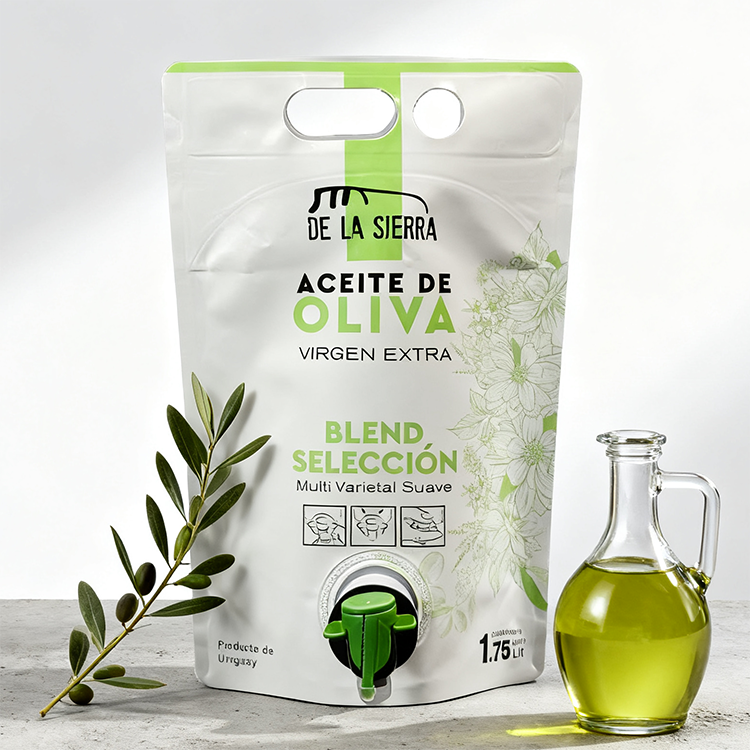
Digital mockups flatten reality. A screen can't show how ink sits on uncoated stock, how a foil stamp catches light, or whether your die-cut edges fray after a hundred passes through a mail sorter. Ask your printer for a physical proof produced on the actual press—or at least on the same substrate with the same finishing—before you commit to a full run.
One common mistake is approving artwork based on a PDF that looks crisp on a monitor. Then the printed piece arrives with muddy gradients, a heavier hand feel, or color shifts because the file used RGB instead of CMYK plus spot colors. Request samples that include your exact artwork scaled to final size, not a generic swatch book from three years ago.
If the print shop hesitates to provide a sample with your design, treat that as a warning sign. Reputable vendors will run a small section on the real stock, cut it to shape, and ship it to you. This step takes a few extra days but it prevents reprinting thousands of units that don't match your vision.
Dig Into Minimum Order Quantities and Their Flexibility for Test Runs
Minimum order quantities (MOQs) often feel like a brick wall when you're eager to test a new product idea. Suppliers set them to protect their production costs, but that doesn't mean you're stuck ordering thousands of units before validating demand. Many manufacturers—especially smaller or mid-sized ones—are open to negotiating lower initial runs if you approach the conversation with a clear plan. Mention your intention to scale up after a successful test, and you might unlock a trial batch that fits your budget without awkward overstock.
The real trick is to understand what drives a supplier's MOQ. Sometimes it's raw material minimums, other times it's machine setup time. If you can align your test order with an existing production schedule or use stock materials, the flexibility often appears. Ask pointed questions: Can we start with a smaller quantity of a standard color? Would a slight per-unit price increase make a lower MOQ viable? These trade-offs show you respect their economics while still pushing for a leaner entry point.
Don't underestimate the value of a phased approach. Propose a first run that covers just enough units for market testing, then negotiate a second order with a tighter timeline once you have real feedback. This builds trust and gives the supplier a reason to bend their usual rules. Document everything—lead times, pricing at different tiers, and any quality guarantees for smaller batches. That way, your “test run” isn't a gamble but a structured step toward a longer-term partnership.
Check Turnaround Times and How They Handle Rush Orders Without Quality Drops
A supplier's standard turnaround time is only half the story. Ask them to walk you through a recent rush order step by step—how they adjusted scheduling, what extra resources were pulled in, and where they refused to cut corners. The best shops will point to specific quality checks that stayed in place even under pressure, like final inspection or material verification.
Watch for signs that speed comes from better workflow, not from skipping steps. A factory that pre-stages common components or keeps backup capacity for urgent runs can often shave days off without touching the actual production quality. Ask whether their rush process changes who does the work—if it shifts to less experienced staff, that's a red flag.
Finally, request real examples of past rush orders with the same complexity as yours. Look for consistency in defect rates between standard and urgent jobs. If they can show data—or at least concrete anecdotes—where rush orders matched regular quality levels, you're likely dealing with a team that respects the process no matter the deadline.
Evaluate Their Print Precision on Fine Details and Small Text Legibility
Raw DPI numbers rarely tell you much about how a machine handles hairline strokes or tightly packed shapes. We ran a set of test sheets with parallel lines spaced from 0.5 mm down to 0.2 mm, plus a few micro-text blocks in both serif and sans-serif faces. The same files went through normal and high-quality modes on plain office paper. Under a 10x loupe, the differences were obvious: some printers held a clean edge on 0.3 mm spacing without any bridging, while others turned the same area into a muddy band. Ink spread at intersections also varied a lot, which matters if you print technical drawings or dense forms.
For small text legibility, we focused on 4 pt to 6 pt sizes because that is where most footnotes, chart labels, and package fine prints sit. Each test mixed uppercase, lowercase, digits, and symbols, and we printed both single-line and 1.0-spaced paragraphs. A couple of machines did surprisingly well at 5 pt on standard copy paper, keeping the bowl of a lowercase ‘e’ open and making ‘8’ easy to tell from ‘B’. Others fell apart at 6 pt with italic text, especially where strokes crossed. Coated photo paper actually made things worse for one device, since the ink spread unevenly into the coating and closed up small counters.
We also learned to separate fine detail from pure small text scores. Edge sharpness on thin lines usually predicts how well tiny characters will hold up, but not always. Some printers produced crisp lines yet struggled with serif details at 4 pt because the typeface required extremely short, thin strokes that the driver simplified. Testing across three paper types gives a better picture, and it is worth noting the exact point size, line width, and viewing distance when you record results. Otherwise, saying something is 'sharp' does not help anyone decide whether it can handle a dense mailing label or a miniature wiring diagram.
Scrutinize Their Food-Grade Compliance Certifications and Renewal Dates
Ask for the actual certificates, not just a vendor's word that they're compliant. Many suppliers will claim food-grade materials, but if you can't match the certificate number to the exact product code and manufacturing site, you're taking on unnecessary risk. Look at the scope listed on each document—whether it's FDA 21 CFR, EU 10/2011, or a third-party standard like NSF/ANSI 51—and check the issue date against the batch or production date of what you're buying.
Renewal dates get overlooked more often than they should. A certificate that expired six months ago isn't proof of anything, yet it still gets passed around in email threads. Make it a habit to log not just the expiry date but also any grace period or surveillance audit requirements tied to that certification. If the supplier hesitates to share the full certificate or only sends the first page, treat that as a red flag.
Also compare the certification body. Not all auditors have the same reputation, and some certificates come from registrars that rubber-stamp paperwork without visiting the facility. A quick check on the accreditation of the certifying body can save you from discovering later that your packaging fails a migration test or a heavy metals screen.
FAQ
Start with their actual production capabilities and the range of materials they stock. Ask for samples from recent runs, not just marketing samples. Check whether they can handle your specific barrier requirements and whether their printing aligns with the finish you want. A quick phone call often reveals more about their communication style than a polished website.
Request a printed color proof on the exact film you plan to use. Ask about their color matching system, whether they use Pantone references or a digital process, and what tolerance they allow. A good supplier will also provide a signed sample for approval before mass production begins.
It varies widely. Traditional flexographic printing often starts around 1,000 to 5,000 units, while digital printing can go below 500. If you are testing a new product, look for suppliers who offer short digital runs with no plate fees. That lets you validate the market without locking cash into a huge inventory.
Ask about their inspection points: incoming raw material checks, in-line monitoring, and final AQL sampling. If they hesitate to share their QC process or won't allow a third-party audit, take that as a warning sign. For food packaging, also ask for migration testing documents and food safety certifications.
After artwork approval, expect 2 to 4 weeks for production. Add another week or two for shipping depending on location. The proofing stage can add 1 to 2 weeks if there are multiple revisions. Always confirm production slots early, especially before peak seasons when factories get backed up.
Plenty. Ask about recyclable mono-material structures, post-consumer recycled film, or compostable options if your product allows it. Also check whether the supplier can reduce the overall layers without sacrificing shelf life. Look for certifications like FSC for paper components or BPI for compostable claims.
Lock down the exact dimensions, material structure, zipper type if any, tear notch placement, and print proof approval. Confirm the quantity, shipping terms, and delivery date in writing. Double-check that the artwork file has been preflighted and that the supplier has a signed sample on hand. A detailed order confirmation prevents most disputes later.
Don't assume the same specs will perform identically from a new factory. Send physical samples of your current pouch and ask for a trial run. Review the film structure and adhesive quality closely. Keep at least two backup suppliers approved in case your primary source has a capacity issue.
Conclusion
A trustworthy custom printed stand up pouch supplier should never be judged by a polished brochure alone. Start by tracing the actual source of their barrier films and adhesives, asking for documented specs on oxygen and moisture transmission rather than vague 'premium' claims. Request physical samples printed with your own artwork—complete with fine lines, halftones, and small regulatory text—so you can feel the seal strength and inspect edge registration under real lighting. Minimum order quantities matter just as much; a partner who allows a modest trial run or offers tiered pricing for pilot batches gives you room to fail cheaply before committing to a full container.
Beyond samples, press for realistic turnaround times and concrete examples of how rush orders are managed without skipping QC steps like color matching or seal integrity tests. Fine detail legibility is often where suppliers slip, so examine small barcodes, nutrition panels, and UPC codes under magnification. Finally, don't just ask if they are food-grade compliant—request current certifications such as FDA, EU, or BRC, and note their renewal dates. A supplier who proactively shares updated documents and welcomes third-party audits is far more reliable than one who treats compliance as a one-time checkbox. These checks protect both product safety and brand reputation.
Contact Us
Contact Person: Cindy Lee
Email: [email protected]
Tel/WhatsApp: 8613622669331
Website: https://www.dgkody.com