
Custom Miniature Circuit Breakers: Tailoring Electrical Safety to Your Needs
2026-08-11
Electrical safety isn't one-size-fits-all. From smart homes to heavy-duty industrial setups, every environment has unique demands—and that's where off-the-shelf breakers often fall short. ETEK's custom miniature circuit breakers step in to bridge the gap, delivering tailored protection that adapts precisely to your project. Whether you're battling space constraints, specific current ratings, or the need for smarter integration, these breakers are designed around your reality—not the other way around. Ready to rethink what your circuit protection can do?
Why Off-the-Shelf Breakers Fall Short
Most standard breakers are designed to trip under predictable, textbook overloads and short circuits. But real-world electrical systems are rarely that clean. Voltage sags, harmonics from modern electronics, and inrush currents from motors can confuse a generic breaker, causing it to either trip too soon—shutting down critical equipment—or worse, not trip when it should, leaving circuits unprotected. They simply lack the nuance needed for today's mixed loads.
Another blind spot is lifespan awareness. Off-the-shelf breakers degrade silently, with no way to track how many times they've tripped or how close they are to end of life. A breaker that's been stressed by repeated faults might look fine externally but fail mechanically when you need it most. Without any diagnostic feedback, you're flying blind, and that gamble isn't worth taking in sensitive environments.
Then there's the one-size-fits-all curve problem. A breaker picked off the shelf comes with a fixed trip characteristic, often too aggressive for capacitive loads or too sluggish for semiconductor protection. Customizing the response typically means swapping out the entire unit—no fine-tuning allowed. That rigidity forces compromises in system design, when what you really need is a breaker that adapts to the specific behavior of your installation, not the other way around.
Crafting Protection Around Your Equipment
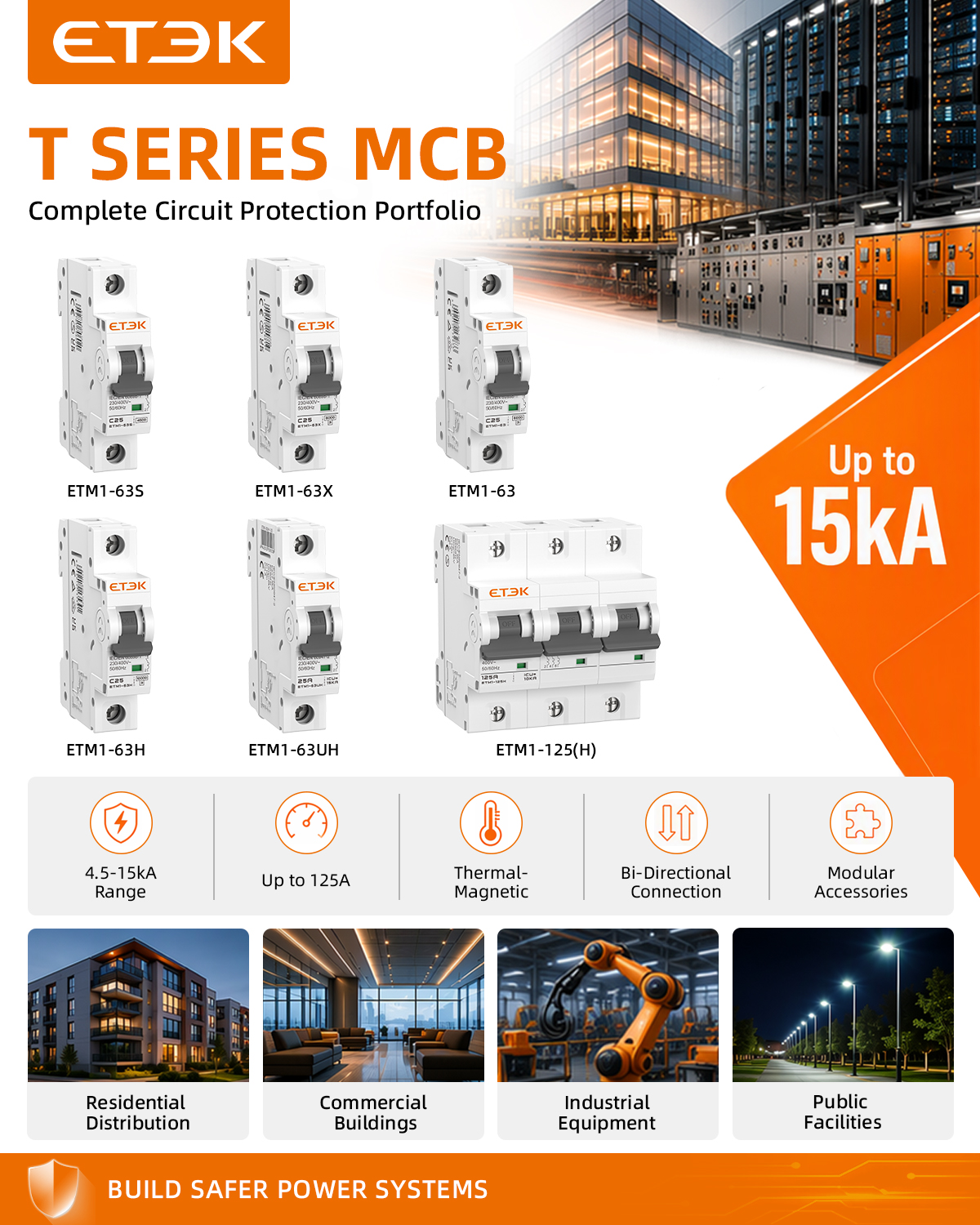
Shielding your gear starts with understanding the unique threats it faces daily. Think beyond generic cases—consider the specific environment where your equipment operates. Is it constant vibration, abrasive dust, or unpredictable impacts? By pinpointing these hazards, you can layer defenses that actually work, like custom-fit dampening mounts or sealed enclosures that still allow easy access for maintenance.
Material choice makes or breaks effective protection. Rather than defaulting to heavy steel, explore composite blends that absorb shock without adding bulk. For outdoor setups, a sacrificial outer layer can take the weather beating, preserving the core structure underneath. Small details matter—angled seams that shed water, recessed ports that avoid snags, and gaskets that stay pliable in freezing temperatures. These thoughtful touches prevent the slow degradation that often goes unnoticed until it’s too late.
Finally, view protection as an evolving strategy, not a one-time fix. Your equipment’s role might shift, or new risks might emerge. Design your safeguards to be modular—panels that swap out, adjustable brackets, or updateable seals. Regular walkarounds with a fresh eye can catch early wear, and involving the people who use the gear daily often reveals practical improvements that engineers miss. When protection adapts, your equipment stays in the game longer without costly rebuilds.
The Art of Bespoke Trip Curves
Custom breaker curves don't simply protect circuits—they reflect how a system truly behaves. Instead of forcing your equipment to tolerate a generic time-current envelope, a tailored trip response aligns precisely with inrush profiles, thermal inertia, and unique load sequencing. This approach turns protection into a deliberate, cohesive part of the design rather than an afterthought.
Crafting these curves demands more than referencing datasheets. It requires iterative collaboration between protection engineers and equipment manufacturers, often using measured fault data, real-world harmonics, and even ambient temperature patterns to shape the knee points. The result is a curve that anticipates stress before components reach their limits, preventing nuisance tripping while never compromising on genuine fault isolation.
Unlike off-the-shelf alternatives, bespoke curves carry the imprint of the specific installation. They evolve with system upgrades, and their shape becomes a silent signature of reliability—understood only by those who plotted the points. When done well, the protection itself becomes invisible, seamlessly absorbing transients and delivering longevity without constant intervention.
Material Choices That Matter
Every material in our designs is chosen with intention, balancing durability, comfort, and environmental impact. We reject the throwaway culture by favoring textiles that age gracefully, like organic cotton that softens over time instead of disintegrating, and wool that resists odors naturally, requiring fewer washes. These choices aren’t just about longevity—they’re about reducing the hidden costs of fashion, from water waste to microplastic pollution.
We also look beyond the fabric itself. Hardware, zippers, and threads matter just as much. A recycled polyester zipper might seem like a small detail, but it keeps plastic out of landfills. Natural corozo buttons, carved from tagua nuts, offer a tactile alternative to mass-produced plastic without sacrificing strength. It’s a meticulous approach, but one that ensures every component pulls its weight—literally and ethically.
Transparency guides our sourcing because a material’s backstory often tells a more important tale than its label. We partner with mills that dye without toxic chemicals and tanneries that treat wastewater before it returns to rivers. This way, a simple jacket carries fewer compromises—not just for the wearer, but for the hands that crafted it and the ecosystems that sustain us all.
From Concept to Certified Unit
Every certified unit starts as a rough idea, shaped by market needs and technical possibilities. We take that initial spark and refine it through collaborative design reviews, feasibility assessments, and iterative prototyping. The goal is not just to build something that works—it’s to build something that endures, aligns with real-world demands, and can be reproduced reliably.
The path from blueprint to stamped approval is rarely linear. Materials are sourced, tolerances are tested, and each component is scrutinized under conditions that often exceed its intended use. Our engineering teams work closely with compliance specialists to anticipate regulatory hurdles, ensuring that every weld, circuit, or line of code meets stringent performance and safety benchmarks long before the final audit.
By the time a unit earns its certification, it carries more than a stamp of approval—it carries the cumulative insight of every department that touched it. This integrated approach eliminates last-minute surprises, shortens lead times, and ultimately delivers a product that not only passes inspection but thrives in the hands of the people who depend on it.
Seamless Integration, Unmatched Safety
In a landscape where technology often demands compromise, our system stands apart by fusing effortless integration with the kind of trust that only true safety can inspire. From the very first touchpoint, you’ll notice a design philosophy that prioritizes simplicity without sacrificing protection. Whether you’re connecting legacy hardware or the latest smart devices, the onboarding process feels less like a technical hurdle and more like a natural extension of your day. There’s no labyrinth of menus, no endless tweaking—just a harmonious blend of form and function that quietly gets to work, shielding your data and operations behind the scenes.
What makes this possible is a foundational architecture built on the principle of proactive defense. Instead of reacting to threats as they emerge, the platform anticipates vulnerabilities before they become vectors. It wraps every data exchange in layers of encryption that adapt in real time, learning from global patterns without ever compromising performance. The result is an environment where updates install themselves without interrupting workflows, and security protocols evolve in the background, invisible yet impenetrable. You move freely between applications, confident that the seamless experience is reinforced by a safety net woven from the latest advancements in cyber resilience.
But beyond the technical prowess lies a human-centered commitment: peace of mind should never feel like a luxury. That’s why we’ve designed every interaction to be intuitive, whether you’re a seasoned IT professional or someone who just wants things to work. The integration feels organic—like dropping a familiar key into a lock—and the safety measures never intrude with pop-ups or false alarms. This is the new standard: where connection happens in an instant, and protection is simply part of the package, so deeply embedded that you can focus entirely on what matters most, knowing the foundation beneath you is solid, secure, and always one step ahead.
FAQ
Custom miniature circuit breakers are protection devices tailored to specific electrical parameters, mounting styles, or environmental conditions that generic breakers can't handle. Unlike mass-produced units, they're built with adjustable trip curves, specialized terminals, or unique form factors to fit precise system needs.
Standard breakers often force compromises in space, performance, or compatibility. A custom MCB eliminates these trade-offs by matching exact voltage ratings, breaking capacities, or even integrating with proprietary busbars and enclosures, which off-the-shelf parts simply can't do.
Nearly everything can be customized: rated current, tripping characteristics, number of poles, terminal configurations, auxiliary contacts, and even the physical dimensions. Some designs incorporate special coatings for corrosive atmospheres or extended temperature ranges.
They're found in industrial machinery, renewable energy systems, railway signaling, medical devices, and any setting where standard breakers can't fit the form factor or meet the electrical demands reliably.
When done correctly, it enhances safety because the breaker is precisely matched to the load and fault conditions. Reliability improves as well since components are selected for the actual operating environment, reducing nuisance tripping and wear.
Installation usually requires attention to the tailored connection points and torque specs. Maintenance schedules might differ if the breaker uses non-standard parts, so keeping the manufacturer's documentation handy is crucial for correct servicing.
It starts with a detailed specification review where you outline electrical needs, physical constraints, and any certifications required. The manufacturer then prototypes a sample, runs compliance tests, and once approved, moves to production with a lead time that varies by complexity.
Conclusion
Standard circuit breakers are built for broad application, but their generic protection profiles often leave gaps when safeguarding specialized equipment. In sectors like medical imaging, precision manufacturing, or renewable energy, a one-size-fits-all breaker might trip too early—or worse, too late—putting sensitive components at risk. This is where custom miniature circuit breakers step in, reshaping protection around the exact operational heartbeat of your machinery. By studying inrush patterns, steady-state loads, and environmental stressors, engineers craft a breaker that responds to your system’s unique electrical signature, catching faults without disrupting normal cycles. The result is a device that feels like an extension of the equipment rather than an off-the-shelf compromise.
The journey begins with a blank canvas: bespoke trip curves are meticulously tuned, delaying action just long enough to ignore harmless surges while reacting instantly to genuine overcurrents. Material selection plays a critical role too—contacts, housings, and arc chambers are chosen to withstand high temperatures, corrosive atmospheres, or vibration-heavy environments, ensuring that the breaker’s own integrity never becomes a liability. As designs move from concept to certified unit, every prototype endures rigorous testing to meet global standards, yet the process remains collaborative and transparent, with feedback loops that refine performance until it perfectly aligns with the intended application. The final integration is seamless, both mechanically and electrically, slotting into existing panel footprints or supporting novel form factors for compact installations. Ultimately, this tailored approach transforms a basic safety component into a strategic asset, delivering unmatched reliability and operational peace of mind. It’s not just about stopping current—it’s about letting your equipment thrive within a designed safety envelope that off-the-shelf units simply cannot provide.
Contact Us
Contact Person: Andy
Email: [email protected]
Tel/WhatsApp: +86 13356133008
Website: https://www.etek-china.com/