
Custom Membrane Filter Press Systems Tailored to Your Process Requirements
2026-11-02
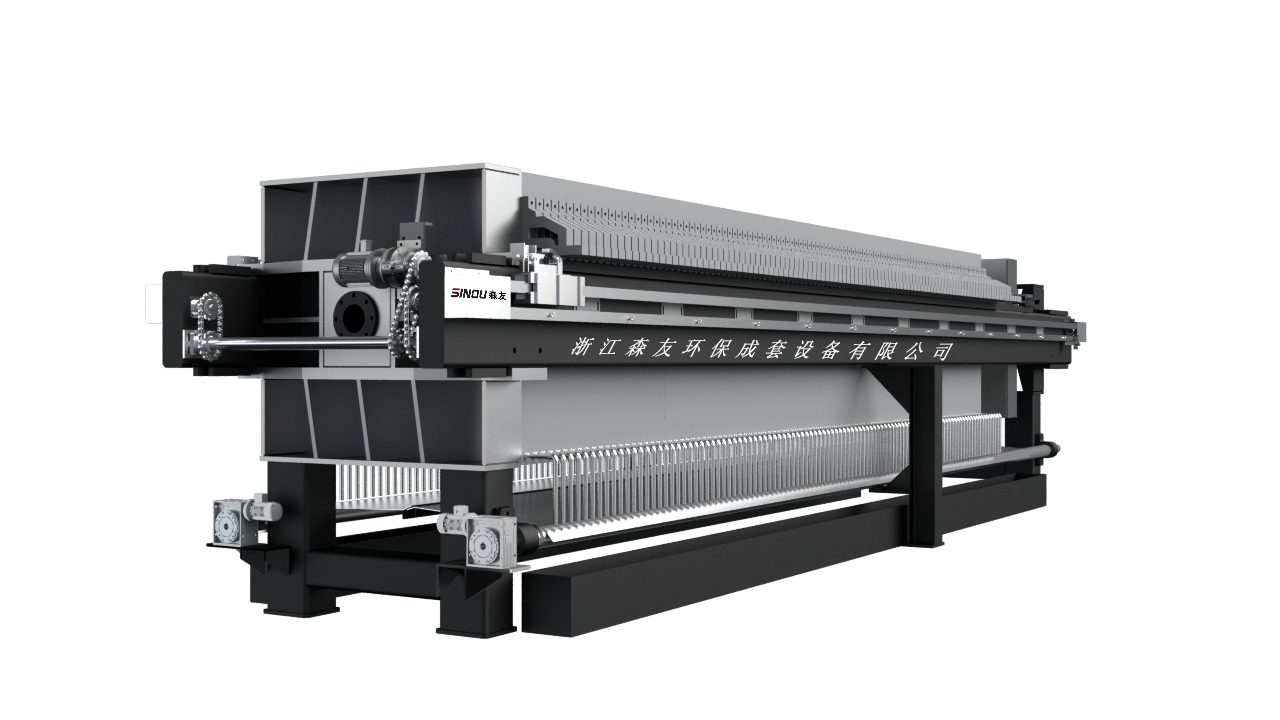
Every industrial filtration challenge comes with its own set of process quirks—particle size, slurry viscosity, throughput targets, cake moisture limits. Off-the-shelf membrane filter presses often force you to compromise. That’s where a custom-engineered approach changes the game. At Sinou, we don’t believe in one-size-fits-all; we design membrane filter press systems around your exact process requirements, so you get the throughput, dryness, and operational reliability you actually need. In this post, we’ll walk through what custom configuration really means, from plate sizing to automation, and how it can unlock efficiency gains that standard units leave on the table.
Your Slurry Doesn't Read the Manual
The data sheet might promise a stable viscosity window and a repeatable particle size distribution, but the moment that drum hits your floor, the slurry starts reacting to its own history. Was it shipped in a cold truck? Has it been sitting long enough for soft agglomerates to form? Did the last guy mix it with a different impeller than the one in the spec? None of that shows up in a printed guide, yet it all changes how the material flows, settles, and cuts.
What actually keeps a process in control is treating every batch as a slightly new material. Instead of blindly trusting the recommended dilution ratio, run a quick bench test and watch how the slurry responds to shear. Note the time it takes to reach a usable dispersion, the way it clings to a blade, the smell or sheen that signals a batch that needs more attention. Your slurry won't follow the manual, but it will tell you what it needs if you learn to listen.
Membrane Choices Built Around Actual Feed, Not Catalog Specs
Membrane selection that starts from a catalog rating instead of a real feed sample often misses what matters most. Actual water carries a shifting mix of organics, inorganics, and biological activity that no single spec sheet can capture. Sampling the feed at multiple points, including worst-case conditions, gives a much clearer basis for choosing between membrane types, surface modifications, and spacer designs.
Rather than treating nominal pore size or standard rejection rates as fixed guarantees, it helps to look at what actually reaches the membrane surface. Colloidal silica, fats, oils, greases, or intermittent turbidity spikes can change fouling behavior in ways lab-grade test solutions never will. Short pilot runs with the real stream expose how quickly permeability drops, how well cleaning recovers it, and whether the selected chemistry holds up under repeated exposure.
Feed quality also rarely stays constant, so the decision should not be one-and-done. Seasonal shifts, upstream process changes, or pH excursions can alter scaling potential and biofouling pressure within weeks. Re-checking the feed after any meaningful change allows a membrane or pretreatment adjustment before performance drifts. That keeps the system tuned to actual operating reality instead of a brochure curve.
Cycle Times You Can Adjust Mid-Shift, Not Just During Commissioning
Cycle time rarely stays put after the first real shift. What was dialed in during commissioning gets tested by thermal drift, worn grippers, and operators who find faster loading sequences on day two. Instead of waiting for the next maintenance window, some plants now expose a handful of timing values directly on the operator panel or a supervisor tablet. A 200-millisecond change to a robot's approach move or an extra half-second on a clamp can be applied while the line is running, as long as the controller has been set up to accept bounded adjustments without a full stop.
The difference comes from how those changes are managed. If a shift supervisor can tweak a conveyor delay but the edit isn't tied to a product recipe or automatically logged, the line drifts into tribal knowledge and repeatability suffers. Better setups use parameter limits and automatic versioning, so a mid-shift adjustment becomes a measured experiment rather than a guess. That way, the same team can walk a cycle time down by small increments across several hours, compare throughput against reject rates, and keep the gain only when the data backs it up.
Plates That Come Apart Without a Fight for Faster Cleanup
You know that stubborn corner where the plate rim meets a divider? The one that traps sauce no matter how long you soak it. These plates do away with that entirely. Each section slides off the base with a light push, and there's no rubber gasket or tiny latch to wrestle with. You separate the pieces, toss them in the dishwasher, and every edge gets hit by water and detergent. Nothing hides.
The mechanism is surprisingly simple: a molded track on the underside lets compartments click into place, but they release with a gentle thumb press. No twisting, no prying, no broken nails. The base stays flat on the table while you lift off the sections, which also means you can use them as individual serving dishes if you want. Stack them back together and they lock just firmly enough to carry a full meal to the couch without wobbling.
Cleanup stops being a negotiation. After dinner, you can run the sections through the dishwasher on the top rack or wash them by hand in under a minute because there are no deep grooves or hidden seams. They're also safe for the microwave and freezer, so leftovers can go straight from plate to storage without transferring to another container. That's the kind of small design choice that makes a big difference in how quickly you get back to your evening.
A Press That Bends When Your Process Throws a Curve
Imagine a stamping line that doesn't flinch when the material thickness shifts mid-run or a batch of blanks arrives with slightly different temper. That's the kind of unpredictability this press was built for. Rather than demanding perfect consistency from your upstream process, it adapts its stroke, speed, and tonnage on the fly—so a curveball in production becomes a non-event.
The secret sits in the control loop. Sensors read actual forming forces every few milliseconds, compare them against the expected window, and nudge the ram position before a defect can form. Operators don't need to reprogram for each variation; they just watch the press quietly absorb the changes. It's less like running a machine and more like working with a skilled toolmaker who anticipates your next move.
Shops that used to scrap parts whenever coil hardness wandered or lubrication thinned are now holding tolerances without constant babysitting. Downtime for die adjustments drops, and the line keeps moving even when the material isn't perfect. For anyone tired of fighting process drift, this is a press that finally works the way you do—reacting to what's actually happening, not what was supposed to happen.
No Two Installations Alike—On Purpose
Most fabrication teams chase repeatability; here, the opposite is the brief. Each install starts with a site walk where ceiling heights, wall textures, and even the way afternoon light crosses the floor get folded into the layout. A piece shown in a raw concrete hall won't sit the same in a white cube or a repurposed chapel, and that's the point.
On site, materials are cut to match uneven floors, brackets are recast to fit odd corners, and cable tensions are tuned to the room's humidity. These aren't fixes; they're part of the work's grammar. The installation doesn't impose a fixed form on a space—it lets the space pull the form slightly off-center.
People who see one version often assume the next will be identical. It won't. The differences are not accidents or afterthoughts but evidence that a place has its own weight, and the work should breathe with it. No two installations alike, on purpose.
FAQ
We typically recommend polypropylene for strong acids and caustics, while PVDF works better with solvents and high-temperature feeds. If you're dealing with abrasive solids, we can add a reinforcing scrim to extend membrane life.
Yes, the PLC can adjust squeeze pressure and cycle duration based on real-time filtrate clarity or feed density, so you don't need to lock into one recipe.
We start with a pilot test on a small plate stack, then scale the chamber depth and filtration area to match your peak daily solids. This avoids oversizing while leaving room for future expansion.
Absolutely. We supply the feed pump, mix tank agitation, and polymer dosing skid as a matched set, so the membrane squeeze timing lines up with floc formation.
Compared to a standard recessed chamber press, the membrane usually increases cake solids by 5-15 percentage points depending on the slurry. For many mineral sludges, you'll see 70-80% solids after a 15-20 minute squeeze.
Once the cycle starts, the press opens, shifts plates, and discharges cake automatically. An operator only needs to inspect cloths and top up the hydraulic fluid weekly.
In many cases, yes. We can replace the plate pack and add a squeeze manifold if your hydraulic system has enough pressure. We'll first check the frame and plate size compatibility.
We include remote diagnostics, a spare parts list, and on-site training for your maintenance crew. If a membrane fails, we usually ship a replacement within two business days.
Conclusion
Standard filter presses assume a slurry will behave predictably, but real process feeds rarely follow the manual. A custom membrane system starts with your actual slurry—its particle size distribution, solids loading, viscosity, and even how it shifts from batch to batch. Instead of forcing a catalog membrane plate into service, we select or fabricate membrane materials and plate geometries around the feed's dewatering behavior. This means you can adjust cycle times on the floor during a shift when the feed thickens or thins unexpectedly, not just during initial commissioning. The result is consistent cake dryness and throughput without constant operator intervention.
Cleanup and process flexibility matter just as much. Custom plate designs can include release angles, surface treatments, or quick-open features so plates separate without hammering or prying, cutting turnaround between cycles. When your process throws a curve—like a sudden change in pH, temperature, or solids type—the press configuration can accommodate it because chambers, manifolds, and controls were sized with headroom and alternative operating modes in mind. No two installations come out the same, and that is deliberate: a food-grade pigment slurry and a mining tailings stream have little in common, so their filtration equipment should not either.
Contact Us
Contact Person: HaiYan
Email: [email protected]
Tel/WhatsApp: +86 18957325588
Website: https://www.senyoubeton.com/