
Concrete Admixture Innovations Reshaping Industry Practices
2026-08-22
What if your next concrete pour could cure faster, resist cracking for decades, and cut cement use by a third—all without touching your mix design? That’s no longer a lab hypothetical. A quiet wave of admixture innovations is redrawing the rules of construction, and HAISEN is at the center of it. Builders who ignore this shift risk pouring yesterday’s concrete tomorrow.
Self-Healing Concrete Moves Out of the Lab and Into Driveways
For years, self-healing concrete has been a promising idea confined to university labs and trade show demos. That changed quietly last spring when a handful of residential contractors started offering it for driveways, sidewalks, and patio slabs. The version they use relies on dormant bacteria and calcium lactate embedded in the mix. When a crack forms and moisture seeps in, the bacteria wake up and produce calcite, sealing the gap before it can widen.
A driveway in Columbus, Ohio, was one of the first residential pours to use this mix outside a controlled trial. Six months later, hairline cracks from freeze-thaw cycles had filled in with a thin mineral deposit, leaving the surface smooth enough to shovel snow without catching an edge. The homeowner reports no visible cracking after a full winter, something that would usually require at least one round of patching with traditional concrete.
The shift from lab to driveway is not just about novelty. It changes the maintenance math for ordinary households. Instead of budgeting for crack filler, sealants, and eventual replacement every ten to fifteen years, owners can expect the material to quietly repair minor damage on its own. The upfront cost remains higher, but early adopters say the reduction in annual upkeep makes the premium easier to justify when a truck or tree root puts stress on the slab.
Graphene Oxide Finds a Quiet Role in Everyday Mix Designs
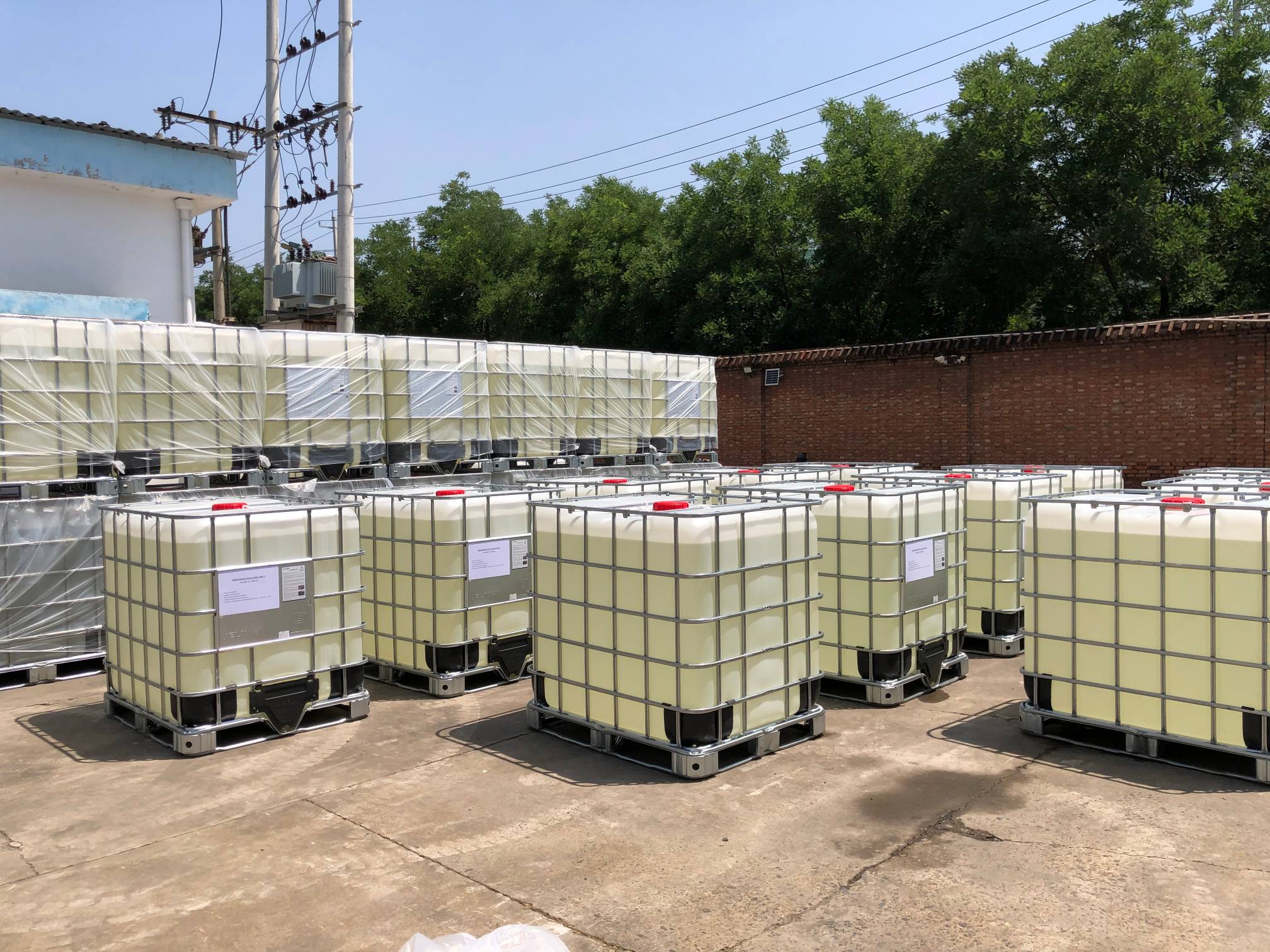
Graphene oxide rarely makes headlines in concrete technology, yet its presence in everyday mix designs is far from trivial. Unlike flashy additives that promise dramatic strength leaps, this material works subtly—dispersing through the cement matrix, refining hydration products, and nudging the microstructure toward denser packing. A modest dosage of 0.03% by weight of cement can shift the pore distribution enough to slow chloride ingress, a detail that matters for parking decks and marine structures where repair budgets quietly bleed out.
What makes the role quiet is the scale of interaction. Graphene oxide sheets, a few nanometers thick, act as nucleation sites rather than reinforcing bars. They do not bridge macro cracks or change the visual character of a mix. Instead, they encourage more uniform growth of calcium-silicate-hydrate, the glue of concrete, which tightens the interface between paste and aggregate. Contractors may not notice the difference in a single batch, but over a season of pours, the reduction in surface scaling and shrinkage chatter becomes measurable in fewer callbacks.
Practical adoption hinges on dispersion, not discovery. Dry-blending graphene oxide with fine sand before adding cement avoids the clumping that plagues direct water mixing. Low-energy sonication or a simple paddle mixer works for ready-mix plants that cannot afford exotic equipment. In field trials, a 0.05% dose improved flexural toughness enough to eliminate polypropylene fibers in some non-structural slabs, trimming both cost and carbon footprint. The material does not announce itself in the mix ticket; it simply lets the familiar concrete behave a little more like a mature, well-cured specimen from day one.
Plant-Derived Water Reducers Outperform Synthetic Workhorses
For decades, synthetic water reducers have been the default choice in concrete mixes, but a quiet shift is underway. Plant-derived alternatives—often sourced from lignin, tannins, or modified starches—are now matching or beating their petroleum-based counterparts on the jobsite. The difference shows up most clearly in how the mix behaves during pumping and finishing, not just in lab spec sheets.
One practical advantage is slump retention. Synthetic polycarboxylates tend to lose their dispersing effect quickly when the mix sits in a hot drum or encounters clay-contaminated sand. Lignosulfonate-based reducers, by contrast, keep the cement particles separated longer without re-dosing. Contractors report fewer rejected loads and less water added at the pour, which directly improves durability and surface quality.
Cost and logistics also play a role. Because plant-derived reducers are less sensitive to raw material price swings and can be produced closer to agricultural or forestry byproducts, supply chains become shorter. Field trials with recycled aggregates and high-absorption sands show that these bio-based admixtures maintain workability at 10–15% lower dosage than typical synthetic workhorses, making the switch a measurable performance gain rather than a green marketing story.
Admixtures That Read the Weather Before the Pour Begins
Concrete doesn't care about the forecast, but the people batching it have learned to. A quiet shift is happening with admixtures that pull in weather data hours before a pour. Instead of reacting to a stiff mix or flash set on site, the chemistry is adjusted in advance—retarder dosage nudged up when the afternoon heat is expected to climb, accelerator held back when a cold front is moving in. It's less about guessing and more about letting the pour start with the right setting time already built in.
The practical side of this is surprisingly straightforward. A small sensor at the batch plant or a feed from a local weather station can provide temperature, humidity, and wind speed. Those numbers feed into a simple dosing table or software that shifts the admixture package. On a dry, windy morning, for example, the mix might get a touch more hydration stabilizer or a shrinkage-reducing agent to cut down on plastic cracking before the finishers even arrive. The goal isn't to fight the weather—it's to give the concrete a head start that matches the conditions it will actually face.
Contractors who have used these weather-aware mixes tend to notice fewer surprises during placement. Slump holds steadier between the truck and the pump, cold joints are less of a headache when the temperatures swing, and the early strength curve is closer to what the project schedule expects. None of it replaces good curing or skilled crews, but it does remove some of the guesswork that used to start every time the clouds changed direction.
Carbon-Minimal Blends Are Becoming the Default, Not the Exception
For a long time, low-carbon product blends sat in a corner of the catalog—reserved for green-minded buyers willing to pay a premium or accept trade-offs in performance. That corner has emptied. Procurement teams now treat carbon-minimal blends as the starting point, not a specialty add-on. The shift isn't driven by a single regulation or campaign; it's the cumulative weight of supplier scorecards, material science improvements, and quieter customer expectations that no longer reward high-footprint defaults.
Part of what made this possible is that blending itself became smarter. Instead of simply swapping one ingredient for a costlier alternative, formulators now tune ratios across recycled, bio-based, and low-energy processed inputs to hit both carbon targets and functional specs. A flexible film, a spun yarn, or a roasted coffee profile can now meet the same tensile, color, or flavor benchmarks as conventional versions—without the carbon penalty. When the performance gap closes, the rationale for keeping a high-emission blend on the menu weakens quickly.
The consequence is a quieter kind of disruption: the exception has flipped. Teams that still pitch carbon-minimal options as a sustainable line risk sounding behind the curve, because the market language has already moved. The new default doesn't require a green badge or a separate SKU; it simply shows up in the base recipe, the standard spec sheet, and the everyday order. That normalization may be less visible than a splashy launch, but it does far more to shift aggregate emissions.
Pumping Skyscrapers With Thixotropic Precision
At the upper levels of a supertall tower, concrete doesn't climb by luck. It moves through a vertical pipeline where pressure, shear rate, and time all compete to break the mix apart. A thixotropic concrete responds to that competition with a reversible trick: while the pump forces it forward, the paste thins out and flows almost like a heavy oil; when the flow stops, its suspended particles quickly re-link into a self-supporting gel. That temporary loss of stiffness is exactly what keeps a 500-metre pumping operation from becoming a series of blockages and blowouts.
The precision part comes from controlling how fast the structure rebuilds. If the mix stays too fluid after leaving the hose, the placed layer sags or drains at formwork edges. If it recovers too quickly, the pump pressure spikes and the pipeline becomes a giant clog. Engineers tune this with carefully dosed viscosity-modifying admixtures and fine particles, often checking the mix with a rheometer on site. The goal is a narrow window: sheared enough to travel through narrow steel, still enough to hold a near-vertical edge within seconds of arrival.
On the deck, that behaviour shows up as a quiet difference in handling. A properly thixotropic mix will spread under vibration, then almost pause as the vibrator is withdrawn, leaving a dense surface that doesn't weep or segregate. For crews placing concrete at altitude, this means fewer cold joints, cleaner transitions between pours, and far less waste from mixes that could not survive the journey. In high-rise work, precision is not only about millimetres of formwork; it is also about the subtle, time-dependent flow that carries the building upward pour after pour.
FAQ
Polycarboxylate ether-based superplasticizers have quietly become the workhorse. They allow crews to place a highly flowable mix at a water-cement ratio that would have been unthinkable two decades ago. The practical effect is fewer cold joints, less vibration, and a smoother finish without anyone adding extra water on site.
Internal curing agents are shifting the conversation away from just wet burlap and spray membranes. By embedding moisture reservoirs inside the mix, these admixtures release water gradually during hydration. That reduces early-age shrinkage cracking, which is often the weak point in large slabs and bridge decks.
A growing class of admixtures paired with calcined clays or limestone powders allows mixes to cut cement content by 15 to 30 percent. The chemistry stays workable and strength development remains on track. Some suppliers are even mineralizing captured CO2 into the mix, turning a waste stream into a strength contributor.
Polymer dispersions, particularly styrene-butadiene and acrylic latexes, create a continuous film within the cement matrix. That film blocks chloride ingress and improves freeze-thaw resistance. For marine structures, parking decks, and bridge overlays, the result is a significant jump in service life without the need for thick protective coatings.
Self-healing admixtures are still a niche, but they are moving beyond the lab. Microencapsulated healing agents rupture when cracks form, then react with moisture and cement hydration products to seal the opening. Bacteria-based systems that precipitate calcium carbonate are also being tested in water-retaining structures. It is not a replacement for good design, but it adds a valuable second line of defense.
Upfront admixture costs are usually higher, but the total cost picture often flips. High-early-strength formulations let precast yards turn forms faster. Self-consolidating mixes remove vibration labor and rework. And if an admixture adds 10 years to a deck's service life, the life-cycle savings dwarf the incremental material cost.
Compatibility between the admixture and the local cement supply should be checked early. Some polycarboxylates behave differently with high-alkali or high-C3A cements, causing unexpected slump loss or retardation. Running trial batches at site temperatures - not just in a lab at 20 degrees C - will catch most problems before they reach the pour.
Conclusion
Concrete admixtures are no longer just additives—they are quietly rewriting how mixes are specified, batched, and placed on real job sites. Self-healing concrete, once confined to academic papers, is showing up in driveways and residential slabs, using encapsulated bacteria or crystalline agents to seal hairline cracks before they widen. At the same time, graphene oxide has slipped into everyday mix designs almost unnoticed. Its tiny dosage strengthens cement paste and reduces permeability, yet it demands none of the fanfare that once surrounded high-tech materials. Just as telling is the rise of plant-derived water reducers. These bio-based polymers are outperforming conventional synthetic products in slump retention and finishability, often at a lower carbon cost, and ready-mix producers are switching not because of mandates but because the field results speak clearly.
The next wave is about responsiveness and reach. Admixtures that read the weather before the pour begins use embedded sensors or reactive chemistry to adjust set times and water demand as temperature, humidity, or wind shift—so crews no longer guess when conditions turn. Carbon-minimal blends have moved from pilot projects to default specifications; many plants now treat high-volume fly ash, slag, or calcined clay mixes as routine, with admixtures compensating for slower strength gain or higher water sensitivity. Finally, thixotropic precision is making extreme vertical pumping possible. By tuning viscosity under shear, these admixtures let skyscraper mixes flow easily through long boom lines yet stiffen immediately after placement, preventing segregation and formwork blowouts. Together, these shifts are not speculative trends but practical adjustments on active sites, quietly reshaping how the industry thinks about durability, carbon, and placement.
Contact Us
Contact Person: Sam Lee
Email: [email protected]
Tel/WhatsApp: 86-311-6617 8338
Website: https://www.horizonadmixtures.com/