Cleanroom Turnkey Supplier: Streamlining Your Controlled Environment Project from Concept to Completion
2026-08-11
Building a controlled environment shouldn’t feel like juggling a dozen disconnected pieces. Yet for many pharma and biotech teams, that’s exactly what happens—until they discover a true cleanroom turnkey partner. At GENO Pharmatech, we replace fragmented timelines and costly missteps with a seamless journey from initial concept to fully validated completion. Whether you’re scaling up R&D or launching a GMP-compliant facility, this blog walks you through how a single-source approach transforms complexity into clarity—and why it might be the smartest move for your next project.
The True Cost of Managing Multiple Cleanroom Contractors
When you hire several cleanroom contractors to handle different phases of a project, the initial savings can look appealing. But what’s often overlooked is the drain on your internal resources. Your team ends up playing full-time traffic cop—coordinating schedules, translating technical specifications between vendors, and constantly chasing updates. One missed handoff between the HVAC contractor and the gowning room specialist can stall progress for days. That invisible labor adds up fast, and it rarely appears on a project budget spreadsheet.
Fragmentation also quietly inflates costs through quality gaps. Each contractor works to their own standards and timelines, which means your facility’s ISO certification effort becomes a patchwork of compromises. A bio-pharma suite might pass a particle count test but fail airflow visualization because two teams interpreted the laminar flow requirements differently. Fixing these mismatches after the fact isn’t just expensive—it erodes confidence in the entire cleanroom’s performance. And you’re left holding the bag for both the rework and the schedule delay.
Then there’s the long-term operational burden. Once the cleanroom is “completed,” you’re often stuck managing multiple service contracts, separate warranty terms, and a finger-pointing circus when something goes wrong. A humidity fluctuation could be blamed on the dehumidification system by one firm and on the building envelope by another. The real cost isn’t just in the monthly service fees—it’s in the hours your team burns deciphering blame instead of focusing on production. Over the lifespan of the facility, that fragmented accountability can outweigh any upfront cost advantage.
Designing a Cleanroom That Works: More Than Just Particle Counts
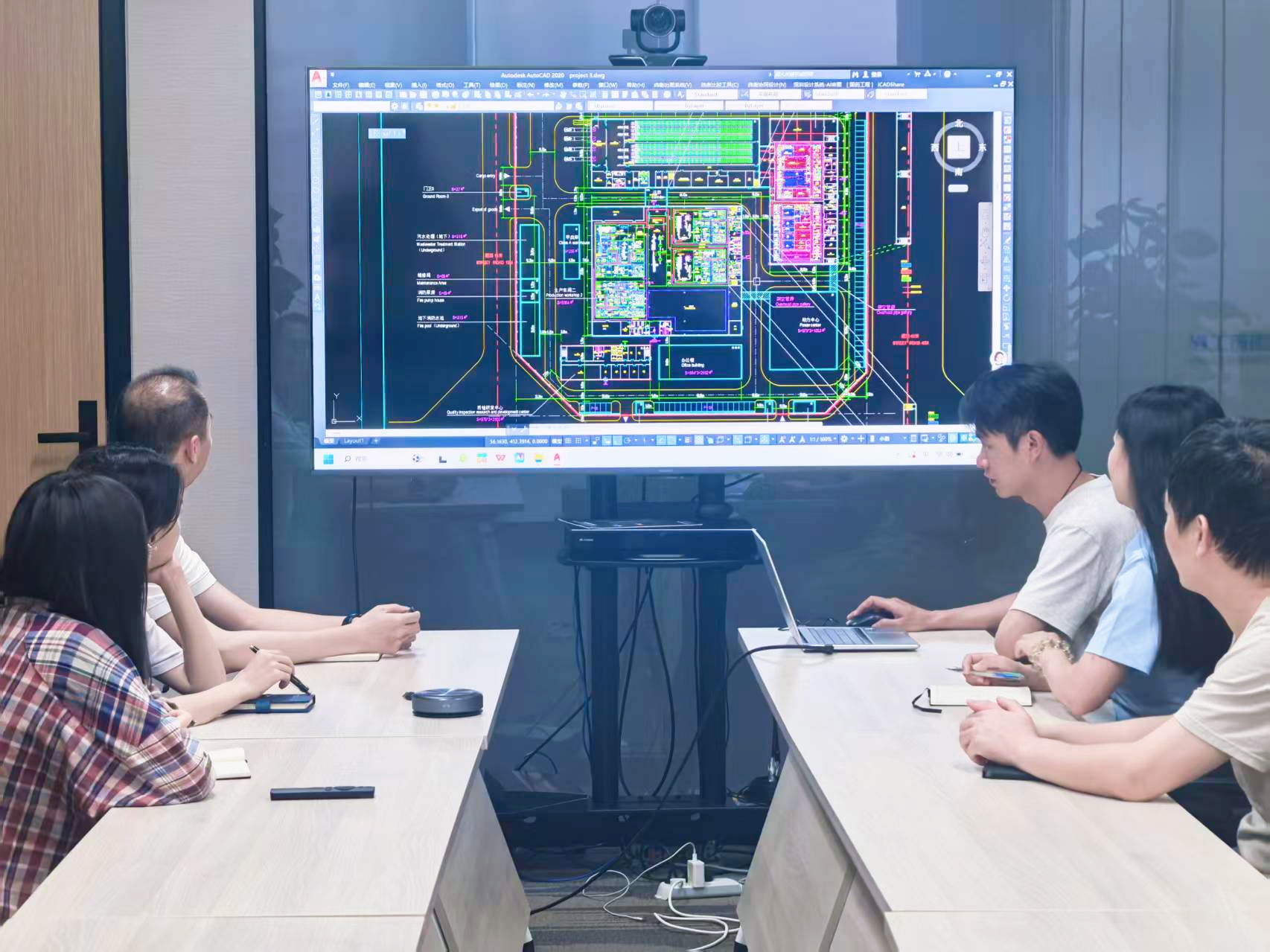
When most people think of cleanroom design, they immediately focus on airborne particle concentrations. While meeting ISO classifications is essential, a truly functional cleanroom goes far beyond these numbers. The layout must support seamless workflow, minimize human intervention, and accommodate future process changes without costly retrofits. Overlooking these aspects can lead to operational bottlenecks, contamination risks that particle counters alone won't catch, and a facility that struggles to adapt as needs evolve.
Effective cleanroom design integrates architectural elements, HVAC systems, and operational protocols from the very beginning. For instance, pressurization cascades must be carefully planned to direct airflow from cleaner to less clean zones, but also consider how frequently doors open or how material transfers occur. Finishes and materials should withstand aggressive cleaning agents while not shedding particles themselves. Even lighting choices matter: fixtures that are difficult to clean or create thermal plumes can undermine contamination control. A well-designed cleanroom makes it easy for people to do the right thing, reducing reliance on strict discipline alone.
Ultimately, the most successful cleanroom designs emerge from a deep collaboration between the end users, engineers, and architects. They map out every process step, identify critical control points, and plan for maintenance access without disrupting operations. This holistic view ensures that the cleanroom isn't just a box with a fancy air filter, but a dynamic environment that consistently delivers product quality, operational efficiency, and regulatory compliance over its lifecycle.
From Zero to Certified: How We Cut Your Time to Operation
We've reimagined the certification journey from the ground up. Instead of forcing you to navigate confusing manuals and endless prerequisites, our approach prioritizes what you actually need to get operational fast. Hands-on simulations replace theory-heavy lectures, so you learn by doing from day one.
Our accelerated path is built on a simple premise: the sooner you’re certified, the sooner you’re creating value. We strip away the fluff and focus on real-world scenarios, giving you the confidence to hit the ground running. It’s not about shortcuts—it’s about smart, efficient learning that respects your time.
Regulatory Compliance Without the Guesswork
Navigating ever-shifting regulations can feel like walking through a minefield, but it doesn’t have to be a gamble. Instead of relying on outdated manual checks or hoping your team catches every nuance, our platform turns ambiguity into clarity. We’ve built real-time intelligence that flags changes the moment they happen, mapping them directly to your operations so you know exactly what’s affected and what you need to do—no frantic email chains, no second-guessing.
What sets this apart is how we cut through the noise. Generic compliance tools drown you in alerts that don’t matter. Ours learns your risk profile, your jurisdictions, and your business context, then serves up only what’s relevant. Imagine a system that tells you, “This new data sovereignty rule impacts your EU customer storage, here’s the updated policy template, and here’s the deadline”—before your next audit prep even begins.
The real win? Confidence that comes from proof, not promises. Every action is logged, every decision traceable, so when regulators ask, you have a clean, defensible trail. It’s compliance with a spine—solid, transparent, and engineered to scale alongside your business without becoming that one department everyone dreads looping in.
Why Turnkey Means Fewer Headaches and Faster Results
Most people don’t realize how much time leaks away in the gaps between different vendors. You hire a designer, then a developer, then someone else to test everything, and suddenly you’re playing project manager instead of focusing on what actually matters. A turnkey approach collapses all those handoffs into one seamless process, so you spend less time coordinating and more time seeing real progress.
There’s a quiet kind of stress that comes from not knowing if all the pieces will fit together until the very end. Will the design system actually work in code? Will the back-end logic align with the front-end flow? With a fully managed solution, those questions are answered before they even become problems. The team works as a single unit from day one, eliminating the back-and-forth that typically drags projects into overtime and over-budget territory.
Faster results don’t come from rushing—they come from removing friction. When every component is built to work together from the start, there’s no need for lengthy onboarding, no redundant explanations, and no waiting for someone else to finish their part before you can move forward. It’s the difference between assembling a piece of furniture with a manual and forty loose screws versus having it arrive fully built, ready to use the moment it’s in place.
After the Handover: Ensuring Long-Term Cleanroom Success
The handover marks the start of real responsibility. Once the cleanroom is certified, its performance hinges on everyday discipline. Operators must treat the space not as a static environment but as a dynamic one that reacts to how people move, how materials enter, and how equipment runs. Sustaining the intended classification demands more than following a checklist—it requires a mindset where every action is weighed against potential contamination risk.
Facilities that thrive long-term invest heavily in their people. Training goes beyond initial onboarding and becomes an ongoing loop of observation, correction, and reinforcement. Staff learn to read subtle signs: a slight pressure shift in the airlock, a door that doesn’t close flush, a change in the airflow sound. These small details, when caught early, prevent larger excursions. Coupled with transparent documentation and regular unannounced audits, this human layer of vigilance often matters more than any single piece of technology.
Behind the scenes, a strict schedule of preventive maintenance keeps the cleanroom from drifting out of spec. Filter integrity tests, airflow velocity checks, and particle counts shouldn’t be mere formalities. They generate trend data that acts as an early warning system. Engaging the original contractors for periodic reviews can uncover issues that in-house teams might overlook, ensuring the installation continues to deliver as intended years after the handover.
FAQ
A cleanroom turnkey supplier manages every single phase of your controlled environment project—initial design consultation, engineering, material procurement, construction, validation, and final handover. Unlike standard contractors who may only handle one slice of the work, a turnkey partner eliminates the coordination nightmare by giving you a single point of accountability, ensuring the cleanroom meets your exact contamination control standards without you having to stitch together multiple vendors.
As early as possible, ideally during the concept or feasibility stage. Engaging a turnkey supplier at the conceptual phase allows them to shape the design around your process flow and regulatory requirements, avoiding costly redesigns later. They can guide you on space planning, HVAC needs, and material choices before architectural drawings are locked, streamlining the entire timeline.
They often do. By overlapping design, procurement, and construction activities under one roof, a turnkey supplier can compress schedules significantly. There's no waiting for separate bids, no finger-pointing when specs clash, and the integrated team works with a unified schedule from day one. Many clients see delivery times shrink by weeks or even months.
Yes, the better turnkey suppliers are agnostic to the construction method. They evaluate your existing building, future flexibility needs, and budget to recommend whether a modular (prefab) system or a conventional stick-built approach makes more sense. Sometimes a hybrid solution is best, and a true turnkey partner will design and deliver that without biasing you toward one technology.
Most established turnkey cleanroom companies routinely deliver spaces from ISO 9 down to ISO 5 or even ISO 4, including unidirectional flow cleanrooms that meet stricter EU GMP Grade A/B requirements. Their engineering teams understand the interplay of air changes, filtration, and pressurization cascades to achieve and certify the target classification reliably.
They bake compliance into every step. This means using materials with documented cleanroom compatibility, following cGMP guidelines during construction, executing rigorous installation qualification (IQ) and operational qualification (OQ) protocols, and often conducting a pre-validation commissioning phase. The documentation package they hand over is structured to support your regulatory submission, drastically reducing the risk of audit findings.
Many offer post-handover service packages or even full facility maintenance contracts. Since they know the installed systems intimately, they can respond faster to performance drift or component failures. This can include routine HEPA filter integrity testing, calibration of environmental monitoring systems, and training for your on-site team, extending the cleanroom's lifecycle and stability.
Conclusion
Managing a cleanroom build through separate contractors often leads to cost overruns, delays, and gaps in responsibility. A turnkey supplier eliminates these hidden expenses by providing a single point of accountability from initial concepts through final certification. More than just hitting particle counts, proper cleanroom design balances airflow patterns, material compatibility, equipment layout, and operator workflows—factors that fragmented teams frequently overlook. When all these elements come together under one roof, projects move from groundbreaking to operational readiness in dramatically shorter timelines. Instead of months coordinating separate validations, a unified process compresses the schedule, delivering a certified facility that truly performs from day one.
Regulatory compliance becomes straightforward when your project partner understands the nuances of ISO, GMP, or FDA standards from the outset—no guessing, no retrofits. Turnkey delivery means fewer headaches because design, construction, commissioning, and qualification are seamlessly woven together, eliminating the finger-pointing that plagues multi-vendor jobs. And the relationship doesn't end at handover; ongoing support, performance monitoring, and rapid troubleshooting keep your cleanroom running at peak efficiency long after the ribbon is cut. Choosing a turnkey approach isn't just about convenience—it's the clearest path to a controlled environment that meets your needs today and adapts for tomorrow.
Contact Us
Contact Person: Amy Yang
Email: [email protected]
Tel/WhatsApp: 008619330882686
Website: https://www.genopharmatech.com/