China Pet Hardware: Essential Metal Components for Modern Pet Products
2026-11-02
When a pet product earns a loyal following, the credit usually goes to its fabric, padding, or clever design. Yet the difference between a buckle that survives years of daily walks and one that fails in months often comes down to metal hardware. China's pet hardware industry has quietly become a key source for these critical components—D-rings, snap hooks, hinges, and frame connectors—and Kingming is one supplier helping modern brands get that foundation right. Before you choose your next component partner, it's worth understanding what actually goes into those small but essential parts.
Why Stainless Steel Is the Workhorse of Pet Hardware
Ask any kennel owner or shelter volunteer which material survives years of scratching, chewing, and daily scrubbing, and the answer rarely wavers. Stainless steel shrugs off rust, doesn't absorb odors, and resists the kind of bacterial buildup that softer metals or plastics invite. It's not about looking sleek—though it does—but about outlasting the chaos of wet paws, spilled water, and the occasional frustrated bite.
Unlike coated wire or powder-coated steel, stainless doesn't flake or chip when a determined dog works at a latch or a cat hooks claws through a feeder grate. That durability translates into fewer replacements and less worry about hidden corrosion weakening a gate or hinge. Vet clinics and boarding facilities lean on it because cleaning is straightforward: hot water, a mild disinfectant, and the surface is ready for the next animal.
There's also a quiet practicality in how stainless steel handles temperature swings. Left in a sunny yard or a cold garage, it won't warp or become brittle like some polymers. For pet hardware that lives outdoors year-round—bowls, enclosures, tie-outs—that stability means the gear keeps its shape and function without constant fuss. It simply does the job, season after season.
Swivel Snaps and D-Rings: The Tiny Parts That Decide a Walk’s Success
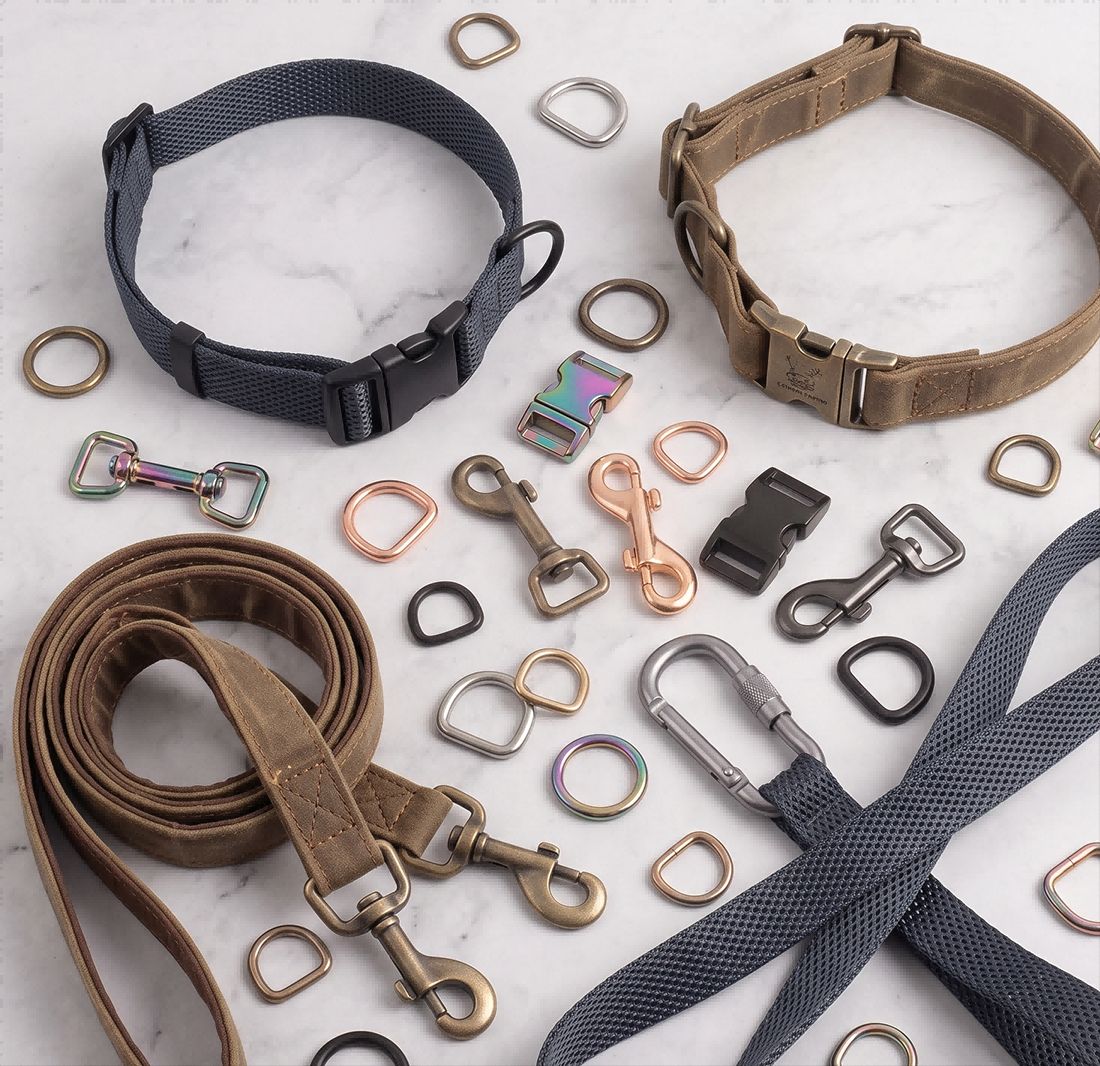
A cheap swivel snap might look fine on the shelf, but once your dog starts circling or tugging, it either binds up or pops open. The whole point of the swivel is to let the leash rotate independently of the collar or harness, so you don't end up wrestling a twisted strap every few minutes. When it works well, the hardware almost disappears—you just clip and go. When it doesn't, you'll feel it immediately: the leash kinks, the clip digs into your hand, and the walk becomes more about untangling than actually walking.
D-rings get less attention, but they're the anchor point for everything. If the ring is too thin, it can bend under a strong pull; if the weld is sloppy, it can snag fur or scratch your hand when you reach for the clip. The best ones sit flat against the harness or collar and are sized to match the snap you're using. A mismatch there means the snap twists sideways, which puts stress on the joint and makes that annoying metal-on-metal jingle with every step.
Before every walk, run your thumb over the swivel and the D-ring. If the swivel doesn't turn freely or the D-ring has any sharp edges, replace the hardware rather than hoping it holds. These parts wear out faster than the webbing or leather they're attached to, and a failure at the wrong moment can turn a calm stroll into a chase. Spending a few extra dollars on solid brass or stainless steel—and checking them regularly—keeps the focus on the dog, not the gear.
Rust Resistance Beyond the Basics: Coatings Worth Paying For
Basic primers and alkyd paints fail the moment a scratch exposes bare steel, because they only block moisture instead of doing anything once the barrier is breached. Premium coatings flip that logic: zinc-rich epoxies and thermally sprayed aluminum are formulated to corrode in place of the substrate, keeping the underlying structure intact for years even where edges, welds, and bolt holes are chipped or abraded. That sacrificial behavior is the real reason specifiers pay extra for these systems, not just thicker film.
A second category worth the price is the family of ceramic and polymer barrier coatings used on fasteners, flanges, and mating surfaces. These are places where conventional paint can crack under torque or thermal cycling, letting moisture settle into crevices that cannot be inspected without dismantling the joint. Dense, low-friction films like PTFE-impregnated epoxies or thin-film ceramics maintain coverage under compression, which prevents the kind of hidden pitting that leads to sudden bolt failure in marine or chemical-plant service.
Finally, there is a quiet layer of chemistry that separates budget coatings from long-life systems: the pretreatment. Silane-based conversion coatings and modern phosphate alternatives create a molecular bridge between the metal and the topcoat, improving adhesion enough that a single mid-range epoxy can outperform two coats of a cheaper system. Spending on that interface—not on extra topcoat thickness—delivers the multi-year rust-through resistance that makes the initial cost look small beside scaffold hire, downtime, and replacement labor.
How Chinese Factories Customize Metal Parts for Niche Pet Gear
Niche pet gear rarely works with off-the-shelf hardware. A cat harness needs a D-ring that won't catch fur, a paracord leash needs a swivel that doesn't squeak, and a bird carrier needs a latch a parrot can't figure out. Chinese factories that specialize in this space don't just take a drawing and quote a price. They ask for samples of the webbing, photos of the animal using the product, and even the weight and chewing habits of the target breed. That kind of context lets them suggest changes like moving a weld point or switching from zinc alloy to 304 stainless before tooling ever begins.
Tooling is where the customization really shows. Many shops keep a library of existing dies from past pet hardware projects—buckles, snaps, O-rings, cord locks—and can modify one for a few hundred dollars instead of charging thousands for a brand-new mold. Finishes get the same attention. A matte black PVD coating on an aluminum buckle might look identical to spray paint in a photo, but the factory will tell you it survives saltwater and dog saliva far longer. Some even do a tumble-polish pass specifically to soften edges that would otherwise abrade nylon straps during a sudden pull.
The more useful shops act like a second design team. Before full production, they often send a short video of a prototype part being yanked, twisted, or attached to an actual strap. If a clasp is too narrow for a thick leather leash, they'll flag it and propose a dimensional tweak rather than silently making it wrong. That back-and-forth is the difference between a generic metal part and one that genuinely fits a niche pet product line.
Load Testing and Safety Standards Behind Everyday Pet Products
Pet products rarely fail from a single overstuffed treat pouch, but the humble leash tells a clearer story. A 60-pound dog hitting the end of a six-foot leash at a dead run can generate instantaneous forces several times its body weight. That is why load testing for collars, harnesses, and handles often starts at three to five times the labeled capacity. Weighted forms are dropped, yanked, and swung in dynamic rigs to mimic a squirrel chase, while buckles and stitching are inspected after each cycle. Crates and carriers face a quieter but equally relentless set of tests: doors opened and slammed, latches torqued, and side panels pressed from the inside to simulate a panicked pet throwing its weight around.
Safety standards add another layer. Voluntary guidelines from ASTM International and CEN, among others, set minimum break strengths for leashes, require small parts on toys to stay put under tension, and specify load limits for ramps, steps, and elevated beds. But the standards also account for real-world wear. Materials are often UV-aged, cold-soaked, or humidity-cycled before testing, because nylon webbing that holds 400 pounds in a lab at 70 degrees can tear at half that after a season on a porch. Even hard plastic puzzle toys undergo repeated drop and flex tests to check for cracks that could turn into sharp edges inside a chewing mouth.
Why Pet Stroller Brands Are Switching to Aerospace-Grade Aluminum
Walk into any pet store or browse online retailers and you'll notice a quiet revolution in the stroller aisle. The days of bulky steel frames that rust after one rainy season are fading fast. Manufacturers have discovered that the same aluminum alloys used in aircraft fuselages and satellite components offer a rare sweet spot: extreme durability without the backbreaking weight. Pet parents no longer have to choose between a frame that survives years of daily use and one they can actually lift into a car trunk without straining.
This shift isn't just about lighter metal. Aerospace-grade aluminum—typically 6061 or 7075 series—resists corrosion far better than standard steel or lower-grade aluminum. That means salty beach air, muddy paw prints, and accidental spills won't slowly eat away at the frame. It also holds its structural integrity through temperature swings, so a stroller left in a cold garage overnight or hot car during summer won't develop hairline cracks or warped joints. For brands, this translates into fewer warranty claims and a reputation for building gear that lasts as long as the pet itself.
There's also a design freedom that comes with the material. Because aerospace aluminum can be machined to tighter tolerances and anodized in vibrant, fade-resistant colors, brands are launching models with sleek, minimalist profiles and finishes that appeal to style-conscious owners. The result is a new generation of pet strollers that feel less like clunky baby gear and more like precision outdoor equipment—whether you're navigating crowded city sidewalks or rocky park trails.
FAQ
Collars and leashes rely on a few workhorse parts: D-rings for leash attachment, side-release buckles (often plastic but metal versions exist), swivel snap hooks, and triglide slides for strap adjustment. Some premium lines also use cast brass or zinc alloy center bars and riveted nameplates.
Stainless steel resists rust and corrosion far better than plain carbon steel, which matters because dogs slobber, swim, and roll in wet grass. It also doesn't need plating that can chip off and become a swallow risk, and it holds up to frequent washing without pitting.
Ask suppliers for tensile strength test reports or batch samples that you can pull-test yourself. A quick bench test uses a hanging scale and slow pull until failure; compare that to the maximum weight of the animal plus a safety margin of at least four times. Also inspect weld seams on D-rings—laser welds are smoother and less likely to snag fur.
Common finishes include electroplating (nickel, chrome, black zinc), powder coating, PVD, and brushed or polished raw metal. For safety, avoid finishes that flake or leach heavy metals if the pet mouths the hardware. A matte PVD or tough epoxy powder coat tends to stay put better than thin decorative plating.
Yes—latches, hinge pins, corner brackets, door springs, and tray stops. These parts need to resist chewing attempts and repeated open/close cycles. Galvanized steel and stainless are common, but the latch mechanism should be smooth enough not to pinch paws or human fingers.
Focus on material hardness and geometry. Zinc alloy parts can fracture under extreme pressure, so look at forged stainless or brass. Avoid sharp edges and tiny removable bits. Also consider size: a heavy chewer's jaw can pop open a weak swivel hook, so go up a gauge or choose locking carabiners.
Absolutely. Many factories can cast custom shapes from brass or zinc, or laser-engrave logos on flat surfaces like nameplates and buckles. The tooling cost depends on complexity; simple engraved logos are cheaper than full custom molds. Minimum order quantities often drop if you choose existing base hardware and add engraving.
Many factories around Guangdong and Zhejiang are used to flexible runs because hardware components share base molds. You can often order a few thousand units of a standard D-ring or buckle, then finish them in your own color or small engraving. Being near material suppliers and electroplating workshops also shortens lead times, though expect to pay a bit more per piece for low volumes.
Conclusion
Modern pet gear leans heavily on China's metal hardware, where stainless steel proves itself as the true workhorse. From swivel snaps that keep leashes tangle-free to D-rings bearing daily tugging stress, these tiny parts quietly determine whether a walk ends in frustration or ease. What separates premium components from commodity ones isn't just the alloy itself, but the layered coatings that fend off salt spray, urine corrosion, and years of outdoor abuse. Chinese suppliers have moved far beyond basic chrome plating, offering ceramic finishes and electrophoretic treatments that genuinely extend product life for brands catering to coastal climates or heavy-duty working dogs.
Customization is where local factories shine, tweaking eyelet diameters, snap throat depths, and even metal temper to fit harnesses for ferrets or strollers built for 40-kilo dogs. Load testing happens not as an afterthought but as a staggered protocol—each batch pulled to failure, cycled through salt chambers, and measured for elongation. Meanwhile, the push toward aerospace-grade aluminum in pet stroller frames reflects a broader shift: owners expect the same lightweight rigidity they find in jogging strollers or bike trailers. Chinese manufacturers have responded with anodized tubing that cuts weight by a third without sacrificing crash protection, effectively rewriting what "premium" means for modern pet mobility.
Contact Us
Contact Person: Jamie Zeng
Email: [email protected]
Tel/WhatsApp: +86 13728219269
Website: https://www.kmhardware.com