
China Membrane Filter Press: Your Ultimate Guide to Efficient Solid-Liquid Separation
2026-08-26
Membrane filter presses are the unsung heroes of efficient solid-liquid separation—especially when every drop of moisture removed from filter cake translates into real cost savings. If you've been searching for a reliable China membrane filter press that doesn't compromise on performance, you've probably noticed the same specs repeated everywhere. That's exactly why this article exists. We'll cut through the noise and show you what actually matters, from plate design to hydraulic clamping, and how Sinou fits into the picture.
How Membrane Filter Presses Work Without the Jargon
Picture a row of sturdy plates clamped together, each one wearing a fabric liner. You pump in a messy mix of liquid and solid bits. The pressure pushes the liquid through the fabric, but the solid bits can't get through and stay behind. That's the core idea—no spinning parts, just steady pressure doing the work.
Once those spaces between the plates are full, a stretchy sheet inside each plate is inflated with water or air. It puffs up and presses against the trapped solids, wringing out more liquid like a hand squeezing a wet sponge. That extra squeeze turns a sloppy pile into a much firmer, drier cake, which makes it cheaper and easier to handle or haul away.
After the squeeze, the plates pull apart, and the dry cakes fall out. The fabric liners get a quick rinse, the plates close back up, and the whole thing starts again. Pump in, squeeze out, drop the solids. Simple as that—pressure plus a flexible sheet is all it takes to split solids from liquids.
Why Chinese Manufacturers Lead in Membrane Plate Design
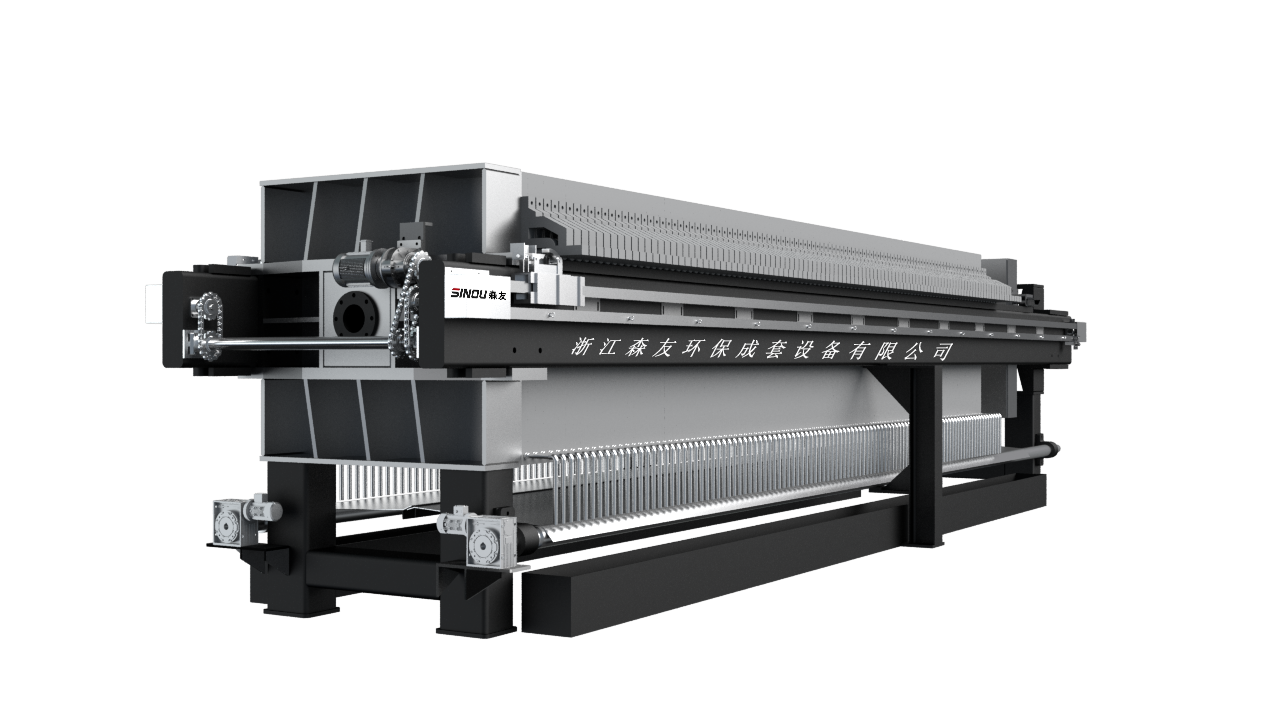
The edge in membrane plate design from Chinese manufacturers comes down to a mix of deep process know-how and rapid iteration cycles. Rather than treating the plate as a static component, engineers in this space routinely run stress simulations and field feedback loops to tweak rib geometry, corner radii, and drainage channel slopes. This hands-on refinement culture results in plates that hold dimensional stability across wide temperature swings and pressure spikes, while keeping polymer consumption lean.
Another less obvious strength is the tight coupling between plate design and local supply chains. Chinese producers can source high-purity polypropylene grades and tailor additive packages for specific filtration or pressing applications without long lead times. That proximity allows for small-batch prototyping with real production tooling, so subtle changes like gate location or venting patterns get validated quickly. The outcome is a portfolio of membrane plates that fit existing filter press frames with minimal shimming, yet outperform generic imports in cycle life and cake release.
Finally, many Chinese manufacturers have moved beyond copying legacy western geometries. They actively study failure modes from mining, chemical, and food processing sites, then introduce features such as reinforced boss areas, non-stick surface texturing, and optimized slurry inlet angles. These improvements are often documented in clear engineering notes shared with buyers, making it easier to match a plate to specific operating conditions instead of relying on one-size-fits-all designs.
Matching Your Slurry to the Right Membrane Configuration
Not every slurry behaves the same way under pressure, and the first step is to look past the basic solids percentage. A thin, low-viscosity feed with fine particles can often run through spiral or hollow fiber setups without constant fouling, but once the particle size climbs or the slurry turns abrasive, those tight channels start to clog and wear. The real question is whether your solids stay suspended or settle quickly, because that alone can rule out configurations that rely on narrow flow paths.
For heavier, gritty slurries, tubular and plate-and-frame designs usually hold up better. The wider channels give solids room to move, and the membrane surface is easier to reach for cleaning. If the slurry contains sharp or irregular particles, a ceramic or reinforced polymer membrane may be worth the extra cost, since softer films can tear after repeated exposure. Pilot testing with a small rig remains the most reliable way to see how the chosen configuration handles your actual feed over time.
Operational Tweaks That Cut Cycle Times in Half
A simple reordering of workstations often does more than any fancy software. On one line, moving the final inspection point to just after the two most error-prone assembly steps meant defects were caught before they got buried under subsequent parts. Rework that used to consume thirty minutes per unit disappeared almost entirely, and the line’s pace jumped from eight units per hour to fifteen.
Another overlooked lever is how materials are staged. Instead of having operators walk to a central kiosk for each kit, we placed pre-sorted bins on gravity-fed rollers at the point of use. That single change cut cycle time by 22% on its own because it removed the stop-and-search intervals that broke every operator’s rhythm. People underestimate how much time gets lost just locating the next component.
Batch logic is the silent cycle-time killer. When a machine waited until it had ten pieces before starting a heat-treat cycle, individual parts sat idle for hours. By switching to a two-piece trigger and overlapping the load/unload sequence with the previous cycle, the average part moved through the cell in half the time. The equipment didn’t run any faster; the parts simply stopped waiting.
Real-World Performance: Mining, Chemical, and Wastewater Cases
Field results from mining, chemical processing, and wastewater treatment rarely follow lab conditions. Abrasive slurries, corrosive fluids, and variable loads push equipment beyond nominal specs. One copper mine replaced standard pump seals every six weeks until a switch to tungsten carbide faces extended service life to nine months. That single change cut downtime by 80% and saved roughly $230,000 annually in parts and labor.
Chemical plants face a different pressure: aggressive media at elevated temperatures. A mid-sized facility handling 30% hydrochloric acid at 90°C had recurring flange leaks with PTFE gaskets. After testing flexible graphite with stainless steel inserts, leak incidents dropped from monthly to zero over an 18-month observation window. The plant also recorded a 12% reduction in maintenance hours, freeing technicians for predictive work rather than reactive repairs.
Wastewater operations highlight how real-world solids and biofilm challenge performance claims. A municipal plant processing 40 MGD struggled with impeller clogging on submersible pumps during wet-weather flows. Switching to vortex impellers with hardened wear plates eliminated clogging altogether and reduced energy draw by 7% despite higher solids loading. The payback period from avoided call-outs and energy savings was under five months, underscoring that field-validated designs pay for themselves quickly.
Maintenance Habits That Keep Filtration Consistent
Filtration systems rarely fail overnight. More often, they lose effectiveness through a slow drift of small oversights. Skipping a pressure gauge check here, letting a seal wear a little too long there, and suddenly your flow rates are off and your media is channeling. The fix isn't complicated—it's just unglamorous. Write down normal operating ranges and glance at them every shift. Don't wait for a problem to show up in the product. Catch the change before it becomes a defect.
The most reliable maintenance routines are built around repetition, not heroics. Instead of deep cleaning everything once a quarter, do a quick visual inspection every day and a modest service every two weeks. Replace O-rings on a schedule even if they still look fine. Log the backwash cycles and compare trends. Consistency beats intensity, because a filter that gets five minutes of attention every day will outperform one that gets an hour once a month.
Don't overlook the small mechanical details. A loose clamp or a slightly misaligned housing can create bypass that lets unfiltered material slip through. Tighten fittings to the manufacturer's spec, not by feel. Use a torque wrench where recommended. Keep spare parts organized and labeled so nobody improvises with the wrong gasket. When maintenance is boring and predictable, the filtration stays boring and predictable too—and that's exactly what you want.
FAQ
The key difference is the flexible membrane inside each chamber. After the initial feed cycle fills the chambers with slurry, the membrane inflates—usually with water or air at 7–15 bar—to squeeze the cake a second time. That extra compression drives out trapped water, and you can end up with 20–40% lower cake moisture than a recessed plate press on the same slurry. It also speeds up the cycle because the squeeze phase is much shorter than waiting for more filtration pressure alone.
Slurry is pumped into the chambers until the pressure reaches about 6–8 bar and the flow drops off. Then the feed pump stops and the membrane expands, pressing the cake against the filter cloth. This squeeze often runs for 10–20 minutes depending on the material. After that, compressed air may be blown through the cake to displace residual liquid, and finally the plates separate for cake discharge. Some systems run fully automatic with plate shifters and drip trays.
You’ll see them in mining and mineral processing, chemical plants, pharmaceutical production, food and beverage clarification, and industrial wastewater treatment. For example, a titanium dioxide plant might use one to wash and dewater pigment slurry, while a brewery might use it to recover yeast. Municipal sludge dewatering is also a big market, especially with polypropylene plates and automatic washing.
Check the plate material and thickness—polypropylene with high molecular weight is standard, and 30–40 mm plates are common for larger pressures. Look at the hydraulic closing system: double-acting cylinders with automatic pressure holding are more reliable. Ask about the membrane material (EPDM, NBR, or TPE) and whether the supplier offers PLC controls with remote monitoring. Also verify that they can supply replacement membranes and filter cloths without long lead times.
First optimize the feed slurry—flocculants or coagulants can help in sludge, while in mineral slurries particle size distribution matters more. Use the highest squeeze pressure the plates and membranes are rated for, usually 10–16 bar, and hold it long enough for water to migrate. Pre-coating the filter cloth with diatomaceous earth or lime can also improve release and drainage. Then make sure the air blow phase removes as much free water as possible before opening.
Yes, if specified correctly. Polypropylene plates handle many acids, alkalis, and solvents up to about 80–90°C. For high chloride or hot concentrated acids, you might need PVDF or reinforced polypropylene plates, and all wetted metal parts should be stainless steel or coated. Reliable manufacturers test plates with the actual chemical mixture and can provide material compatibility data before you buy. Don't assume a standard polypropylene press will survive strong oxidizing acids.
The common range runs from 630×630 mm up to 2000×2000 mm, with some special models reaching 2500 mm. Chamber depths vary from about 30 mm to 60 mm, so a single 1500×1500 press with 100 chambers might hold several cubic meters of cake. Most suppliers also offer side-bar or overhead-beam designs, and the number of plates can be customized from a few dozen to over 150 depending on filtration area needed.
After sludge is conditioned with polymer, the press first fills the chambers under low pressure to build a cake. Then the membrane squeezes the cake, often lowering water content from 80% to below 60%, which cuts hauling and disposal costs significantly. The press can run multiple cycles per day, and with automatic cloth washing, the cloths stay clean for several weeks. Some plants also use lime conditioning before the press to produce a stackable, landfill-ready cake.
Conclusion
Membrane filter presses don’t have to be confusing. At their core, these machines squeeze slurry between plates, then inflate a flexible membrane to press out extra water—no complicated chemistry needed. What sets Chinese manufacturers apart is how they’ve refined the plate design. Instead of copying old blueprints, many have experimented with recessed chamber geometry, membrane thickness, and corner feed ports, reducing uneven cake formation and dead zones. Matching your slurry to the right configuration matters just as much: thick, sticky mining tailings often do better with a mixed pack of membrane and recessed plates, while slow-settling chemical sludge benefits from a high-pressure squeeze cycle. Getting this pairing right often delivers drier cakes without extra energy.
On the operational side, small changes can cut cycle times dramatically. Pre-coating the filter cloth, adjusting the feed pump ramp, and timing the membrane squeeze to start before the chamber is fully packed can shorten total cycle from hours to under forty minutes in some plants. Real-world examples show this clearly: a zinc mine in Yunnan reduced moisture in tailings by 8 percentage points after switching to a staged squeeze; a chemical plant in Shandong cut wash water use by a third simply by repositioning the wash ports. And none of that holds up without maintenance. Checking membrane integrity every 200 cycles, keeping plate alignment true, and replacing worn cloths before they blind are habits that keep filtration predictable. Skipping these invites uneven cakes and rising pressure drops—problems that quietly eat into throughput. The real advantage isn't just buying a press from China, it's running it with attention to these details.
Contact Us
Contact Person: HaiYan
Email: [email protected]
Tel/WhatsApp: +86 18957325588
Website: https://www.senyoubeton.com/