China Household Air Purifier Buying Guide for Cleaner Indoor Air
2026-09-24
You might assume the air inside your Chinese home is cleaner than the smog outside—but that assumption could be harming your family. From lingering PM2.5 to formaldehyde off-gassing from new furniture, indoor pollution often goes unnoticed until health issues appear. That's why a practical buying guide matters now more than ever. At LUFUTATECH, we've analyzed real-world air quality data and user habits across hundreds of urban households to cut through marketing hype. In this post, we reveal the exact filter types, CADR ratings, and smart features that actually make a difference—and the mistakes most buyers regret. Ready to breathe easier? Let's get started.
What's Actually Drifting Through Your Chinese Apartment's Air?
You close the windows against the street noise, but the air inside still carries a cocktail you never consciously ordered. Cooking oil vapors settle on every surface, while formaldehyde slowly off-gasses from that new laminate wardrobe. The real shock? Outdoor PM2.5 levels often sneak indoors through balcony door seals, creating a haze you can taste more than see.
Then there are the invisible passengers: dust mites thriving in humidity trapped by double-glazed windows, volatile organic compounds from dry-cleaned curtains, and even microplastics shed by polyester bedding whenever you toss at night. Each breath mixes these with whatever your downstairs neighbor is stir-frying, delivered through shared ventilation shafts older than most of the building's residents.
What drifts through your apartment isn't just 'air' — it's a layered archive of daily habits, construction materials, and urban weather patterns. Ignoring it won't make it leave, but understanding what's actually there is the first step toward deciding which particles deserve to stay.
Filter Tech That Fights Urban Smog—Not Just Marketing Jargon
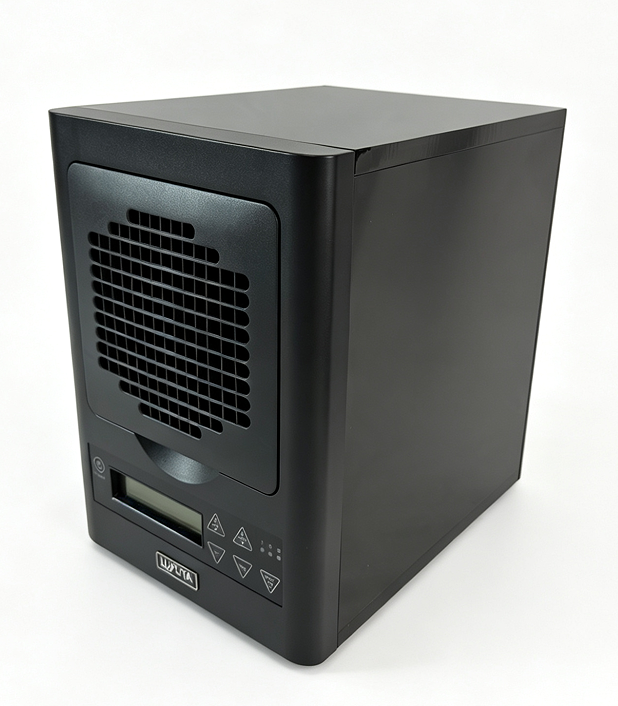
Most filters sold for city apartments still lean on a single HEPA layer and call it a day, but urban smog is a mix of exhaust particulates, brake dust, and volatile organic compounds that behave very differently once they enter a room. A filter that actually works on a busy street needs to trap particles well below 0.3 microns—the usual HEPA test benchmark—while also adsorbing gases like nitrogen dioxide and formaldehyde. If the spec sheet only lists a HEPA class and a CADR number, you're looking at lab conditions, not your window cracking open during rush hour.
The difference shows up in the media itself. Instead of plain polypropylene, look for dense, electrostatically charged microfiber layers paired with a carbon bed that's been treated with potassium permanganate or a similar oxidizer. That combination catches soot and tire-wear particles physically, then chemically breaks down the NO₂ and ozone that slip through most mechanical filters. Some units add a cold catalyst layer to handle residual VOCs without producing the ozone that older ionizers are notorious for. These aren't exotic materials—they've been used in industrial respirators for decades—but seeing them in a consumer unit means the manufacturer is addressing street-level pollution, not just dust from a closet.
Pay attention to how the filter ages, too. A real anti-smog setup should show a measurable drop in gas removal efficiency over time, not just a vague "replace every 6 months" sticker. Better designs include a weighted carbon load (often 1 kg or more) and a pre-filter that's easy to vacuum, because the fine black dust from traffic will clog a first stage in weeks. If the product talks more about its app and ambient lighting than the filter's gas capacity and pressure drop, the tech is probably secondary to the marketing.
Room Size and CADR: Why a Bigger Number Isn't Always Better
A common mistake is treating CADR like horsepower—more is always better. In reality, CADR needs to match the room's volume and your tolerance for noise. An air purifier rated for 600 cubic feet per minute in a small bedroom will hit its target air changes quickly, then either blast air past you or cycle down to a lower speed where its effective cleaning drops. You end up paying for peak performance you rarely use, along with extra noise and higher energy draw at the top setting.
CADR is measured at the highest fan speed, but most people run purifiers on low or medium for daily comfort. That means the number on the box can overstate real-world performance by half or more. A unit with a modest CADR that runs quietly and steadily often delivers better overall air quality than a high-CADR model that you turn off because it sounds like a jet engine.
A useful guideline is to aim for about two-thirds of the room's square footage matched to the CADR-based coverage, not the maximum coverage listed. This leaves headroom for lower speed operation and avoids short-cycling. Smaller rooms benefit from a gentle, constant exchange of air, not a brief, violent purge that stirs up dust and leaves cold drafts.
The Real Daily Trade-offs: Noise, Energy Use, and Filter Replacements
Living with an air purifier means accepting a constant hum in the background. On low settings, most units whisper around 25–35 decibels—quieter than a library. But crank it to high during pollen season or a smoky spell, and you're suddenly sharing your living room with a machine that rivals a box fan at 50–60 dB. It's not unbearable, but if you're sensitive to sound while sleeping or working, placement matters. Tucking the unit behind a sofa or using the night mode (if available) can drop the noise to a level you barely notice, though at the cost of less airflow.
Energy use is another quiet drain. A typical HEPA purifier pulling 40–70 watts on medium is roughly equivalent to running an old-school incandescent bulb—not a budget breaker, but it adds up if you run it 24/7 in multiple rooms. A unit left on high around the clock might cost $5–$10 per month, depending on local rates. Some newer models tout DC motors and Energy Star ratings that cut consumption by a third, but truthfully, the biggest factor is how you use it. Running it only when you're home, or pairing it with a smart plug schedule, often saves more than any spec-sheet efficiency gain.
Then there's the filter replacement dance. Manufacturers love to claim 6–12 month lifespans, but real-world smoke, pet dander, or urban grit can choke a filter in half that time. A $30–$60 replacement every four months stings when you didn't budget for it. Some purifiers now use washable pre-filters to extend the main HEPA's life, and a few offer filter-free electrostatic models, though those come with their own ozone concerns. The honest advice: check the filter every month with a flashlight—if it looks like a dirty dryer lint screen, don't wait for the little red light. Buying a two-pack of generics can cut costs by half, but verify they match the seal dimensions or you'll lose airflow around the edges.
Spotting Genuine Certifications Among a Sea of Stickers
The certification landscape has become a sticker war. Walk through any trade show or scroll a product feed and you'll spot dozens of badges—eco-friendly, lab-tested, cruelty-free, organic. But not all stickers carry the same weight. A genuine certification isn't just a colorful label; it's backed by an independent body that sets clear standards, audits compliance, and maintains a public registry. If a logo feels suspiciously easy to find on every product with no supporting details, that's your first red flag.
Dig one layer deeper and the real ones reveal themselves through traceability. Look for a certificate number, a batch code, or a QR pattern that leads to an official verification page—not a marketing landing page. Many counterfeit stickers copy the visual style of respected marks while omitting the tiny print: the issuing organization's full name, the standard code (like ISO 17065 for product certification), and an expiry or surveillance date. If the sticker is glossy but the registry entry is missing, you're probably holding a decoration rather than a credential.
Finally, cross-check the issuer. A legitimate certification body will have a clear chain of accountability—think laboratories, inspectors, and audit reports you can actually request. If the only proof is the sticker itself, treat it as a claim, not a guarantee. Simple habit: flip the product over, find the certifier's website, and search their database directly instead of trusting a scannable tag that might redirect anywhere. In a sea of stickers, the ones worth trusting are the ones that welcome verification.
Smart Features That Earn Their Place (and Gimmicks to Skip)
Some features quietly make daily use better, like a physical mute switch you can find by touch or an auto-lock that triggers when you walk away. These earn their place because they remove friction instead of adding another menu to dig through.
Then there are the gimmicks. A fridge that tweets, a toothbrush with a touchscreen, a washing machine that needs a firmware update before it will spin. If a feature requires a dedicated app just to turn it on or forces you to create an account, it is dead weight. Skip anything that adds steps instead of removing them.
The test is simple: after a week, would you miss it? A sensor that dims the screen when you glance away, yes. A gesture control that triggers accidentally half the time, absolutely not. Pay for thoughtfulness, not novelty.
FAQ
CADR tells you how much clean air the machine pushes out per hour, not how powerful the fan feels. In a Chinese apartment with regular smog or renovation fumes, look at the particulate CADR for dust and PM2.5, and the formaldehyde CADR separately if you have new furniture. A higher number means faster cleaning, but it also tends to mean more noise and power draw, so balance it with your actual room size.
If you've just renovated or bought new cabinets, yes—formaldehyde can off-gas for years, and many standard HEPA filters barely touch it. Look for a unit with a dedicated activated carbon or catalytic filter and a listed formaldehyde CADR, not just a marketing badge. Keep in mind the carbon layer gets saturated, so replace it on schedule rather than waiting for a smell.
A rough rule is to multiply the CADR by 0.07 to 0.12 to get the suitable square meters, but don't take that as exact. Measure your largest room and add a little buffer if you cook often or have pets. Buying the biggest machine you can afford isn't always wise—oversized units can be loud and waste energy, while an undersized one will run constantly and still not keep up.
You don't need the priciest HEPA grade, but avoid the cheapest filters with vague labels. Look for H12 or H13 ratings and a solid CCM value, which tells you how long the filter holds up before losing efficiency. A mid-range machine with a high-quality filter often beats a premium shell with a cheap filter inside, so check replacement filter prices before buying.
The main ongoing cost is replacement filters, not electricity. Most filters last six months to a year depending on air quality and runtime, and a set can cost anywhere from a few hundred to over a thousand RMB. Also factor in pre-filter cleaning time and occasional sensor cleaning. If a machine has a washable pre-filter, that helps stretch the main filter's life.
Most built-in sensors are decent for spotting trends, but they can drift or read only one pollutant. Use the display as a rough guide, not a lab instrument. If it shows red on a hazy day and blue after an hour, it's doing its job. For serious concerns like formaldehyde, a separate calibrated monitor gives a clearer picture.
During heavy smog or high pollen season, running it 24/7 on a medium or auto setting is more effective than blasting it for an hour only when you're home. Modern purifiers with brushless DC motors use little power at low speed and stay quiet enough for sleep. Just remember to close windows and doors, otherwise you're filtering the whole city.
One unit can handle both if it has a real carbon filter for odors and a good HEPA for particles, but it won't be perfect at everything. Cooking smoke and pet smells require more carbon than most budget models include, so you may need to replace the carbon layer more often. For heavy kitchen use, run the range hood first and let the purifier handle the leftovers.
Conclusion
Most people assume outdoor smog is the only problem, but the air inside a Chinese apartment often carries a heavier mix—cooking oil fumes, formaldehyde leaching from pressed-wood furniture, dust mites, and ultrafine particles that slip through window seals. A filter that only grabs PM2.5 isn't enough; you need granular activated carbon for volatile organic compounds, and you should be wary of ionizers that generate ozone. HEPA is still the workhorse, but pay attention to whether it's a true H13 or just a marketing label. Then there's CADR. A massive number looks impressive, yet if your bedroom is only 15 square meters, a 600 m³/h unit will either blast you with noise on high or underperform on low. Match the clean air delivery rate to your actual room volume, and think about air changes per hour rather than chasing the biggest spec. The daily experience matters more: a powerful purifier running at full speed can be too loud for sleep, so check the decibel rating at the fan speed you'll actually use. Energy use is another silent factor—some units draw over 60 watts on high, which adds up if you run them 24/7. And don't forget replacement filters; a cheap machine can become expensive if filters cost 400 RMB every six months.
Certifications in China are a minefield of counterfeit stickers. Look for the national standard GB/T 18801-2015 (or the newer 2019 revision) and check test reports from CVC or similar labs, not just a generic CE mark. Smart features can be genuinely useful—an accurate laser particle sensor that adjusts fan speed automatically saves energy and noise, and a filter life indicator prevents you from breathing through a saturated HEPA. But skip voice assistants, touch screens, and app dashboards that only mirror the display; they add cost without cleaning more air. The best purifier for your home is the one that quietly handles your room size, has real certification for both particulate and formaldehyde removal, and won't bankrupt you on filters. Buy for the air you actually breathe, not the spec sheet.
Contact Us
Contact Person: Paul Luo
Email: [email protected]
Tel/WhatsApp: 0086-19966314501
Website: https://www.lufutatech.com