
China Blank Print Label Supplier Guide for Custom Label Solutions
2026-08-22
Finding the right China blank print label supplier can feel like searching for a needle in a haystack—especially when your custom label solutions demand consistency, speed, and true print clarity. At Xinsen, we’ve watched too many brands settle for labels that fade, peel, or delay production. This guide strips away the guesswork, showing you what actually matters when sourcing blank labels from China and how a partner like Xinsen turns a simple roll of labels into a competitive advantage for your packaging line.
How to Spot a Blank Label Factory That Actually Communicates
A factory that actually communicates shows it from the very first email. Instead of a generic price sheet, you get specific questions about your label's substrate, adhesive, finish, and even how the roll will be loaded onto your applicator. They read your drawings rather than just attaching a quote. If someone replies within a day with a clear breakdown of lead times and material options—not vague promises—that's a strong signal.
Pay attention to how they handle the middle of the project. Do they send a photo of the first printed proof without you having to ask? Do they flag a potential die-line issue before cutting tooling? A communicative factory treats your order as a live thing, updating you on press schedules or ink adhesion tests. Silence between order placement and shipment is the real red flag, not a missed comma in an email.
Finally, watch what happens when something goes wrong. A factory that hides a misregistered batch or ships a slightly wrong core size hoping you won't notice is not communicating—it's avoiding. The ones worth keeping will call you before you ever see the defect, explain what happened, and already have a reprint or credit plan in motion. That kind of transparency is rarer than a perfect first run, and it's exactly what you should be looking for.
Picking the Right Face Stock and Adhesive for Your Packaging
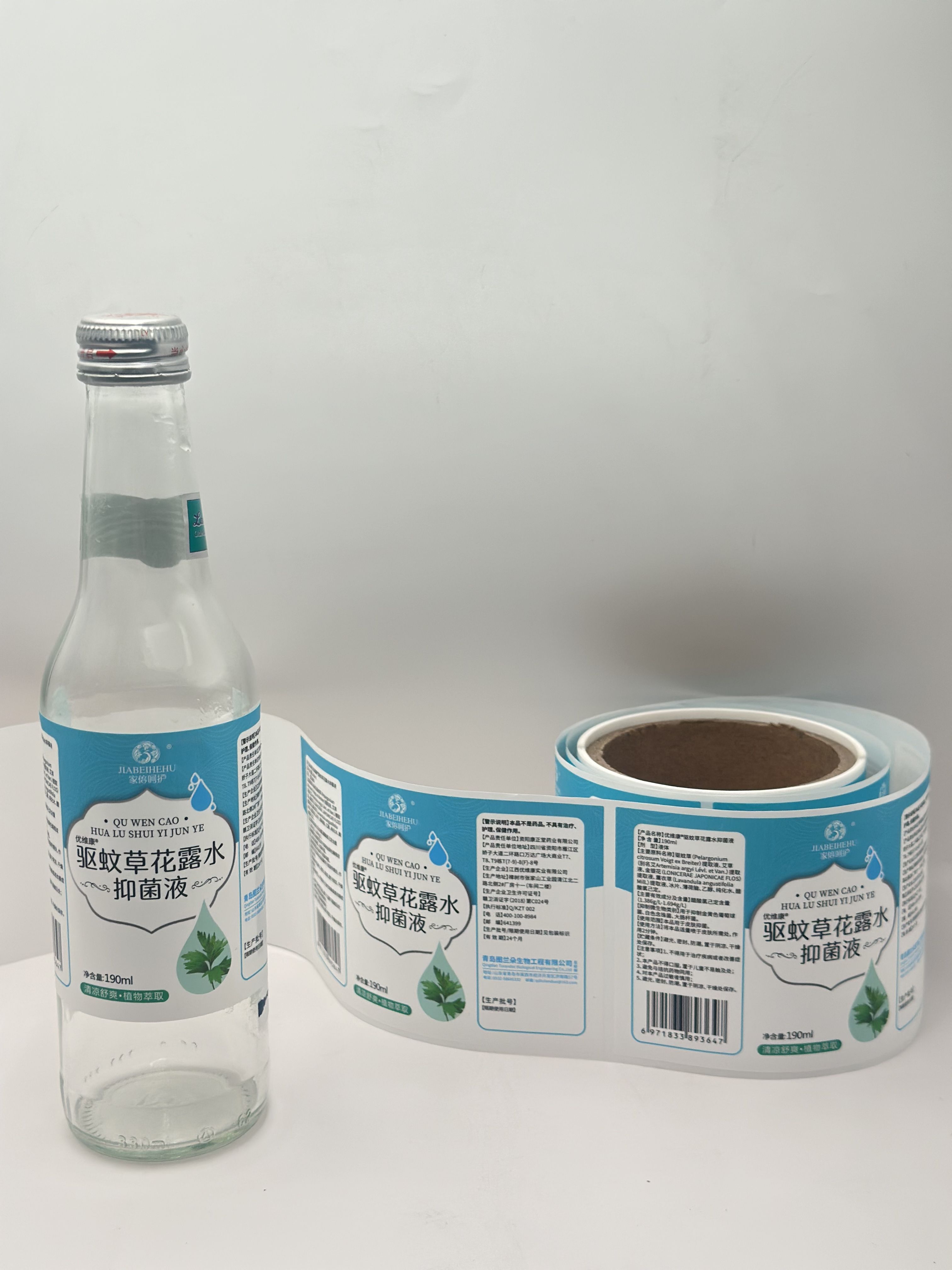
Most packaging teams spend hours agonizing over ink coverage and die lines, then let the face stock and adhesive be an afterthought. That's a mistake—those two layers are what keep the label intact when a bottle sweats in a cooler, a box gets dragged across a warehouse floor, or a squeeze tube is rolled up to get the last drops out. Pick based on where the package actually lives, not just how it looks on a proof.
Face stock isn't just paper versus film. A coated paper might feel premium on a candle jar but turn to pulp in a shower caddy. Matte polypropylene handles moisture and scuffs better, while a clear film lets the container color show through for a no-label look. Match the stiffness, texture, and opacity to the container's material and shape. On the adhesive side, think about the surface energy of what you're labeling—polyethylene and powder-coated metals are notoriously slick, so a high-tack acrylic is often safer than a rubber-based option. Removable adhesives sound friendly, but they can fail on curved surfaces that flex during shipping. Always test a roll on actual filled containers, not just flat panels.
Temperature is the sneaky variable. A label that sticks perfectly at room temp might peel off a frozen food carton or slide down a bottle that goes through a hot-fill line. Check the adhesive's service range against your supply chain, from warehouse storage to the customer's fridge or garage. And don't ignore the liner release—if the label won't dispense cleanly on your applicator, the best face stock and adhesive won't matter. Run a small batch through your actual labeler at production speed, then abuse the labeled package like a consumer would. That's the only way to know you've picked right.
Avoiding Hidden Tooling Charges on Custom Die-Cut Orders
Tooling fees rarely appear in the first quote a buyer sees. Some shops bury steel-rule die charges, clicker die setup, or laser-cutting fixture costs until the invoice arrives. Ask for a line-item breakdown that separates material, labor, die creation, and any recurring setup fee before you approve the order. This simple request forces the supplier to disclose exactly what you are paying for and often reveals charges you can negotiate away.
Find out whether the die is considered a one-time purchase or a per-order rental. In many die-cut operations, the tool is built once and used across repeat runs, yet some vendors will quietly add a 'die maintenance' or 'tooling refresh' line item each time. If you expect to reorder the same part, push for a written statement that the die belongs to you after the first production run, or at minimum that subsequent runs carry no additional tooling charge.
Finally, compare the final invoice against the approved quote line by line. A surprising number of custom die-cut orders include a small but persistent 'rush die fee' or 'sample tooling fee' that was never discussed. If a charge wasn't on the quote, don't pay it without a clear written explanation. Setting expectations early and reviewing invoices closely keeps tooling costs from becoming a recurring surprise.
Comparing Digital and Flexo Output Before You Commit
Before you commit to a run length, get a physical sample from both machines on the actual substrate you'll be converting. Digital output has a slick, consistent halftone pattern that rarely surprises you, while flexo can vary from shift to shift depending on how fresh the plates are, how much pressure the operator dials in, and whether the anilox has been cleaned recently. A side-by-side comparison under a loupe will show you exactly where the flexo dots start to bridge or disappear, and that's information you won't get from a virtual proof.
Don't just stare at solid Pantone swatches either. Gradients, skin tones, and fine reverses are where the two processes really separate. Digital tends to hold the same density from start to finish, but flexo might look great on the first thousand labels and then drift as the run progresses. If your design has a lot of delicate highlights, ask the flexo shop to run a few hundred feet and pull samples at intervals. That small investment in testing will save you from approving something that only looks good in the pressroom under perfect conditions.
Planning Around Production and Shipping Timelines From China
Working with Chinese manufacturers means accepting that lead times rarely behave the way you expect them to. Production schedules slip when a key component is suddenly out of stock, when a factory shifts priority to a bigger client, or when a local holiday shuts everything down for a week without notice. Instead of treating the factory's quoted 25-day production window as a promise, build in a buffer that reflects reality—at least 30 to 40 days for most consumer goods, and more if your product requires custom tooling or multiple assembly steps. Ask for a breakdown of the timeline: raw material procurement, molding or cutting, assembly, quality inspection, and packing. If any of those stages feels vague, push for specifics before you commit.
Ocean freight from major ports like Shenzhen, Ningbo, or Shanghai to the US West Coast typically takes 14 to 20 days, while the East Coast tacks on another week or two. But that's only the vessel time. You also need to account for cargo cut-off dates, customs clearance at both ends, trucking to the warehouse, and potential delays from port congestion or weather. During peak shipping season—roughly August through October—space gets tight and rates climb, so booking two to three weeks ahead of your ready date is not paranoid, it's prudent. If you're working on a hard deadline like a product launch or holiday sale, consider air freight for a portion of the order to bridge the gap, even though it will eat into your margins.
The smart approach is to plan backwards from the day you need inventory on your shelf, not forwards from the day you place the order. Map out every step—factory production, inland trucking to the port, export clearance, ocean transit, import clearance, drayage, and final delivery—and assign a realistic range to each. Then share that full timeline with your supplier and ask them to confirm each leg. If you're new to importing, add a 20% cushion to the total. A missed holiday season or an empty shelf during your biggest sales month costs far more than the extra storage fees for a slightly earlier shipment.
Building a Repeatable Quality Check for Every New Roll
Start by pinning down the exact moments you inspect a new roll—right after mounting, after the first few meters run, and again before you commit to a full production shift. At each point, check the same three things: surface defects, tension consistency, and edge alignment. If you rely on memory, you'll miss subtle drift. A simple laminated card taped to the machine beats a flawless mental checklist.
Make the numbers repeatable, not just the steps. Record ambient temperature and humidity, roll diameter, and the gauge reading you get at a fixed speed. Don't adjust the speed mid-check. If a reading looks off, rewind the roll slightly and run the same segment through again before you make any call. Small changes in how you measure create bigger changes in what you accept.
Finally, log the result with a timestamp and your initials, even when everything passes. Over time, this log becomes your baseline for what a good roll actually looks like on that line. When someone new takes over, they don't need to learn your instincts—they can follow the log and the card, and get the same pass/fail decision.
FAQ
Request a physical sample roll before placing a volume order and check the unwind direction, core size, and splice count. A dependable supplier will list the coating weight, adhesive type, and service temperature range on the datasheet instead of giving vague descriptions. They should also be willing to share recent batch inspection records and explain how they control die-cutting tolerances across long runs.
Many factories set lower minimum order quantities for blank labels but adjust pricing sharply below a few thousand square meters. Some will combine your order with similar material runs to reduce waste, while others charge a small die fee for custom shapes. It is worth asking if they keep stock of common materials so you can reorder in lower volumes without waiting for a full production slot.
You can usually source uncoated paper, coated paper, thermal paper, synthetic films like PET and BOPP, plus vinyl for outdoor use. The supplier should offer different adhesive systems, such as permanent acrylic, removable rubber-based, or freezer-grade options, depending on the surface and environment. Ask for samples of each face stock with the intended adhesive so you can test printability and peel strength yourself.
Many factories in China run both blank converting and flexographic or digital printing lines. Even if your current need is blank labels, a supplier with in-house printing can manage future runs where you add barcodes, batch numbers, or simple brand elements. Check whether they can store your artwork and maintain consistent color across reorders rather than treating each job as a one-off.
After artwork and material specifications are approved, a typical custom die-cut order takes about 7 to 15 production days before dispatch. More complex shapes, unusual adhesives, or special coatings can add several days. Confirm whether the factory produces the cutting die in-house or outsources it, because that often affects both speed and the cost of revisions.
For rough cardboard, a high-tack rubber-based adhesive usually grabs better than a standard acrylic. For low-energy plastics such as polypropylene or powder-coated surfaces, ask for an adhesive specifically formulated for hard-to-bond substrates. A good supplier will recommend the right combination and provide peel test data rather than sending a generic permanent adhesive that fails in the field.
Pay attention to how the supplier packs the finished rolls. Moisture-resistant wrapping, edge protectors, and desiccant packs inside cartons reduce the risk of curling or adhesive bleed in humid transit. Ask about the splice count per roll and core alignment; clean, consistent winding prevents jams in automatic label applicators. A short trial run with your own printer or applicator before full shipment can catch many issues early.
Conclusion
Working with a blank label factory in China starts with one overlooked test: how they talk to you before money changes hands. A supplier that asks about your packaging conditions, surface energy, and application environment is already better than one that quotes a price after two messages. That same mindset applies to material selection—polypropylene, PET, or paper face stocks all behave differently once they hit cold storage, moisture, or rough handling. You want someone who will challenge your adhesive choice instead of just sending samples. Hidden tooling charges on custom die-cuts are another place where silence costs you. A factory that itemizes knife fees, plate fees, and minimum order penalties upfront tends to respect your budget later; one that buries them in the invoice does not.
Before committing to a run, compare digital and flexo output side by side, especially on fine text, gradients, and die-cut alignment. Digital is forgiving for short runs and variable data, while flexo rewards volume with lower unit cost and faster repeat orders—but only if the plates are clean and your operator is consistent. Then map the real timeline: raw material lead times, plate production, Chinese holidays, and ocean freight can add four to six weeks beyond the production window itself. Finally, build a simple check for every new roll: unroll the first few meters, rub the print with a solvent-dampened cloth, peel the liner at a steady angle, and log the core tension. That routine catches drift before a full shipment goes out, and it turns a distant supplier into a predictable partner.
Contact Us
Contact Person: Yara
Email: [email protected]
Tel/WhatsApp: +86 13505426090
Website: https://www.qdxspack.com/