
China Automotive Shunt Resistor Market Trends and Applications
2026-07-15
The race to electrify China’s automotive sector is shining a spotlight on a component often overlooked—the humble shunt resistor. As electric vehicles and smart driving systems demand ever more precise current sensing, the market for these tiny but critical devices is surging. So what’s fueling this growth, and how are top-tier suppliers like Milliohm addressing next-gen challenges? From battery safety to power efficiency, we unpack the trends and real-world applications shaping the industry today.
Shunt Resistors Driving EV Efficiency Gains in China
Precision current sensing has become a cornerstone of China’s booming electric vehicle market, with shunt resistors quietly enabling smarter battery management and motor control. By delivering accurate, real-time current measurements, these components help optimize energy flow, reduce thermal losses, and extend driving range—crucial advantages in a competitive landscape where every percentage point of efficiency matters.
Designers are increasingly turning to low-ohmic, high-power shunt resistors to handle the demanding currents of next-generation EVs, from 800V architectures to fast-charging systems. Their compact footprints allow tighter integration into onboard chargers and DC-DC converters, minimizing parasitic inductance and improving overall system reliability under harsh automotive conditions.
Field data from fleet operators in China shows that incremental improvements in current sensing accuracy can lead to measurable reductions in energy consumption per kilometer. As local manufacturers scale up production of advanced metal alloy shunt resistors, the cost-to-performance ratio keeps improving, making them a default choice for engineers aiming to meet both regulatory targets and consumer expectations for longer range and faster charging.
How Smart Battery Management Relies on Precision Shunts
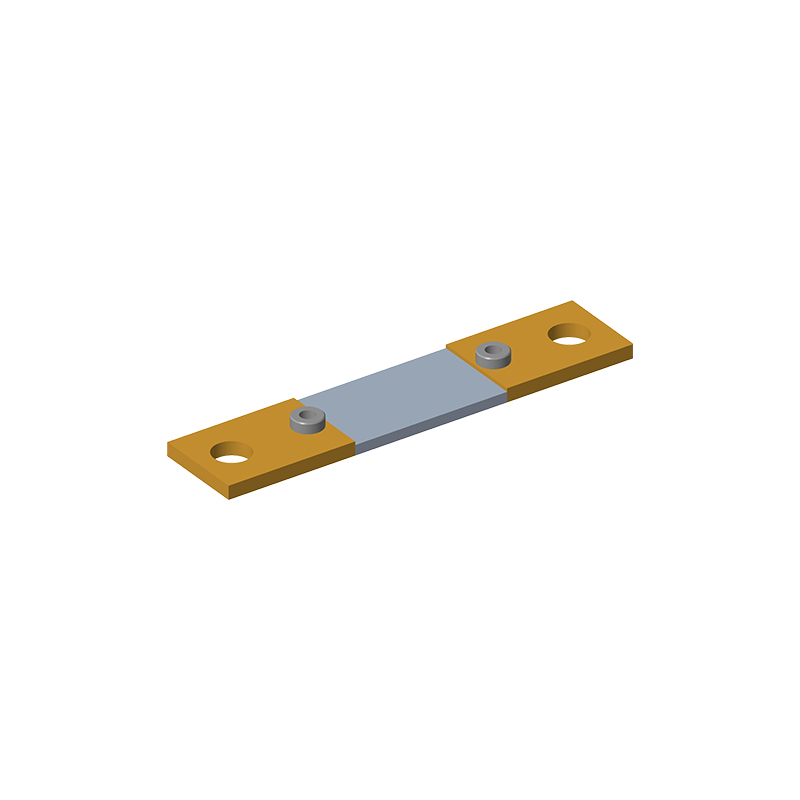
In modern battery management systems, accurate current measurement is the cornerstone of reliable state-of-charge estimation and safe operation. Precision shunts—low-resistance, high-accuracy resistors placed in the current path—provide a direct and linear voltage drop proportional to the current flow. Unlike Hall-effect sensors, shunts are inherently immune to magnetic interference and offer superior resolution at low currents, making them indispensable in applications ranging from electric vehicles to renewable energy storage.
The effectiveness of a shunt-based measurement chain hinges on careful design considerations. Even micro-ohm level resistances can generate significant heat at high currents, so thermal management and temperature coefficient matching are critical. Modern precision shunts often employ materials like manganin or constantan, chosen for their low temperature coefficients of resistance, and are paired with high-resolution analog-to-digital converters to maintain accuracy across a wide dynamic range. This attention to detail allows battery management systems to catch subtle changes in internal resistance, a key indicator of aging and cell health.
Beyond mere current monitoring, precision shunts enable advanced algorithms like coulomb counting, where minute charge increments are tracked over time. The low noise and high linearity of shunts ensure that even the smallest energy transfers are accounted for, preventing cumulative errors that can lead to inaccurate state-of-charge readings. In today’s increasingly demanding battery applications, the humble shunt remains a silent hero—delivering the fidelity needed for intelligent, safe, and long-lasting energy storage.
Evolving Current Sensing Needs in Autonomous Driving
The shift toward higher levels of vehicle autonomy has radically transformed the demands placed on current sensing technologies. In earlier driver-assistance systems, current measurements were primarily used for basic diagnostics and overcurrent protection in relatively isolated electronic modules. Today, however, the proliferation of high-power electric actuators, centralized domain controllers, and distributed sensor arrays means that current sensing must deliver far greater precision, bandwidth, and functional safety integrity. A single autonomous vehicle might manage hundreds of amperes flowing through multiple power domains—from the main traction inverter down to the smallest lidar motor—all while guaranteeing fault detection within milliseconds to meet ASIL-D requirements.
One of the less obvious consequences of architectural consolidation is the electromagnetic noise environment in which these sensors operate. As power density climbs, high-frequency switching from SiC and GaN power stages couples into signal traces, degrading the signal-to-noise ratio of traditional shunt-based sensing. Designers are therefore moving beyond standalone shunt amplifiers toward integrated solutions that combine isolation, signal conditioning, and diagnostics. Magnetic field‑based sensors have also seen renewed interest, not as a replacement for shunts but as a complementary technology for galvanically isolated measurements in tight spaces where thermal management of low-ohm shunts becomes impractical.
Looking ahead, the most consequential trend may be the blurring of lines between sensing and decision-making. With functional safety concepts like freedom from interference dictating that data paths remain uncorrupted, smart current sensors now embed local monitoring algorithms that verify the plausibility of their own measurements before passing data to the compute platform. This distributed intelligence reduces the software complexity in the central domain controller and allows vehicle engineers to meet the evolving requirements for real‑time power management and predictive maintenance without overwhelming the vehicle’s communication backbone.
Overcoming Thermal Drift in High-Power Automotive Designs
In high-power automotive electronics, thermal drift silently erodes precision and reliability as temperature swings push component parameters beyond their intended ranges. The challenge isn't just about managing heat—it's about anticipating how voltage references, sensor front-ends, and power stage characteristics will shift when under-hood temperatures climb from a cold start to sustained full-load operation. A design that performs flawlessly on the bench can develop critical offsets and gain errors once thermal gradients take hold, leading to inaccurate torque estimation, unstable gate drive behavior, or drifting sensing thresholds that degrade engine control or battery management.
To counteract these effects, designers can combine analog compensation techniques with dynamic calibration schemes. For instance, burying a matched pair of thermally sensitive elements deep within the same semiconductor substrate helps nullify differential drift within an amplifier chain. Meanwhile, using integrated temperature sensors alongside small on-chip lookup tables allows real-time correction of bias currents and filter corner frequencies without burdening the main processor. These approaches are particularly effective when placed as close as possible to the heat-generating power devices, so they track the relevant temperature gradients rather than some distant ambient reading. Selecting resistor networks with opposing temperature coefficients or applying controlled pre-heating during factory trim can also flatten the drift profile across the automotive temperature range, turning a stubborn error source into a manageable design parameter.
Ultimately, overcoming thermal drift is as much about system-level awareness as it is about clever circuitry. Placing a high-side current-sense amplifier on the same leadframe as the power MOSFET it monitors, for example, creates a deliberate thermal coupling that simplifies drift cancellation. Similarly, adopting modular thermal models within the control firmware allows predictive adjustment of safety limits and dynamic performance boundaries as thermal conditions evolve. This kind of holistic thinking—combining layout, material selection, factory calibration, and runtime adaptation—is what separates robust automotive designs from those that merely pass a room-temperature verification. The result is a powertrain or chassis system that holds its accuracy from Arctic mornings to desert heat soak, without sacrificing bandwidth or adding unnecessary cost.
Material Innovations Shaping Next-Gen Shunt Resistors
The shift toward high-precision current sensing in electric vehicles and renewable energy systems has pushed shunt resistors beyond conventional manganin and constantan alloys. New composite metal blends, such as copper-manganese-tin systems with trace additives, now achieve temperature coefficients of resistance (TCR) below 10 ppm/°C—matching the thermal stability once reserved for premium foil resistors, but at a fraction of the cost. These materials are refined through controlled annealing processes that align grain structures to reduce internal electromotive forces, a critical step for low-ohmic values where even microvolt-level offsets can skew readings. The result is a class of shunts that maintain tight tolerance from -65°C to +170°C, enabling accurate state-of-charge monitoring in battery packs without elaborate compensation circuits.
Beyond bulk alloys, additive manufacturing techniques are unlocking geometries that mass production previously discarded as impractical. Selective laser melting allows porous, three-dimensional current-sensing elements that maximize surface area while minimizing inductance—ideal for high-frequency switching in GaN-based power converters. Simultaneously, thick-film deposition of nickel-chromium-silicon compositions onto alumina substrates yields sub-milliohm shunts with integrated thermal pads, localizing heat dissipation and preventing hot spots that degrade measurement linearity. These fabrication advances do more than shrink footprints; they transform the shunt from a simple voltage drop device into a smart, structurally optimized component that directly supports modular power architectures.
Supply Chain Dynamics for China’s Auto Electronics Sector
The automotive electronics supply chain in China has undergone a quiet but dramatic restructuring. Traditional tiered supplier models are giving way to more fluid networks, where OEMs like BYD and Nio are bypassing long-established system integrators to source semiconductors and sensors directly. This vertical integration push, fueled by past chip shortages, has blurred the lines between automaker and component designer. Yet, the ecosystem remains fragile — advanced microcontrollers and high-voltage power modules still depend heavily on foreign fabs, a vulnerability that persists despite aggressive capacity building at home.
A fierce battle over analog chips and power management ICs is reshaping procurement strategies. While domestic foundries like SMIC have ramped up mature-node production, the yields and reliability for automotive-grade parts often lag behind Taiwan’s TSMC or Europe’s Infineon. To bridge the gap, several Chinese auto-electronics firms are forming joint ventures with Malaysian and Singaporean packaging houses, creating a semi-localized loop that skirts direct export controls. This intermediary approach reflects a pragmatic turn: rather than chasing full self-sufficiency, the sector is constructing alternative corridors that buy time for indigenous R&D to mature.
The most unpredictable variable now is the influx of consumer electronics giants into the automotive space — Xiaomi, Huawei, and even drone-maker DJI are leveraging their supply chain muscle to offer advanced driver-assistance systems and smart cockpit solutions. Their presence is compressing traditional development cycles and introducing consumer-grade velocity to vehicle electronics, forcing legacy suppliers to rethink decades-old production rhythms. As software-defined architectures demand ever-tighter integration between chips and algorithms, the supply chain is morphing from a linear chain into a web of tech partnerships, where data flows and IP exchanges matter as much as physical components.
FAQ
Shunt resistors are the unsung heroes of current sensing in automotive electronics. They allow precise measurement of current flow by producing a tiny voltage drop that's proportional to the current, which is then amplified and monitored by control units. In China's rapidly electrifying car parc, they are indispensable for tasks like battery state-of-charge tracking, motor phase current sampling, and overcurrent protection in both EV traction inverters and traditional 12V/48V architectures. Without them, you simply can't achieve the functional safety levels demanded by modern ADAS and autonomous driving systems.
The EV wave hasn't just boosted volume—it has fundamentally changed the requirements. We're seeing a steep rise in demand for high-power, low-ohmic value shunts with metal alloy resistive elements that can handle hundreds of amps while staying compact enough to fit in densely packed battery disconnect units and onboard chargers. At the same time, 800V architectures are pushing temperature stability and power derating to the limit, so suppliers are rushing to develop AEC-Q200 qualified, low-TCR variants that keep accuracy within 1% even under bonnet conditions.
Beyond the obvious traction inverter and BMS, we're seeing shunts embedded in smart fuse boxes for zonal architectures, enabling wire protection and predictive diagnostics without bulky relays. Another hot area is solid-state battery disconnect switches, where ultra-low resistance shunts (think 50 micro-ohms) monitor hundreds of amps continuously and trigger pyrotechnic fuses in a crash scenario. Also, shunt-based current sense is migrating into steering and brake-by-wire systems, where redundant measurement is non-negotiable for ISO 26262 compliance.
Local players like Yageo-Kemet and Susumu's Chinese arms have been aggressive in vertical integration—bringing metal strip stamping, electron beam welding, and resistance trimming fully in-house. That cuts cycle time and cost. We're also noticing a trend toward offering 'resistor + PCB busbar' sub-assemblies that simplify the customer's SMT process. And, crucially, some are pre-loading calibration data into onboard EEPROMs so the ECU can compensate for gain errors on the fly—something that used to be the domain of pricier Hall-effect solutions.
Because the real limitation isn't the ohmic value itself but the ability to dissipate Joule heat without exceeding the grade 0 temperature range. In China's diverse climate, from Harbin cold starts to Turpan summer test runs, a shunt might see a 150°C internal swing during a rapid charge pulse. Designers are now paying as much attention to the kelvin connection layout and heatsink interface as the resistivity. We're seeing more adoption of surface-mount shunts with exposed metal bottoms soldered directly to thick copper planes, plus busbar-mounted shunts with active liquid cooling—stuff that seemed exotic five years ago.
Expect a shakeout and consolidation among the smaller workshops, while the top five suppliers invest heavily in 300mm-wafer-level manufacturing for precision thin-film shunts aimed at next-gen SiC inverters. Integrated magnetic sensing will encroach on higher current ranges, but shunts will own the sub-1000A space due to cost and linearity. The real wildcard is functional integration—shunts with built-in isolated amplifiers on a single substrate could bypass the traditional op-amp chain, slashing bill-of-material cost and PCB area. That's where the smart money is going.
Conclusion
China’s automotive shunt resistor market is being reshaped by the rapid electrification of vehicles and the growing complexity of onboard electronics. In electric vehicles, low-ohmic shunt resistors are playing a central role in boosting overall efficiency, as they enable precise current measurement across motor inverters, DC-DC converters, and onboard chargers. Smart battery management systems now depend heavily on these components to track state-of-charge and state-of-health with minimal energy loss, directly influencing driving range and battery longevity. As autonomous driving functions advance, the current sensing demands have evolved, requiring shunts that can maintain accuracy under fluctuating loads and wide temperature swings. This has pushed engineers to tackle thermal drift in high-power designs, integrating heat-spreading substrates and optimizing layout to ensure stable readings even under sustained stress.
On the materials front, innovations such as electron-beam welded joints and copper-manganese-nickel alloys are delivering lower temperature coefficients and improved long-term stability, which are critical for next-generation power modules. These breakthroughs are not only enhancing performance but also reshaping supply chain dynamics within China’s auto electronics sector. Local manufacturers are scaling production and forging closer ties with automakers to secure supplies amid fluctuating raw material costs. The push toward higher reliability standards is fostering a competitive ecosystem where domestic suppliers and global players collaborate, making shunt resistors a strategic linchpin in China’s drive to lead in intelligent and electric vehicle technology.
Contact Us
Contact Person: Yuying Gao
Email: [email protected]
Tel/WhatsApp: +86 18926013721
Website: https://en.milliohm.net/