
Best Prototyping Services Factory to Turn Your Ideas into Tangible Products
2026-11-02
Most prototyping services promise speed, but few deliver a part that actually fits your design the first time. If you’ve ever held a 3D print that felt flimsy or wrong, you know the frustration. ProtoMat was built to close that gap—turning digital models into durable, precise prototypes without the usual trial-and-error. In this guide, we’ll show you what to look for in a prototyping factory and why the right partner can make your next product launch feel less like a gamble.
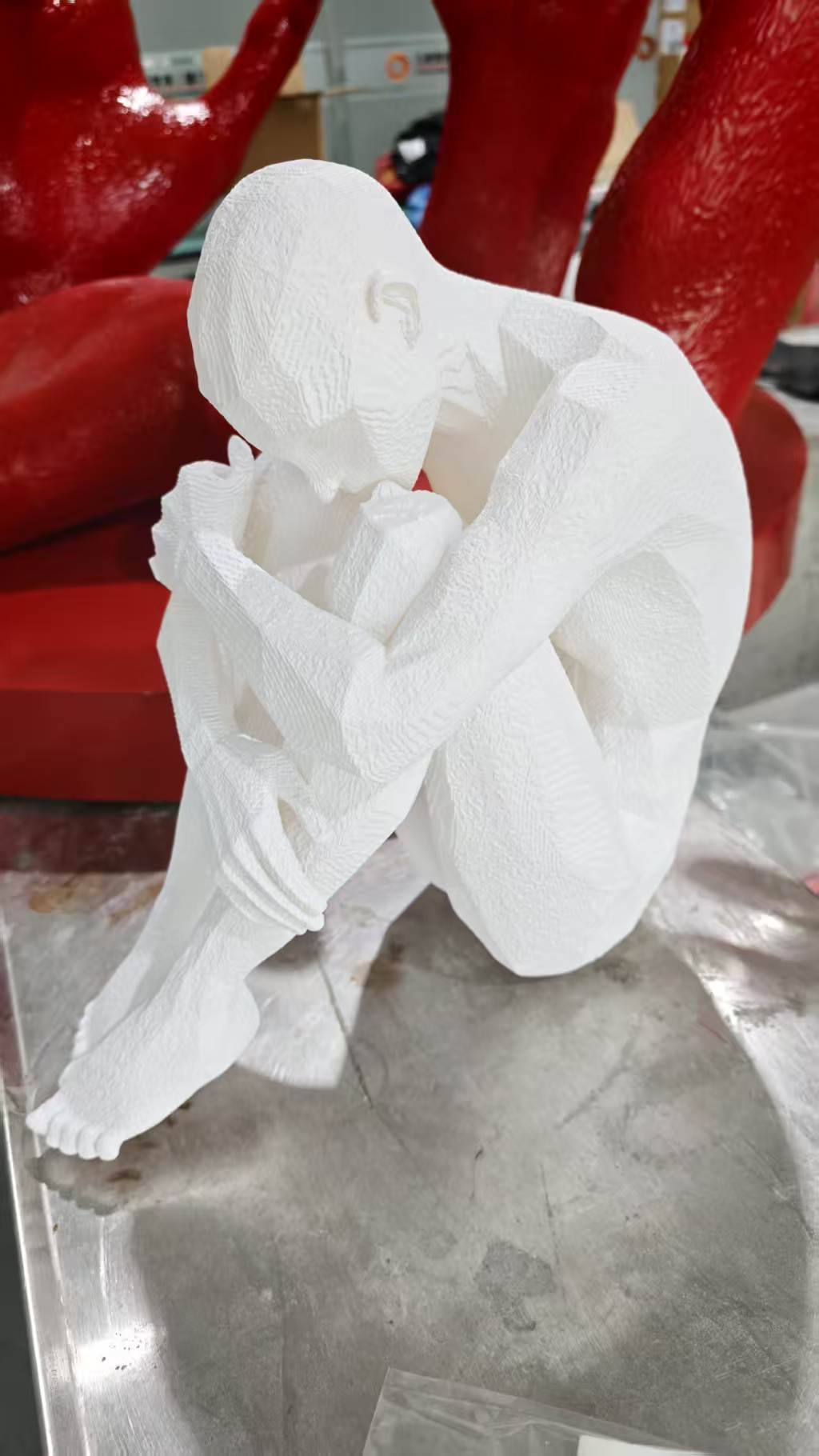
Prototypes That Feel Like Production Parts
Most prototypes feel exactly like what they are: fragile stand-ins that only hint at the final product. They flex when they should be rigid, rattle when they should sit tight, and leave everyone in the room making mental adjustments instead of trusting what’s in their hands. But when a prototype behaves like a production part, the conversation shifts. Stakeholders stop asking “what will it really feel like?” and start reacting to the actual experience—weight, snap, texture, and tolerances all playing their part.
The difference usually comes down to material honesty. Instead of printing everything in a single generic resin, you match the prototype’s flexural modulus to the intended nylon, use living hinges where the mold will have them, and add brass inserts where screws will actually thread. Suddenly the prototype carries the same inertia as a molded part, and design flaws that hide in flimsy models—like a clip that creeps open or a boss that strips too early—surface long before tooling money is spent.
That level of fidelity doesn’t happen by accident. It means treating the prototype as a manufacturing preview rather than a pretty mockup: building in the same draft angles, gating vestiges, and even the slight sink marks that production will inevitably show. When engineers and designers can hold something that already feels final, their feedback becomes sharper. They stop commenting on the prototype itself and start refining the product it represents.
Feedback Loops Built Around Your Timeline
Every swipe, pause, and tap quietly reshapes what appears next in your feed. The timeline doesn't just reflect your interests; it actively reorders itself based on the smallest signals you leave behind. A lingering glance at a video, a quick scroll past a post, a reply you almost sent—each one feeds into a quiet calculation that decides what deserves your attention tomorrow.
This loop isn't always obvious because it works backward as well as forward. Once the timeline learns you prefer certain topics, it starts filtering out the noise you never asked to see. That can feel like a relief until you notice the edges of your world getting narrower. The same mechanism that helps you find useful updates can also make you forget there was ever anything else worth seeing.
Breaking out of the loop usually requires a deliberate interruption: searching for something outside your usual patterns, muting a few loud sources, or simply leaving the app alone for a while. The timeline adapts quickly, but it only knows what you show it. The question isn't whether the feedback loop exists—it's whether you're the one steering it or just riding along.
Materials Sourced for Function, Not Just Form
At the core of our sourcing decisions is a simple question: will this material hold up to the way people actually use it? We look beyond how a surface reads in a showroom or on a screen. Fabrics are rubbed, stretched, and exposed to light long before they make it into production. A finish isn't chosen because it photographs well; it's chosen because it resists staining from daily spills or develops a patina that still looks intentional after years of contact.
Function also shapes how we think about weight, texture, and repair. A chair frame made from solid ash isn't just a visual nod to mid-century design—it carries load across grain lines that we've mapped against real stress points. Upholstery foam density is matched to sitting duration, not just cushion profile. When a material can't be easily cleaned, reconditioned, or eventually separated for recycling, it usually doesn't make the cut, no matter how striking it looks.
Sometimes the most honest choice is also the most visually quiet. Oiled leather, brushed aluminum, and densely woven wool all earn their place through repeated use case testing rather than trend cycles. We'd rather specify one well-understood material than layer three decorative ones that fight each other over time. That restraint leaves room for the form to emerge naturally from what the material does best.
Small Batches Without the Setup Fee Shock
Ordering small runs of custom products used to come with a nasty surprise: setup fees that made the entire project feel like a bad deal. Many suppliers charge the same tooling or plate costs whether you're buying ten units or ten thousand, which pushes your per-unit price sky-high. We've thrown that model out the window. Our small batch production runs without hidden setup charges—you pay for what you order, nothing more.
That means you can finally test a new design, launch a limited drop, or restock a seasonal item without committing to a huge volume just to spread out the setup cost. You keep inventory lean, free up cash, and react to what your customers actually want. If a product takes off, reorder. If it doesn't, you haven't sunk a fortune into setup fees.
We've streamlined our process from file prep to final output, so small orders get the same attention to detail as big ones. No minimums, no surprise invoices—just the quantity you need, delivered on time and at a price that makes sense.
Tolerances That Hold Up Under Real Stress
When a part leaves the drawing board, its tolerances are often treated as static numbers. Yet in the field, those numbers get pushed and pulled by thermal cycling, vibration, and unexpected loads. A tolerance that looks generous on paper can turn tight once the material starts creeping or the housing distorts. The real test isn't whether a dimension meets spec on a granite surface plate—it's whether the assembly still functions after ten thousand hours of abuse.
Designing tolerances for actual stress means looking beyond simple fit classifications. You need to consider how each feature interacts with its neighbor when everything expands at a different rate. For instance, a bearing bore might need a slightly looser fit not because of manufacturing limitations, but because the shaft will grow more than the housing under load. Successful engineers treat tolerance stacks as dynamic chains, not isolated limits. They simulate worst-case thermal gradients and apply safety factors to critical clearances, accepting that some dimensions will drift in ways that no CMM report can fully predict.
Validation under realistic conditions separates honest tolerances from wishful thinking. Prototype testing should include thermal shock, overload cycles, and long-run endurance—not just ambient checks. When a gearbox survives a 50°C temperature swing without binding, that's evidence the clearance analysis was right. But when a seal leaks after three weeks of vibration, it means the tolerance loop wasn't closed properly. Real stress reveals which dimensional decisions were robust and which were just lucky.
Design Tweaks That Don't Reset the Clock
Tweaking a design without resetting the user's mental clock is less about what you change and more about what you leave alone. Familiar landmarks—the position of a primary action, the rhythm of a scroll, the weight of a heading—act as anchors. When you adjust secondary details like spacing, color temperature, or micro-interactions around those anchors, the interface feels refreshed rather than replaced.
Think of it as redecorating a room without moving the doors. A new finish on a button, a more readable font size, or a subtle shadow on a card can all shift perception while the underlying flow stays untouched. Users won't pause to reorient because the path they already know is still there.
What trips people up is not the scale of a change but the suddenness of it. A series of tiny, incremental tweaks released over time lets the design breathe and evolve. Each one might be nearly unnoticeable, but together they create a product that feels current without ever making someone feel like they've been dropped back at the starting line.
FAQ
It's less about flashy equipment and more about how well the team listens. The best ones ask sharp questions up front, challenge weak spots in your design, and suggest tweaks that save you money before you've paid for a single part.
For most consumer or industrial parts, you're looking at 5 to 10 business days after design freeze. Rush options can cut that to 48 hours on simple components, but smart factories will tell you when rushing is a bad idea instead of just taking your money.
Go with glass-filled nylon, polycarbonate, or CNC-machined aluminum for early durability tests. A good factory will also suggest hybrid approaches, like a 3D-printed core with a machined metal sleeve, to mimic final production behavior without tooling costs.
Absolutely. That's where real value shows up. They'll run design-for-manufacturing checks, flag thin walls or undercuts, and sometimes produce a small pilot batch so you can catch assembly issues before committing to injection molds.
The cheap one gives you exactly what you asked for, even if it's wrong. The better one gives you what you need, documents tolerances, uses calibrated machines, and won't ghost you when a dimension is off. You end up paying less per usable prototype.
You need at least a clear sketch, basic dimensions, and a sense of how it should function. If you only have a napkin drawing, look for a service that offers design refinement as part of the package. Otherwise you'll burn budget on guesswork.
Yes, and it's more common than you'd think. Factories can combine CNC rigid bodies with overmolded silicone or 3D-printed TPU joints. The trick is picking a partner that handles multi-material assembly under one roof instead of outsourcing it.
Look for parts similar to yours in complexity and industry, not just glossy renders. Real photos of unfinished prototypes, tolerance callouts, and case studies that mention failures and fixes tell you more than a hundred five-star reviews.
Conclusion
Turning a rough concept into something you can actually hold is where most prototyping shops stumble. This factory does things differently. Their prototypes don't feel like flimsy mockups—they come off the line with the weight, finish, and structural integrity of production parts, so you can test form and function without second-guessing. Feedback loops move at your speed, not theirs; when you need a revision, it slots into the schedule without a week of radio silence. Materials are chosen for how they perform under load, temperature, and repeated use, not just because they look right in a render. And small batches are genuinely welcome—no setup fees that make you question whether the prototype costs more than the product ever will.
What really sets them apart is how they handle change. Tolerances are held tight enough that parts survive real-world stress testing, not just a quick photo shoot. When you tweak a design—move a rib, thicken a wall, swap a fastener—the clock doesn't reset. The team works from your latest file, keeps the existing tooling where possible, and gets the revised part back to you fast. It's that combination of production-grade quality and low-friction iteration that makes the whole process feel less like outsourcing and more like having an in-house prototyping cell a phone call away.
Contact Us
Contact Person: Joe
Email: [email protected]
Tel/WhatsApp: +8613799507208
Website: https://www.3dprotomat.com/